



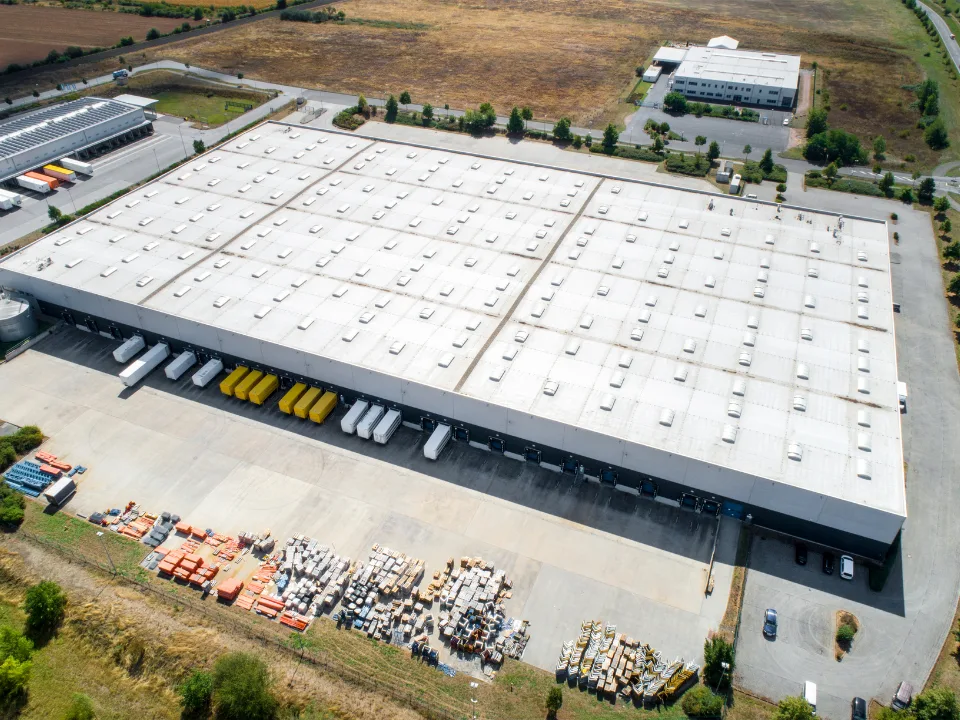
- WareSpace acquired about 164,000 SF of industrial space for $36.5M, including a 100,000 SF Miami Gardens property and a 64,103 SF building in South San Francisco.
- The purchases add more than 210 flexible warehouse units and mark WareSpace’s third Miami acquisition and first Bay Area deal, growing its national footprint to 34 facilities.
- The deals reflect demand for right-sized industrial space near customers and workers in dense, high-barrier markets where small-bay options are scarce.
WareSpace has bought a $36.5M industrial portfolio in Miami Gardens, Fla., and South San Francisco, Calif., according to CommercialCafe. The two buildings total about 164,000 SF and hold more than 210 flexible warehouse units.
WareSpace now operates 34 facilities totaling more than 3.2M SF nationwide.
Get Smarter about what matters in CRE
Stay ahead of trends in commercial real estate with CRE Daily – the free newsletter delivering everything you need to start your day in just 5-minutes
Doubling Down in South Florida
The Miami Gardens property at 4900 NW 167th St. sold for $20.42M. It spans 100,000 SF with 100 units serving more than 125 small businesses, which works out to roughly $204 per SF.
It is WareSpace’s third Miami acquisition, building on its existing presence in south Florida.
A First in the Bay Area
The South San Francisco building at 161 Starlite St. traded for a little more than $16M. It covers 64,103 SF with more than 85 units.
The deal is WareSpace’s first Bay Area transaction.
Small-Bay Space Stays Scarce
WareSpace’s model targets small businesses that need smaller bays close to customers and employees. That niche sits apart from the big-box buildings that dominate the industrial construction pipeline.
Small-format product in infill locations remains hard to build and hard to find.
Why It Matters
Co-founder and COO Joseph Ely said both areas are population-dense, high-barrier markets where appropriately sized options are increasingly difficult, if not impossible, to find.
CEO Levi Cohen said Miami builds on existing momentum, while South San Francisco opens a new market where industrial space is becoming increasingly scarce.
What’s Next
With a Bay Area foothold in place, watch for further acquisitions in space-constrained markets. Additional deals would signal how aggressively WareSpace plans to scale its flexible-unit model.