




- Multifamily absorption, rents and occupancy are improving, with 50.1% of markets posting better absorption in Q2 2026 and annual rent growth reaching 1.8% in July.
- Apartment values remain 22.3% below their July 2022 peak, while cap rate spreads over the 10-year Treasury sit near 118 basis points versus a 290-point norm.
- With credit normalizing but rates elevated, the valuation reset favors selective, long-term investors targeting markets where fundamentals are strengthening fastest.
Multifamily operating conditions are firming even as apartment values sit well below peak, according to Arbor Realty Trust’s fall 2026 rental housing report, produced with Chandan Economics. The report finds supply pressure receding, rent growth broadening and occupancy improving.
But elevated Treasury yields and historically thin cap rate spreads continue to weigh on valuations, leaving multifamily fundamentals and pricing on different tracks.
Get Smarter about what matters in CRE
Stay ahead of trends in commercial real estate with CRE Daily – the free newsletter delivering everything you need to start your day in just 5-minutes
The Supply Wave Recedes
After several years of heavy deliveries, the market is absorbing new units more effectively as the pipeline moderates. The Atlanta Fed’s Commercial Real Estate Market Index showed 50.1% of multifamily markets posted improved absorption in Q2 2026, the highest share since late 2024 and the second straight quarterly gain.
The National Multifamily Housing Council’s Market Tightness Index also moved above neutral, signaling a national market moving toward balance.
The Details
Annual rent growth reached 1.8% in July 2026, extending a four-month acceleration, per the report. Roughly three-quarters of metros recorded monthly rent gains and nearly 90% posted year-over-year increases.
Apartment List’s national vacancy measure has eased from its peak earlier in 2026, though supply-constrained markets keep outperforming metros still absorbing heavy deliveries.
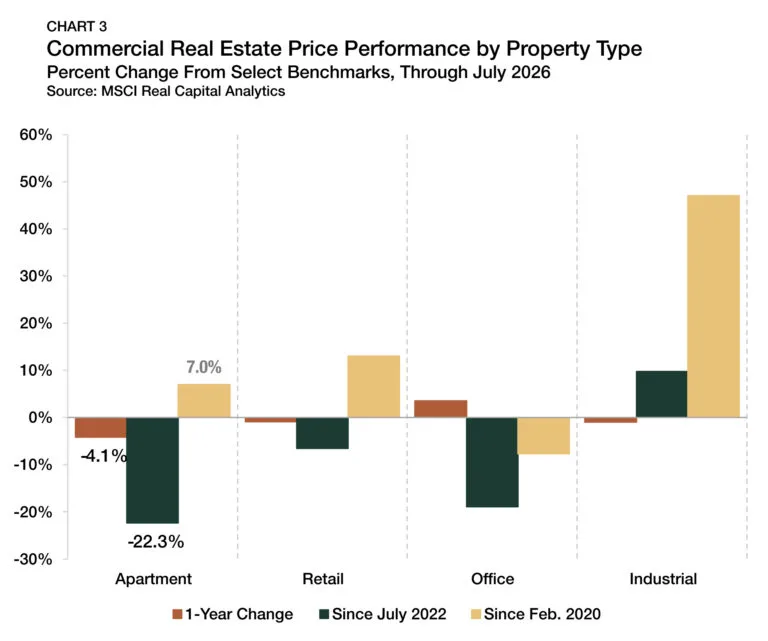
Pricing hasn’t caught up. Apartment values were 22.3% below their July 2022 level as of July 2026, per MSCI Real Capital Analytics, a steeper correction than office, retail or industrial, yet still 7.0% above February 2020.
Credit Opens Up, Spreads Stay Thin
The Federal Reserve’s Senior Loan Officer Opinion Survey shows multifamily lending standards and borrower demand converging toward neutral through Q3 2026 after years of large swings. The latest readings show a modest net easing in standards and slightly weaker demand, consistent with lenders competing harder while borrowers stay selective.
The catch is the rate math. The spread between multifamily cap rates and the 10-year Treasury yield was about 118 basis points in Q2, versus a roughly 290-basis-point average since 2010, per Chandan Economics, leaving little room for cap rate compression without lower long-term rates.
The operating side looks healthier, with multifamily rent growth broadening across major metros.
Why It Matters
The Federal Reserve’s September quarter-point hike reinforced expectations that short-term rates will stay elevated, adding to CRE refinancing pressure. Long-term yields also remain high amid persistent inflation and fiscal concerns, per Arbor.
Arbor frames the 22.3% value drop as cyclical repricing rather than the structural impairment hitting parts of office, giving long-term capital a better entry point. Operating expense growth has moderated but still limits how quickly rent and occupancy gains reach NOI.
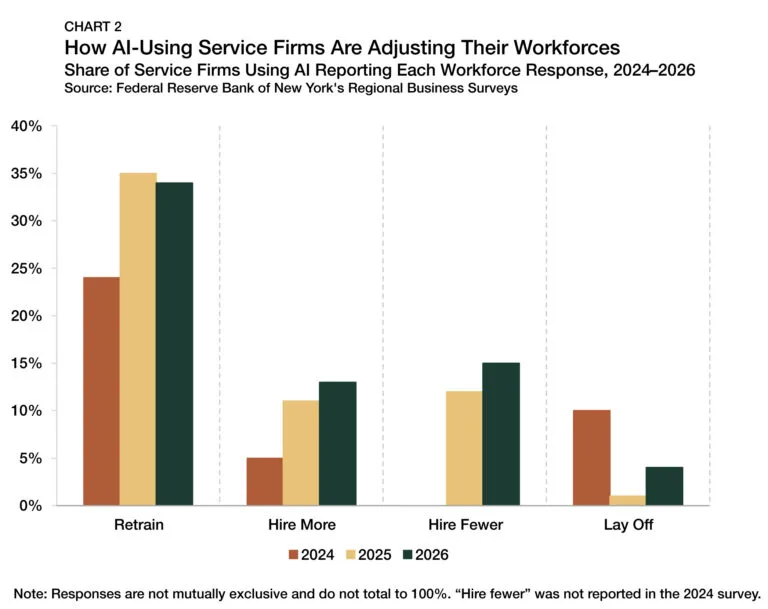
Technology may help margins: Buildium’s 2026 research found AI adoption among surveyed property management companies rose to 58% from 20%. On the labor side, New York Fed surveys show 34% of AI-using service firms retrained workers, while just 4% reported AI-related layoffs.
What’s Next
Arbor expects normalizing deliveries to support operations as the development pipeline moderates, though slower population and labor force growth may temper the pace of demand gains.
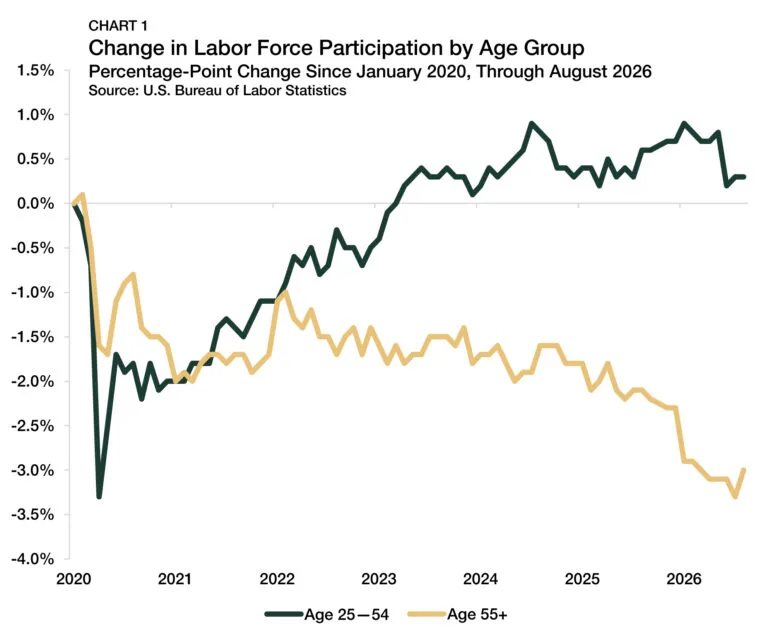
Demographics are a growing factor. Prime working-age labor force participation has fully recovered and sits slightly above pre-pandemic levels, but Americans 55 and older participate at a rate about three percentage points lower, per BLS data cited in the report. Foreign-born employment has also slowed sharply alongside the pullback in net international migration.
Consumers are still spending, but the personal saving rate has fallen to roughly half its typical 2010s level, leaving households less cushion if income or jobs weaken.
The next phase, the report argues, won’t depend on a return to cheap financing or outsized rent growth. Instead, improving operations, more available credit and reset valuations should favor disciplined investors targeting markets where fundamentals are strengthening fastest.