



- AI companies accounted for 51.1% of TAMI office leasing through mid-2026, up from 20.2% in 2025, lifting the sector’s share of total leasing to a new high.
- New York City, San Francisco and the Bay Area captured 77.1% of TAMI new leasing, powered by large commitments from Anthropic, PayPal and Ramp.
- With non-AI tech tenants still retreating, the office recovery increasingly hinges on a single tenant segment and on Class A buildings in a handful of coastal markets.
AI companies now drive more than half of all TAMI office leasing in major U.S. markets, according to CompStak’s Biannual Office Report for 2026. AI tenants took 51.1% of technology, advertising, media and information (TAMI) leasing through the second quarter, up from 20.2% in 2025.
That surge in AI office leasing lifted TAMI to 26.6% of total leasing activity, edging past the sector’s prior high of 26.0% set in 2021.
Get Smarter about what matters in CRE
Stay ahead of trends in commercial real estate with CRE Daily – the free newsletter delivering everything you need to start your day in just 5-minutes
A Sector Running on One Engine
AI tenants accounted for 13.6% of total leasing volume in 2026, up from 4.7% in 2025 and the highest share since CompStak’s analysis began in 2020. The rest of TAMI kept softening, falling to 13.0%, its lowest reading in that span and far below its 24.4% peak in 2021.
In other words, AI firms aren’t just adding demand. They’re filling the space left by the tech, media and telecom tenants that pulled back after the pandemic, which makes today’s TAMI high far more concentrated than the last one.
Hiring data points the same way. AI mentions in Indeed job postings climbed from 1.9% in February 2020 to 6.3% by July 2026, per Indeed Hiring Lab, while software development postings remain 24.6% below their pre-pandemic baseline.
The Details
TAMI demand has consolidated geographically. New York City, San Francisco and the Bay Area captured 77.1% of TAMI new leasing in the first half of 2026, up from 64.0% in 2025 and a 30.4% trough in 2023. New York City alone accounted for 38.1%.
A few large deals did much of the work. Anthropic signed 412,875 SF at 300 Howard Street in San Francisco, Ramp extended and expanded into 285,303 SF at 28-40 West 23rd Street in Manhattan, and PayPal took 260,872 SF at 345 Hudson Street.
AI tenants are also committing for longer. Their average lease term jumped to 80.3 months in 2026 from a 2024 trough of 49.2 months, within 5% of the 84.4-month average for all other tenants. They still pay up: AI starting rents averaged $89.01 per SF versus $75.21 for everyone else, an 18.3% premium, though that’s down from 23.2% in 2020.
Class A Carries the Gateway Recovery
The broader recovery is tilting toward quality. Seven of ten gateway markets now rate as recovering in Class A based on effective rents, up from four in the second quarter of 2025. Chicago, New York City and Phoenix hold strong ratings, while Boston swung from strong recovery to decline. Class B/C moved the other way, with five markets in decline versus three a year ago.
Prime Class A starting rents reached $110.41 per SF in Q2 2026, up 75.0% from Q4 2019, though that average leans heavily on New York and San Francisco. Class A buildings also captured 88.6% of leases signed above $100 per SF in effective rent, consistent with an earlier shift toward direct Class A deals among AI users.
Why It Matters
Landlords are finally pulling back on giveaways. CompStak’s concessions ratio for new leases fell back to its 2019 average of 16.5% after peaking at 19.9% in 2023, and renewals dropped to 12.1% from a 15.8% peak in 2025. Sublease discounts are tightening too, with market rent now 9.6% above achieved sublease rents, down from 18.4% in 2024.
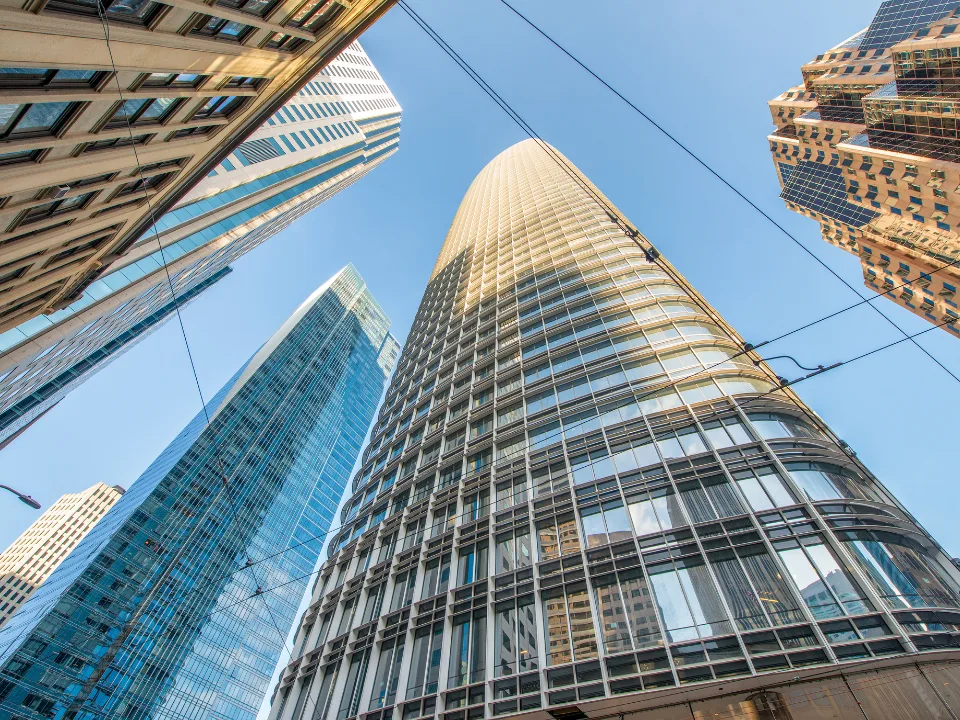
Still, the demand base is narrow. Office-using job openings fell 8.8% year over year in July 2026, per Bureau of Labor Statistics data. And San Francisco, despite leasing wins at the Transamerica Pyramid Center, faces the steepest repricing risk of any gateway market.
What’s Next
About 27.4% of leased gateway office space expires between 2026 and 2028, and repricing will split by market. New York City market rents sit 22.7% above current rents, with 78.9% of expiring space positioned to reprice higher, while Phoenix follows at 19.7%. San Francisco stands alone on the downside, where market rent sits 9.0% below current rent.
New supply won’t ease the squeeze on top-tier space. Input costs for nonresidential construction rose 7.6% year over year in July 2026, per the BLS, while office construction spending outside data centers fell 10.9%. CompStak also flags finance and insurance as the sector most likely to accelerate AI-driven space demand next, based on Census Bureau adoption survey data.