



- The national median rent fell 0.1% in September to $1,388, the first monthly decline since January but milder than both recent years and the pre-pandemic norm.
- Multifamily vacancy eased to 7% from a February peak of 7.3%, though units now take an average of 34 days to lease, the longest September reading since 2019.
- If current trends hold, 2026 could post the first positive full-year rent growth since 2022 as Sun Belt markets rebound and new supply gets absorbed.
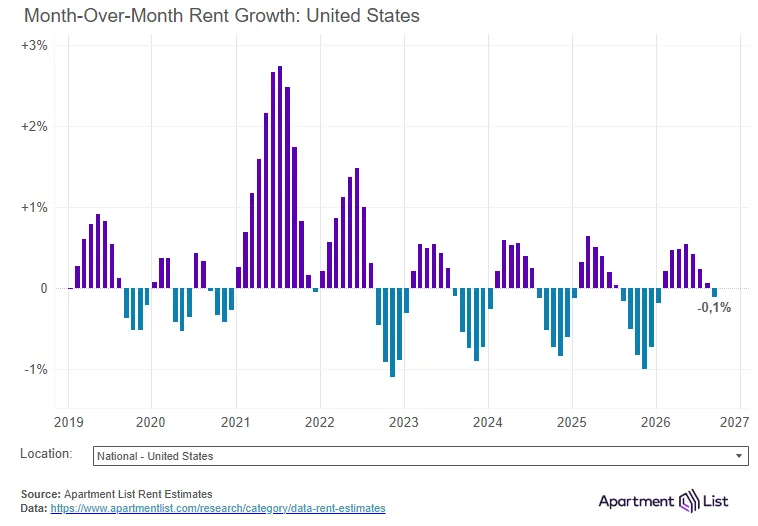
The national median rent fell 0.1% in September to $1,388, according to Apartment List’s latest national rent report.
National rent is still down 0.4% year-over-year, but annual growth has improved for five straight months and vacancy is trending lower, pointing to a gradual tightening in rental conditions.
Get Smarter about what matters in CRE
Stay ahead of trends in commercial real estate with CRE Daily – the free newsletter delivering everything you need to start your day in just 5-minutes
A Milder Off-Season
Fall and winter typically bring modest rent cuts as fewer renters move. In each of the past three years, the off-season started early, in August. This year, August rent growth was positive for the first time since 2022.
September’s dip was also notably shallow. The average September decline was 0.5% from 2022 to 2025 and 0.3% from 2017 to 2019, making this the first month in years that rent growth outpaced the pre-pandemic average.
Years of modest declines have also brought prices back to trend. The national median is now roughly where it would be had rents grown at a steady 2.5% a year, the 2017-2019 average, rather than swinging between hot and cold spells throughout the 2020s.
The Details
Year-over-year growth bottomed at -1.6% in April, matching a record low in Apartment List’s data going back to 2017. The national median now sits just $6 below September 2025 and 3.7%, or $54 a month, below its mid-2022 peak.
Vacancy at stabilized properties peaked at 7.3% in February, the highest since tracking began in 2017, before easing to 7% in September. At the current pace, it will take more than a year to return to the 2017-2019 average of 6.4%.
Units leased in September sat on the market for an average of 34 days, the longest September reading since tracking began in 2019 and two days longer than a year earlier. That is more than two weeks slower than September 2021, a reminder that conditions remain cool overall.
Sun Belt Declines Ease
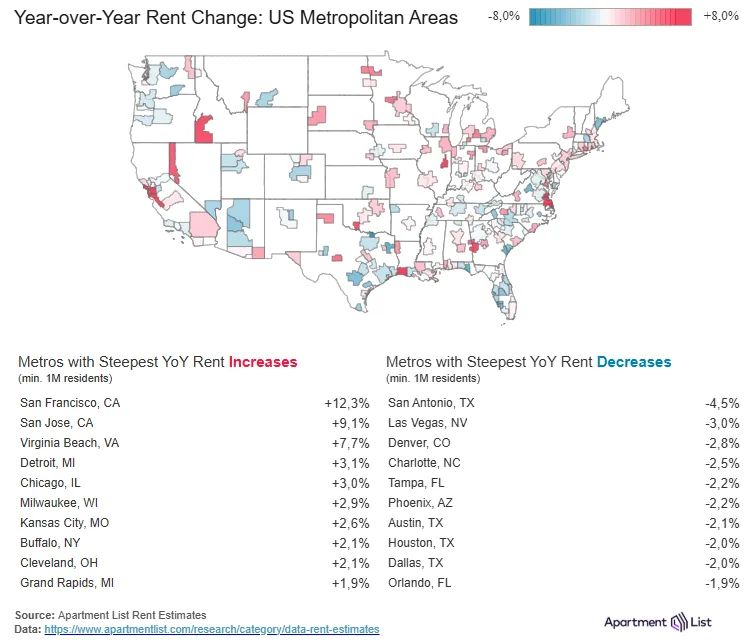
The construction boom peaked in 2024 with more than 600,000 new multifamily units, the most in a single year since 1986, and Sun Belt and Mountain West markets drove the national slump. San Antonio now posts the sharpest large-metro decline at 4.5% year-over-year, while Austin has improved to a 2.1% decline from a 6.2% drop in 2025.
Austin added more units per capita than any major market, and its recovery offers a template for other boom markets. Denver, Phoenix, Tampa and Charlotte still post some of the nation’s biggest declines, but those drops are smaller than at the start of the year.
Rents fell month-over-month in 39 of the 55 metros with more than one million residents, yet 33 now show annual rent growth. Owners are also pulling back on apartment concessions across major markets, another sign of stabilization.
Why It Matters
For multifamily owners and lenders, the inflection in both pricing and occupancy suggests the supply wave is finally being absorbed. The Bay Area leads the country, with San Francisco metro rents up 12% and San Jose up 9% year-over-year on AI-driven hiring. Within the city of San Francisco, rents are up 26%.
Midwest markets including Detroit, Chicago, Milwaukee, Kansas City and Cleveland round out the top ten, supported by relative affordability. Slowing construction in former hot spots, reflected in falling Austin housing permits, could help sustain the rebound.
What’s Next
Apartment List flagged weak consumer sentiment and stubborn inflation as downside risks to household formation, though the labor market has been fairly resilient. Rising mortgage rates may also keep would-be first-time buyers renting longer.
If the year finishes on its current trajectory, 2026 would be the first year since 2022 with positive full-year rent growth.