



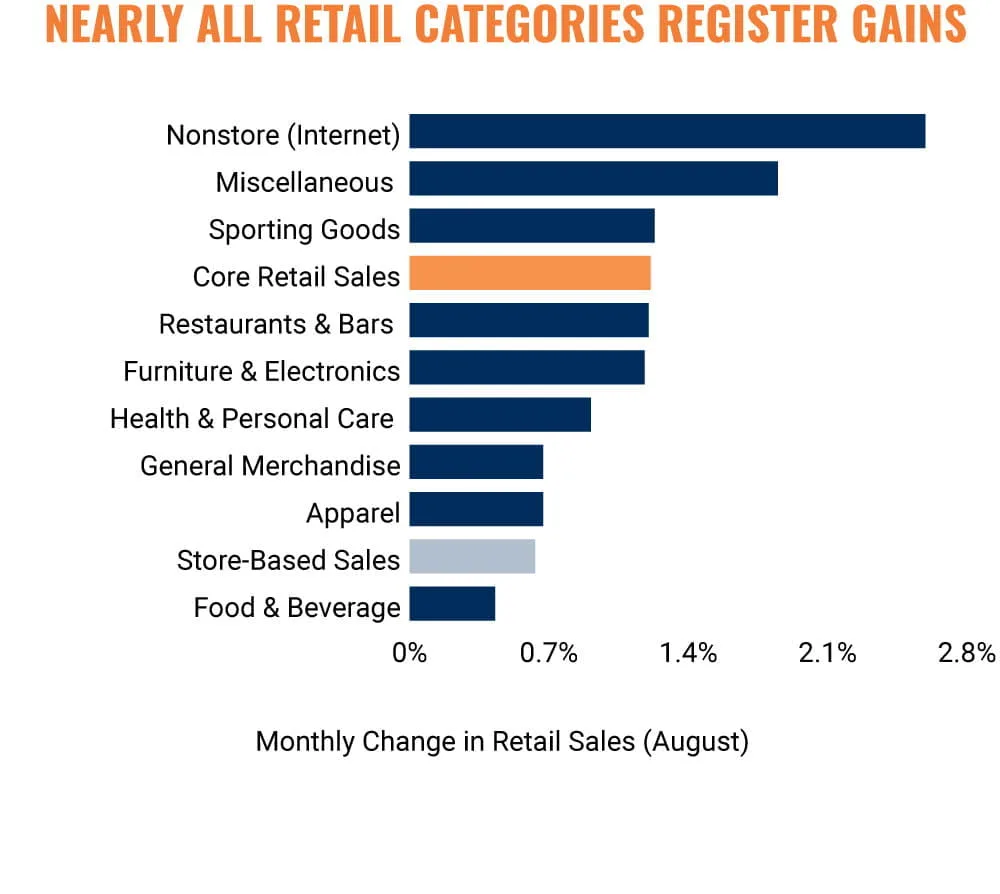
- Core retail sales rose 1.2% in August and 5.6% year over year, with gains across nine of 10 major retail categories.
- Store-based sales increased 0.6%, outpacing headline inflation and marking the second-largest monthly gain in the past 14 months.
- Preliminary Q3 2026 data showed positive net absorption across single- and multi-tenant retail, with supply roughly in line with demand.
Consumer spending strengthened broadly in August, supporting both online and physical retail. Marcus & Millichap Research Services says core retail sales rose 1.2% for the month. Sales were also 5.6% higher year over year. Nine of 10 major categories posted gains. The improvement reversed July’s moderate pullback, which was driven largely by weaker online sales.
Get Smarter about what matters in CRE
Stay ahead of trends in commercial real estate with CRE Daily – the free newsletter delivering everything you need to start your day in just 5-minutes
Spending Broadens Across Categories
The August increase suggests households continued spending across necessities, experiences and dining out. Categories such as health and personal care, apparel, sporting goods and general merchandise reached record sales totals. The strength came even as consumers faced new pressure. Financing costs are rising, inflation exceeded wage growth on an annual basis and average national gasoline prices moved above $4 per gallon. Those headwinds will test whether spending can hold at the new level.
Source: Marcus & Millichap Research Services
The Details
US employers added an estimated 162,000 jobs in August, though the source notes that the figure will be revised. Quarterly household debt among people with a credit score was at its lowest level since 2013. Those supports helped offset pressure on purchasing power. The rebound also follows July’s softer retail sales momentum. Core spending fell 0.2% that month but remained 4.8% above a year earlier. The August advance therefore restored momentum rather than starting from a weak annual base.
Brick-and-Mortar Sales Set a Record
Store-based sales exclude online purchases and spending at restaurants and bars. They rose 0.6% in August, ahead of headline inflation. That was the second-largest monthly increase in the past 14 months. Several categories also posted record sales totals. Marcus & Millichap said those new benchmarks have positive implications for retail tenant demand if they persist in coming months. Physical stores therefore participated meaningfully in the broader consumer spending rebound.
Why It Matters
Preliminary Q3 2026 data showed positive net absorption in both single-tenant and multi-tenant retail. Absorption was roughly in line with new supply. The source also cited a favorable ratio of store openings to closings. Together, those conditions should limit overall vacancy movement through the rest of 2026. The sales data support continued physical retail demand even as consumer finances face higher interest costs and persistent inflation.
What’s Next
Some retailers are using tariff refunds to lower prices, including Walmart, Burlington, Tractor Supply and e.l.f. Beauty. Most cuts are expected to apply to essentials. If lower prices lift store visits, the added traffic could extend to other tenants in the shopping centers those retailers anchor. The next test is whether August’s broad sales strength holds as higher credit costs and inflation pressure household budgets. Marcus & Millichap also notes that the recent job-growth estimate could be revised.