




- New York’s Economic Development Corporation is set to vote Sept. 15 on a $100 million property tax break for Tishman Speyer’s proposed 48-story office tower at 99 Hudson Boulevard.
- The $2.7 billion project would cost the city $92.2 million in tax benefits while generating almost $860 million in direct and indirect tax revenue, according to an IDA analysis.
- The subsidy could put Mayor Zohran Mamdani at odds with his progressive base, which argues tax giveaways favor developers over affordability priorities like his city-owned grocery store initiative.
New York is considering a $100 million property tax break for a new Hudson Yards office tower proposed by Tishman Speyer, according to Bloomberg. It would be the largest economic subsidy granted since Mayor Zohran Mamdani took office. An arm of the city’s Economic Development Corporation is scheduled to vote Sept. 15 on the measure, which would support a 48-story building in a district that’s thriving by almost every economic metric.
Get Smarter About What Matters in New York
Subscribe to our free newsletter covering the biggest commercial real estate stories across the five boroughs — delivered in just 5 minutes.
A History of Subsidized Growth
Hudson Yards has relied on public incentives since its early days. In 2005, the city rezoned the far West Side district. By December 2006, it had started selling debt to fund the No. 7 subway extension. That extension helped make the project possible.
Then, the Great Recession forced the city to cover $360 million in interest payments. The payments supported $2 billion in municipal bonds backed by developer payments in lieu of property taxes.
Over the past two administrations, the city’s Industrial Development Agency granted roughly $1 billion in tax breaks. Recipients included Related Cos., Brookfield Properties, and Tishman Speyer.
More recently, the subsidy math has changed. The Hudson Yards Infrastructure Corp. was created to issue bonds for the redevelopment. Over the past decade, it has transferred about $2 billion in surplus revenue back to the city. The corporation first covered its own debt service.
The Details
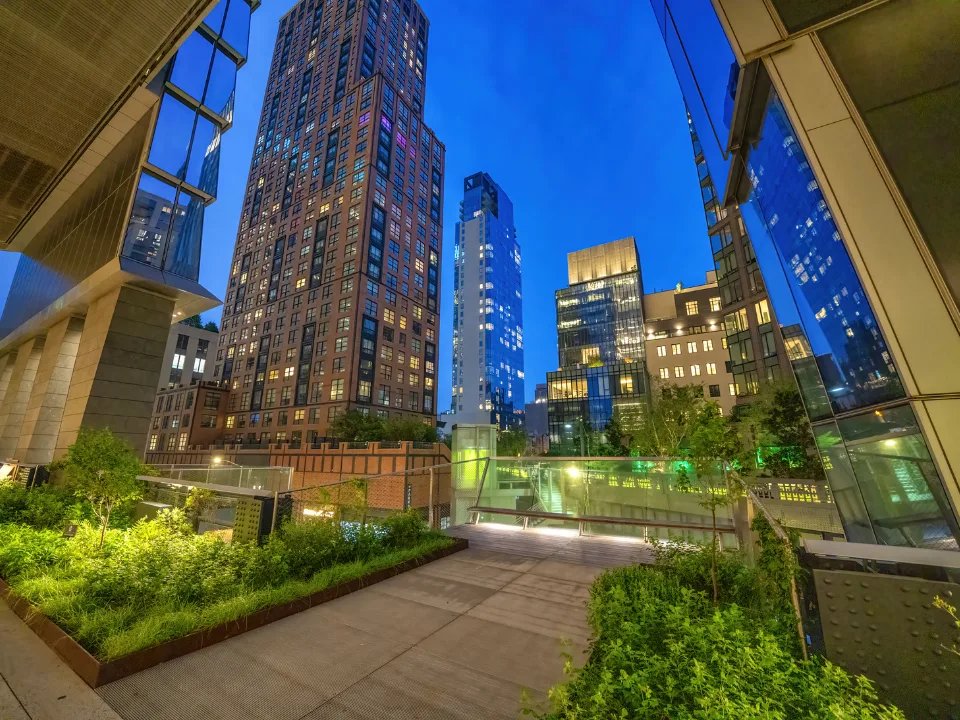
The proposed tower, known as 99 Hudson Boulevard, would span 1.3 million square feet. It would sit across from the Jacob K. Javits Convention Center. Tishman Speyer acquired the site in 2016.
Construction on the $2.7 billion project is scheduled to begin in January. However, the subsidy must receive approval first.
The tax benefits would cost the city $92.2 million. At the same time, they would generate almost $860 million in direct and indirect tax revenue, according to the city’s Industrial Development Agency.
The project would become Tishman Speyer’s second skyscraper in Hudson Yards. The first was The Spiral, a 66-story tower with 60 outdoor terraces. The building houses Pfizer’s headquarters, along with HSBC, AllianceBernstein, and Marshall Wace.
Zooming Out
The proposed subsidy comes as Hudson Yards continues to anchor a broader CRE recovery. CRE Daily has tracked this trend, with Manhattan’s office market outperforming most major U.S. metros this year.
Meanwhile, Hudson Yards office rents rank among the city’s highest, according to Avison Young. Tenants include BlackRock, Wells Fargo, and KKR.
The district also has a major residential presence. At Related’s One Hudson Yards, one-bedroom apartments rent for $5,700 to $7,900 per month, according to StreetEasy.
Why It Matters
The vote will test how Mamdani balances two competing priorities. He has tapped real estate figures for his business advisory council. At the same time, his campaign focused heavily on affordability.
That tension could become more visible if his administration backs a subsidy that his own base may oppose.
Mamdani’s highest-profile economic initiative so far is the creation of city-owned grocery stores. The stores would offer discounts of 30% on produce, meat, bread, and milk.
The city has committed $70 million to build the stores and support their operations. That approach stands in sharp contrast to a $100 million tax break for a private office tower.
Reinvent Albany’s John Kaehny argues that the subsidy no longer makes financial sense. “Hudson Yards has basically worked, and there’s just no reason to offer that,” he said.
Kaehny also noted that successful subsidy programs should eventually phase out. In his view, they should not continue indefinitely.
Business groups see the issue differently. Steven Fulop, president of the Partnership for New York City, said major office construction projects “unlock significant private investment, create thousands of jobs, generate tax revenue and turn vacant sites into productive engines of the city’s economy.”
What’s Next
The IDA’s board vote on Sept. 15 will provide the first real test of Mamdani’s approach to commercial development incentives.
A public hearing on Tishman Speyer’s application took place Sept. 10. If the subsidy clears the final hurdle, construction on 99 Hudson Boulevard is slated to begin in January.