





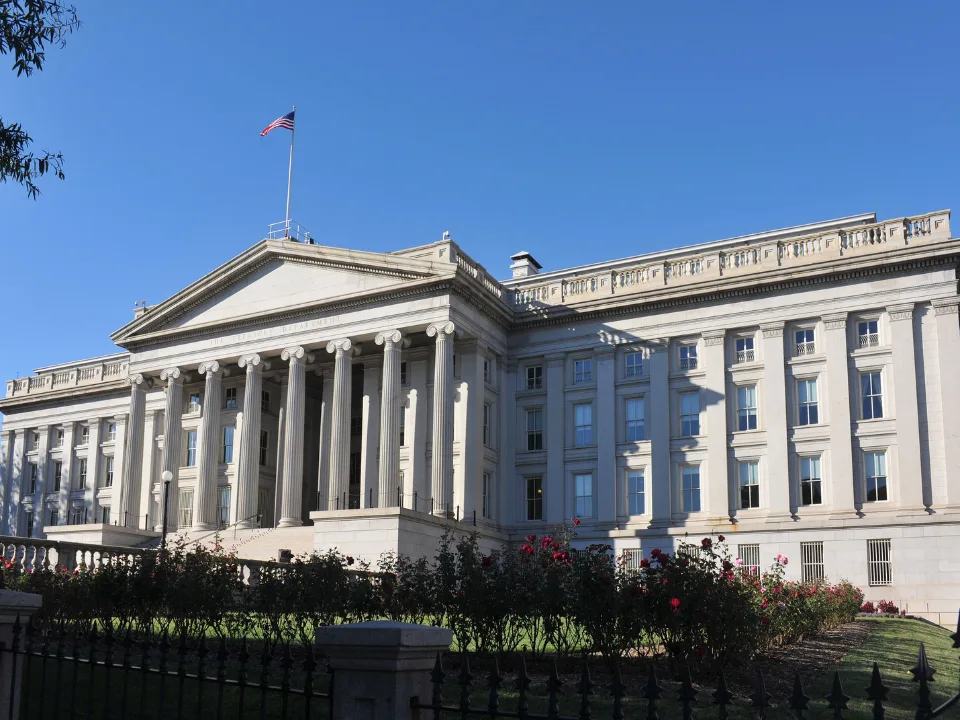
- The U.S. Treasury will repurchase $6 billion of 10- and 20-year notes on Thursday, three times the normal buyback size, in a bid to steady the long end of the bond market.
- The move follows an Aug. 19 pledge from Treasury Secretary Scott Bessent to at least double buybacks, as federal debt topped $40 trillion and tariff- and Iran-driven inflation fears pushed yields higher.
- Despite the larger buyback, the benchmark 10-year yield rose to 4.841%, a sign that CRE borrowing costs tied to the long end of the curve could stay elevated longer than expected.
The U.S. Treasury Department said Wednesday it will buy back $6 billion of longer-term government debt, tripling the size of its normal buyback operation, according to CNBC. The move targets 10- and 20-year notes and aims to keep the long end of the bond market functioning smoothly. The announcement did little to calm markets, though: Treasury yields rose further within hours of the news.
Get Smarter about what matters in CRE
Stay ahead of trends in commercial real estate with CRE Daily – the free newsletter delivering everything you need to start your day in just 5-minutes
How It Started
Wednesday’s announcement follows an Aug. 19 pledge from Treasury Secretary Scott Bessent that the department would at least double its normal buyback size for already-issued securities. The final number, three times the usual $2 billion operation, came in well above that floor, underscoring how much pressure has built on the long end of the Treasury curve in recent months.
Speculation had swirled ahead of the announcement that the multiple could run even higher than the initial guidance suggested, reflecting how closely bond traders have been watching for signs the government would step in more aggressively to support long-dated debt. That anticipation itself is a signal of how thin trading has become at the long end of the curve, where large moves can happen on comparatively light volume.
The Details
The actual repurchase will happen Thursday in a 20-minute operation concluding at 2 p.m. ET. Buybacks work by having the Treasury repurchase older, less-traded bonds directly from the market, which is meant to smooth out price swings and keep the long end of the curve functioning even when trading volume thins out.
It’s the latest step in an effort to support liquidity in the least-traded segment of what’s otherwise considered the deepest and most liquid bond market in the world. Even so, the benchmark 10-year Treasury yield climbed to 4.841% on the day, up nearly 4 basis points, a sign that a larger buyback alone hasn’t been enough to offset broader upward pressure on rates.
Zooming Out
The buyback comes as federal debt recently topped $40 trillion, and as elevated inflation expectations tied to tariffs and geopolitical tension surrounding Iran have coincided with crude oil topping $100 a barrel on Wednesday. Those forces have kept Treasury yields near their highest levels since before the 2008 financial crisis.
That dynamic tracks with what CRE Daily has reported as borrowing costs have stayed stubbornly elevated across commercial real estate financing throughout 2026, a stretch that has made the timing of any rate relief harder to predict for owners and lenders alike.
Why It Matters
For CRE owners and borrowers, the direction of long-term Treasury yields matters more than the mechanics of any single buyback operation. The 10-year yield remains the primary benchmark for commercial mortgage pricing, and its climb toward 4.841% signals that relief on financing costs may not arrive as quickly as some lenders had hoped. Sustained moves like this one tend to filter through to cap rates over time, since buyers underwrite deals against the cost of debt, not just current rents.
That’s consistent with what CRE Daily has reported as higher rates continue to weigh on refinancing and acquisition underwriting heading into next year.
What’s Next
Markets will be watching whether Thursday’s operation has any lasting effect on long-end yields, or whether the Treasury needs to lean on buybacks again at future auctions to keep the 10- and 20-year market functioning.
With inflation risks from tariffs and energy prices still unresolved, and government debt levels climbing, CRE borrowers should expect elevated long-term financing costs to persist into the coming quarters. That makes stress-testing deals against higher-for-longer debt costs, rather than betting on a quick pullback in yields, the safer underwriting approach for now.