







- National median rent rose 0.1% in August to $1,390, marking the seventh consecutive monthly increase.
- Year-over-year rents remain down 0.8%, but vacancy fell to 7.1% after peaking at 7.3% in February.
- Sun Belt markets still lead rent declines, while San Francisco and San Jose are posting the strongest large-metro growth.
US apartment rents are showing their clearest signs of stabilization after several years of supply-driven softness. Apartment List said the national median rent rose 0.1% in August to $1,390. Vacancy also moved lower, although leasing times and year-over-year rent declines show that conditions remain soft overall.
Get Smarter about what matters in CRE
Stay ahead of trends in commercial real estate with CRE Daily – the free newsletter delivering everything you need to start your day in just 5-minutes
US Apartment Rents Turn Up Slowly
August marked the seventh consecutive monthly increase in national rents. It was also the first positive August reading since 2022, according to Apartment List. Year-over-year rents remain down 0.8%, but that decline has narrowed for four straight months after reaching negative 1.6% in April.
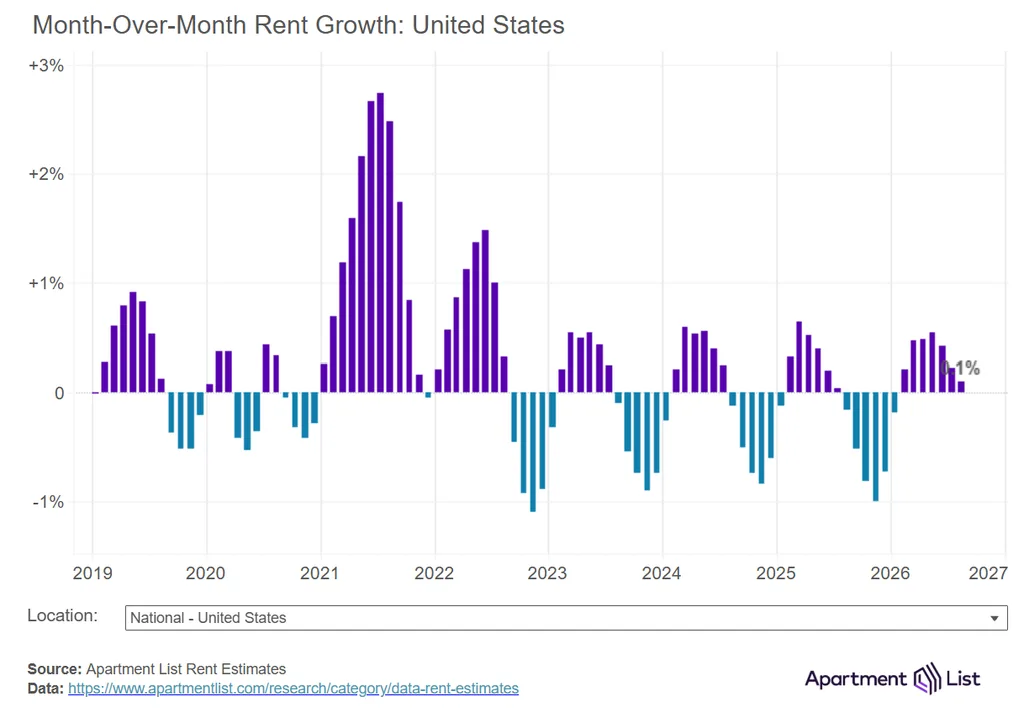
The national median is now $11 below August 2025 and 3.6%, or $52, below its mid-2022 peak. Even after the pullback, rents remain 21% above their level at the start of 2021. Apartment List expects typical seasonal declines to return within the next month or two.
Vacancy Finally Moves Lower
Apartment List’s national multifamily vacancy index fell to 7.1% in August from a 7.3% peak in February. That was the first decline since late 2021. The index covers stabilized properties that have completed initial lease-up. Vacancy remains above its long-run average, so the shift is still modest.
A historic construction wave pushed more than 600,000 new multifamily units into the market in 2024. Deliveries have slowed since then, helping recently completed units get absorbed. The current direction suggests occupancy may be reaching an inflection point alongside rent growth.
Leasing Still Takes Longer
Rental demand has not tightened enough to eliminate tenant choice. Apartments leased in August spent an average of 32 days on the market. That was two days longer than July and three days longer than August 2025. It was also the longest August reading since Apartment List began tracking the metric in 2019.
The number remains well above the 2021 market peak, when units leased about two weeks faster. The slower turnover shows why recent improvements in rent and vacancy should be viewed as stabilization rather than a full recovery.
Sun Belt Supply Pressure Persists
Rent weakness remains concentrated in markets that added apartments aggressively. Among 55 large metros, 28 still posted year-over-year declines in August. San Antonio had the sharpest large-metro drop at 5.1%. Austin rents were down 2.9%, compared with a 6.8% decline a year earlier.
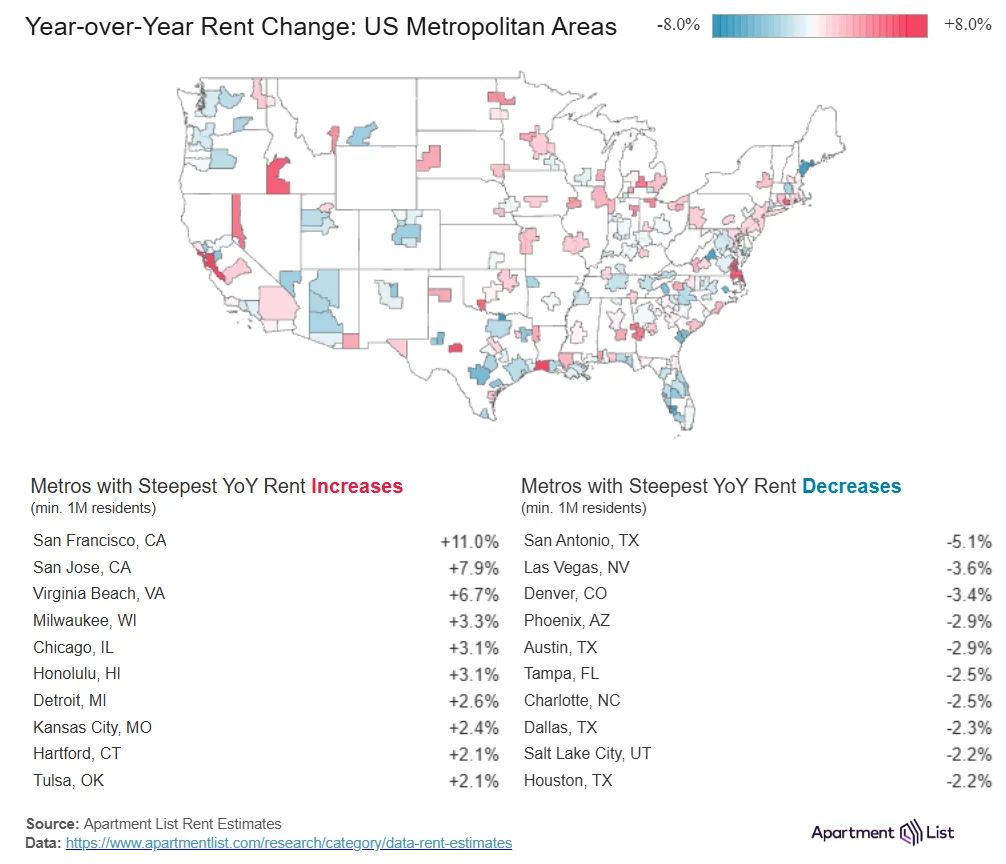
Sun Belt supply pressure remains visible in Denver, Phoenix, Tampa, and Charlotte. Apartment List said those markets appear to have bottomed. San Francisco and San Jose moved in the opposite direction, with large-metro rent growth of 11% and 7.9%, respectively.
Why It Matters
The data suggest the apartment market is beginning to absorb the construction boom without producing a rapid rebound in pricing. That matters for operators and lenders because occupancy is improving before year-over-year rents have turned positive.
The pace remains uneven and exposed to labor-market and inflation risks. Apartment List expects vacancy to continue tightening gradually. For investors, the next phase will depend on whether slower completions can keep improving occupancy as the market moves into its seasonal off-season.
What’s Next
September and the following months will test whether the stabilization trend can survive the normal seasonal slowdown. Apartment List expects rents to begin their off-season dip within a month or two. A smaller seasonal decline, continued vacancy improvement, or faster leasing would strengthen the case that the market has turned. For now, the national market is improving gradually rather than moving into a broad rent-growth cycle.