




- LoopNet ranked Midland, Lubbock, Indianapolis, Tulsa and Odessa as the five best industrial investing markets for 2026.
- The ranking weighs rent-to-price ratios, listing depth, industrial employment, population growth and building quality across 139 cities.
- Top markets show clear trade-offs between acquisition cost, income potential, asset quality and local demand conditions.
Texas dominates LoopNet’s 2026 industrial investing ranking, led by Midland and Lubbock. Five Texas cities landed in the top 10, with Odessa, Austin and Fort Worth also making the list. The study compared 139 US cities across five investment-focused measures.
Get Smarter about what matters in CRE
Stay ahead of trends in commercial real estate with CRE Daily – the free newsletter delivering everything you need to start your day in just 5-minutes
Industrial Investing Rankings Favor Texas
LoopNet ranked Midland first with a score of 86.8, followed by Lubbock at 78.9. Indianapolis, Tulsa and Odessa completed the top five. Midland paired a $17.50 PSF annual median asking rent with a $167.90 PSF median sale price. Its rent-to-price ratio was 10.4%. Lubbock posted an 11.1% ratio with a $94.96 PSF median asking price. Both markets also ranked well across inventory and employment measures.
The Details
LoopNet analyzed more than 7,400 industrial properties for sale and over 15,000 lease listings. The study covered 139 cities using July 2026 property and pricing data. Each market needed at least 20 active for-sale listings, including 10 with disclosed prices. The methodology also used Bureau of Labor Statistics employment figures and Census Bureau population data. LoopNet scored markets by rank on each metric rather than raw values.
Value Leaders Differ From Rent Leaders
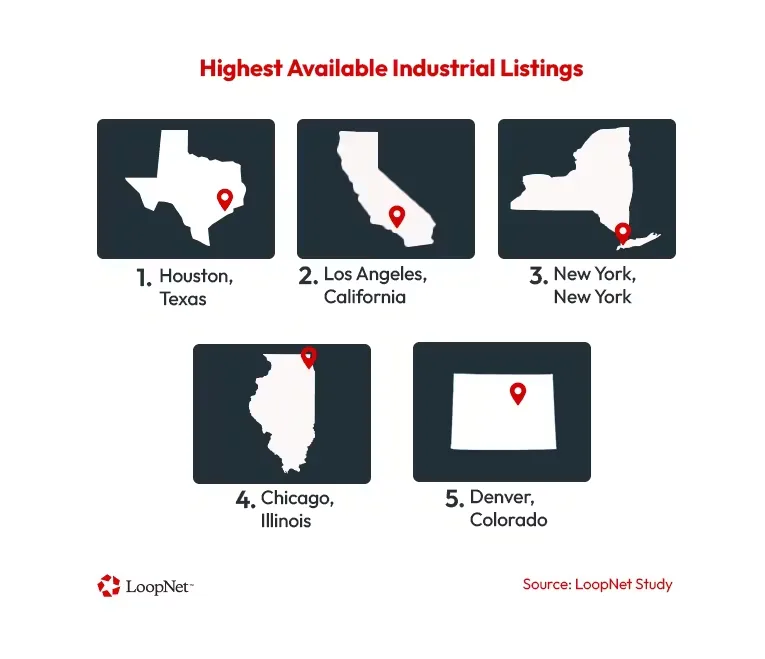
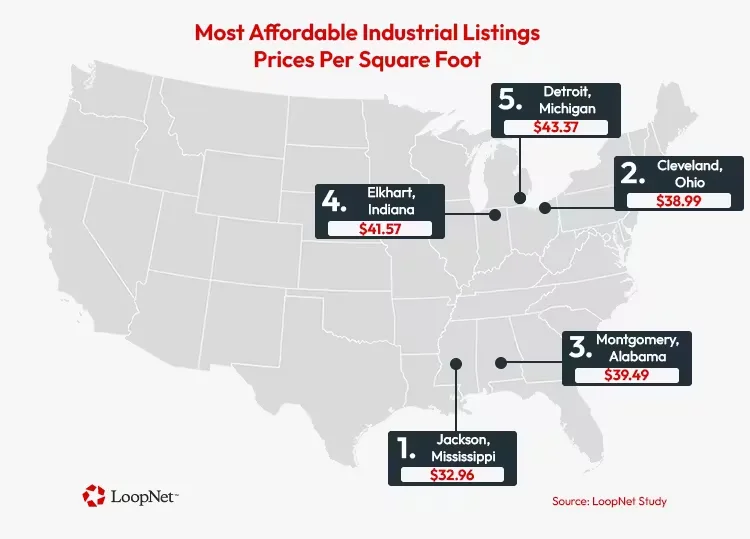
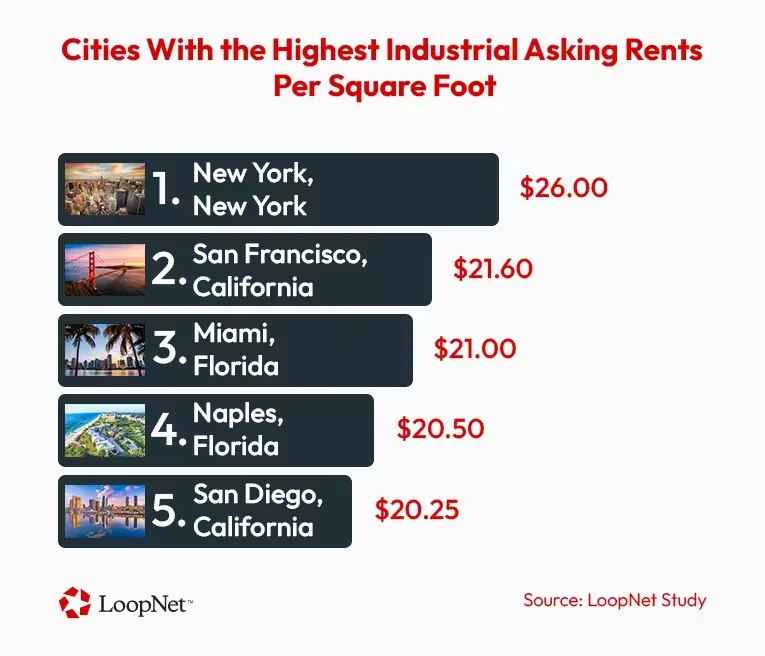
The strongest rent-to-price ratios were not concentrated in the overall top five. LoopNet put Baton Rouge first at 14.9%, followed by Cleveland at 14.1% and Cincinnati at 13.4%. Odessa ranked fourth on that measure at 12.6%, while Lansing reached 12.5%. New York City had the highest median industrial asking rent at $26.00 PSF. San Francisco followed at $21.60 PSF, with Miami at $21.00 PSF.
Demand and Quality Shape the Scores
Rent-to-price ratio carried the largest weight at 30% of each city’s score. Listing volume and industrial employment trends each counted for 20%. Five-year metro population growth contributed 15%, while a lower Class C inventory share counted for another 15%. LoopNet used fourth-quarter 2025 industrial employment data and Census Vintage 2025 population estimates. The ranking therefore blends pricing, liquidity, demand and building quality.
Why It Matters
The ranking shows how markets reach attractive industrial profiles through different combinations of fundamentals. Midland scores well across pricing, inventory and employment. Texas industrial strength also extends to DFW, where demand and development have supported continued market activity. Austin offers stronger population and manufacturing growth, yet its 5.9% rent-to-price ratio was the weakest among the top 10. Fort Worth pairs deep inventory with the group’s highest share of Class A listings.
What’s Next
LoopNet noted that industrial demand is projected to outpace supply by late 2027. The source also expects rents to rise moderately over the coming year. Its ranking is designed as a research starting point rather than an expected-return forecast. Investors still need property-level due diligence because asking rents and sale prices come from separate listing sets. The ratio also excludes vacancy, expenses, taxes and concessions.