






- Multifamily starts reached 117,000 units in the second quarter, up 5% from a year earlier, per NAHB analysis.
- Built-for-rent units made up 109,000 of those starts, keeping the rental share near record highs.
- Growth clustered in smaller, lower-density markets while urban cores kept struggling.
Multifamily Starts Climb Away From Big Cities
Globe St reports that multifamily construction regained ground in the second quarter, but the recovery is forming outside the urban core. Starts rose 5% from a year earlier, according to NAHB analysis. Earlier NAHB work shows the gains landed mainly in smaller metros and lower-density markets. Those areas tend to offer more favorable development conditions.
Get Smarter about what matters in CRE
Stay ahead of trends in commercial real estate with CRE Daily – the free newsletter delivering everything you need to start your day in just 5-minutes
The Details
Builders started 117,000 multifamily units in the second quarter, up 5% from the same period in 2025. Of that total, 109,000 units were built for rent. The first quarter saw 107,000 starts, including 103,000 built-for-rent units. That first-quarter figure ran 21% higher than a year earlier, per a separate NAHB analysis.
Growth Moves Beyond Urban Cores
The annual increase does not signal a broad revival. Urban core markets have kept facing weakness, earlier NAHB analyses show. Lower-density markets are capturing more new apartment construction.
Instead, growth concentrated in smaller metropolitan areas and lower-density markets. For investors, that points to different supply and development economics.
Rentals Dominate the Pipeline
Rental construction made up 93% of all multifamily starts in the second quarter. The category also includes for-purchase units such as condominiums. The rental share stays high by historical standards, after hitting 96% in the first quarter.
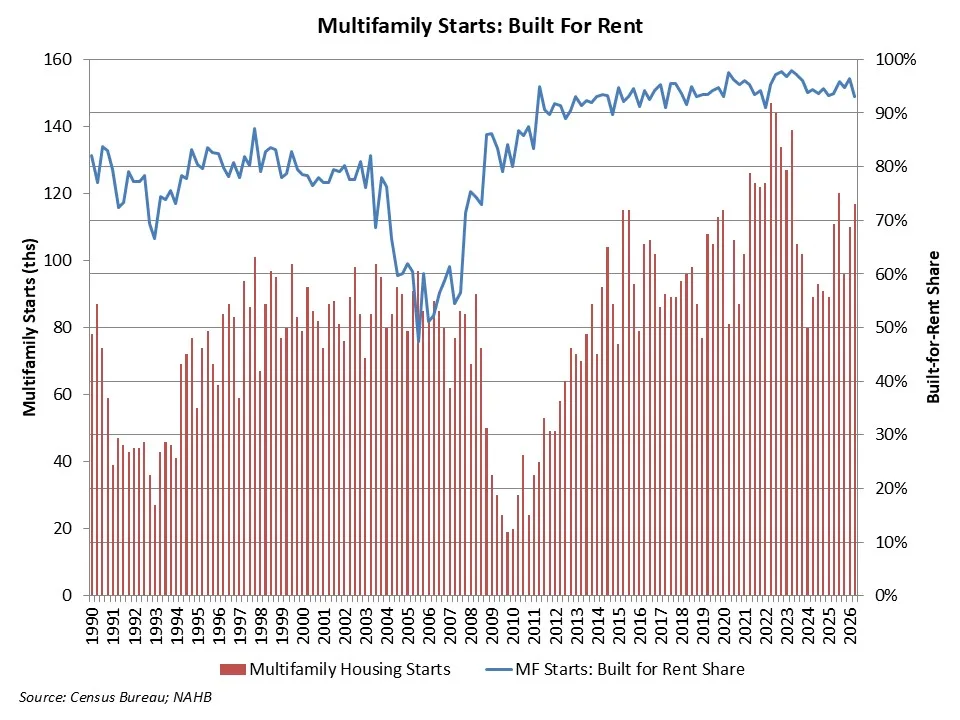
Rental units averaged 80% of starts between 1980 and 2002. The record low was 47% in the third quarter of 2005, at the peak of the condo boom. Condo starts did rise to 8,000 units, up from 7,000 a year earlier.
Unit Sizes Edge Higher
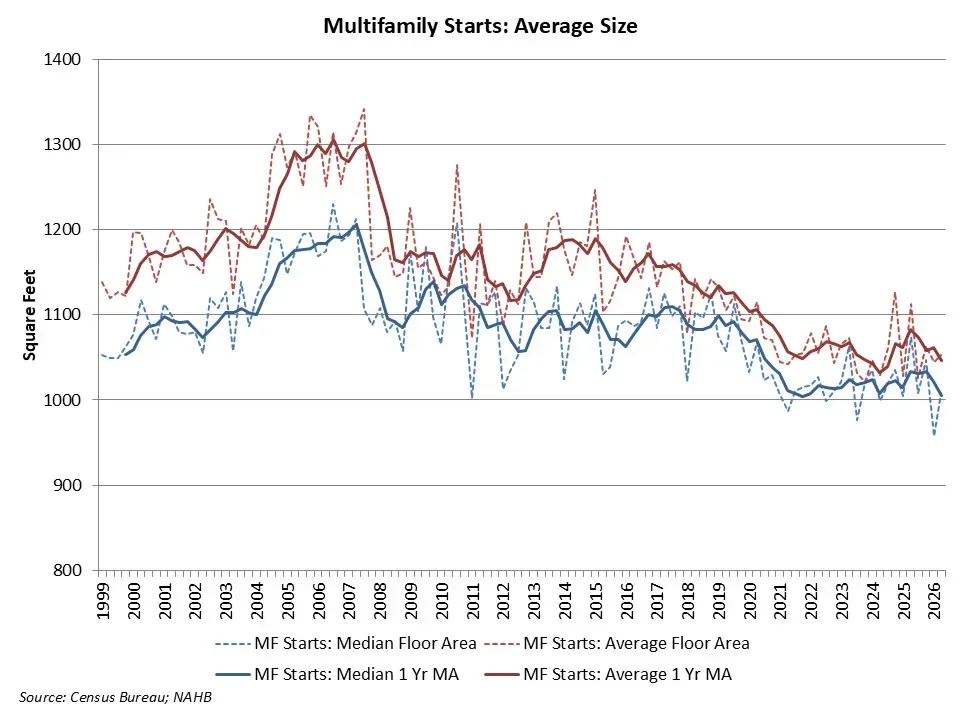
Multifamily units grew slightly larger in the second quarter. The average footprint reached 1,053 SF, up from 1,047 SF in the first quarter. The median rose to 1,008 SF from 960 SF. Both figures stay below pre-recession norms. Average units then ranged from about 1,120 SF in 2000 to more than 1,300 SF in 2006.
Why It Matters
The shift changes where new rental supply will land. Built-for-rent units made up 109,000 of the quarter’s 117,000 starts, per NAHB, so the pipeline leans heavily toward rentals. A move toward smaller, lower-density markets points to different supply dynamics than the crowded urban cores. Investors may need to look beyond the biggest metros to track where supply is heading.