



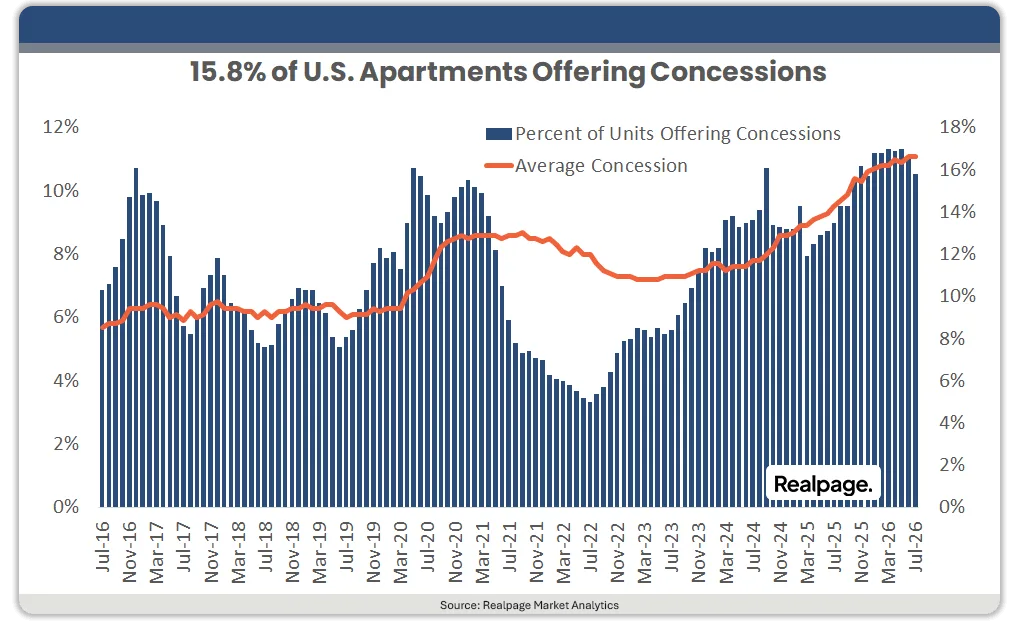
- National apartment concession use dropped to 15.8% in July 2026, the second consecutive monthly decline, per RealPage Market Analytics.
- The average US rent concession remained flat at 11.1%, equal to nearly six weeks free on a year-long lease, with significant variation by asset class and unit type.
- Despite the recent pullback, overall concession usage is still elevated versus last year, signaling persistent lease-up challenges for operators in many markets.
Seasonal Pullback Follows Leasing Patterns
Apartment concession use fell across the US for the second straight month in July, according to RealPage Market Analytics. The decline follows normal seasonal trends, as stronger summer demand allows landlords to reduce incentives.
However, discounts remain elevated after a sharp increase earlier this year. About 15.8% of stabilized units offered concessions in July, down 0.7 percentage points from June. The figure remains 2.3 points above July 2025 and marks the highest July level since 2011.
Get Smarter about what matters in CRE
Stay ahead of trends in commercial real estate with CRE Daily – the free newsletter delivering everything you need to start your day in just 5-minutes
The Details
RealPage reported an average concession discount of 11.1% in July. The rate stayed flat from June but increased 1.6 points year over year. That equals nearly six weeks of free rent on a typical 12-month lease.
Concessions continue to vary by property class. Class C assets saw usage rise 0.7 points to 21.5%, up 5.6 points from last year. Meanwhile, Class B usage fell 1.3 points to 13.8%, and Class A dropped 1.1 points to 12.5%. Class A was the only segment below July 2025 levels.
Efficiency units faced the most pressure, with 18.4% offering concessions and average discounts reaching 12.3%.
Operators Struggle With Leasing Pressure
Persistent discounts show that many operators still face leasing challenges. Even during peak leasing months, concession levels remain above pre-construction cycle norms.
Class C properties continue to feel the most pressure as renters face greater affordability concerns. Similar concession trends have shaped multifamily leasing strategies throughout 2026, as operators balance higher supply levels with the need to maintain occupancy. Larger units showed modest improvement in July, reflecting stronger demand for family and roommate layouts.
The split between asset classes and unit types highlights a fragmented recovery. Supply levels and demand conditions continue to vary across markets.
Why It Matters
Concession trends provide an important signal for apartment market conditions. July’s 15.8% usage rate shows operators still need incentives to attract residents.
Average discounts remain significant at 11.1%, despite two months of declines. This suggests rent growth may face continued pressure in many markets.
The divide between property classes is becoming clearer. Class C buildings are increasing discounts, while Class A properties are starting to reduce incentives.
This shift matters for investors and asset managers. Lower-quality properties may require longer discount periods, especially in supply-heavy markets. Higher-end assets appear better positioned as demand improves.
What’s Next
Seasonal trends could push concession use lower in the coming months. Higher-quality properties and larger units may see the fastest improvement.
However, older and more affordable properties may keep offering discounts. Affordability challenges and new supply will continue affecting absorption.
RealPage expects differences between asset classes and unit types to remain through 2026. Operators will need more targeted leasing strategies to protect occupancy and revenue.