



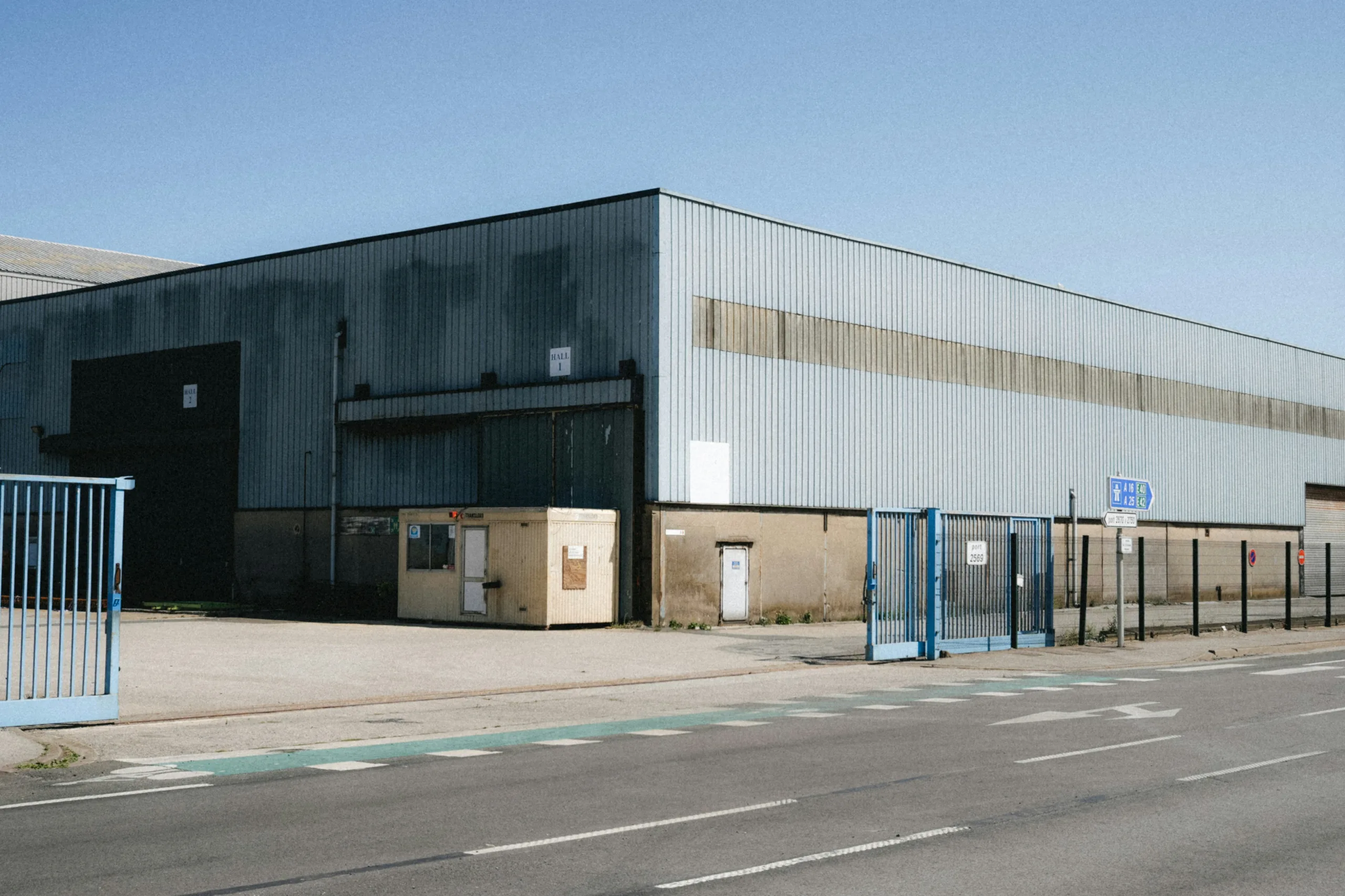
- National industrial vacancy held steady at 9.1% in June 2026, per Yardi Matrix data.
- In-place rents averaged $9.20 PSF, with new leases running a narrower $0.82 premium at $10.02 PSF.
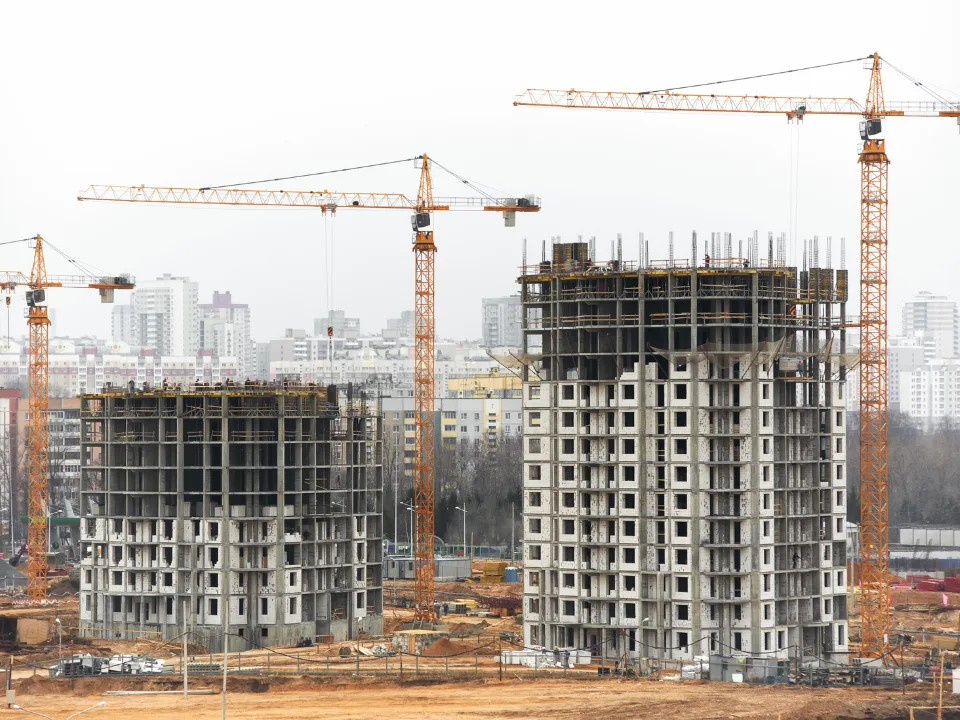
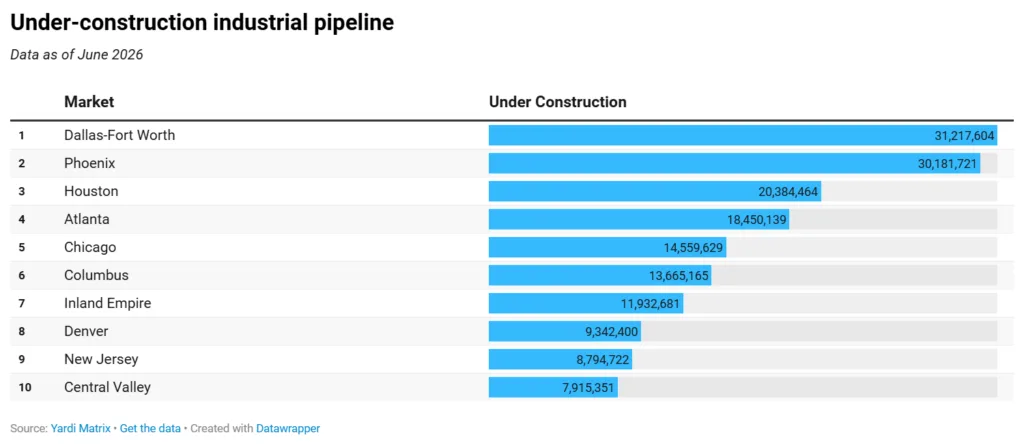
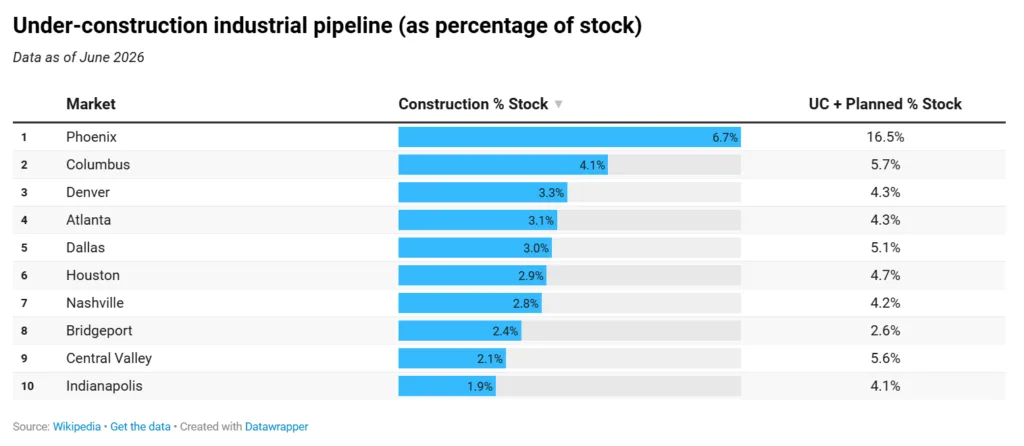
- The construction pipeline totaled 399.5M SF, with Dallas and Phoenix leading for volume and pipeline share, respectively.
Vacancy Holds as Rent Growth Decelerates
The US industrial market has reached a turning point. According to Yardi Matrix’s July 2026 Industrial National Report, vacancy measured 9.1% in June—up just 10 basis points from twelve months prior, indicating stabilization. Annual rent growth remained positive but slipped in breadth, as only three major metros saw increases above 7%. Markets such as Inland Empire (8.4%), Atlanta (8.1%), and Miami (7.3%) led for gains, while most cities fell below that mark. The narrowing of elevated rent growth signals a more balanced supply-demand equation as new inventory slows and tenant demand steadies.
Get Smarter about what matters in CRE
Stay ahead of trends in commercial real estate with CRE Daily – the free newsletter delivering everything you need to start your day in just 5-minutes
The Details
A closer look at the numbers tells a story of moderation rather than a downturn. National in-place industrial rents hit $9.20 PSF in June, up 5.3% year-over-year. New leases signed over the previous year averaged $10.02 PSF, translating to a premium of 82 cents per SF. This premium is down significantly from the $1.58 delta seen a year earlier. Meanwhile, the pipeline remains active: 399.5M SF of industrial product is under construction across the country, representing 1.9% of total stock. Among primary metros, Dallas had the largest square footage under development at 31.2M SF, with Phoenix close behind at 30.2M SF. Phoenix also leads for pipeline size relative to its existing inventory at 6.7%.
Sales, Spreads, and Market-by-Market Trends
The national market’s normalization is reflected in regional dynamics and deal flow. Industrial sales hit $40.7B in the first half of 2026, averaging $141 PSF. Dallas posted the largest volume at $2.6B, trailed by Chicago ($2.2B) and Los Angeles ($1.9B). The pricing spread across metros remains vast, with Bay Area assets selling for $318 PSF—boosted by six Fremont manufacturing property trades at $447 on average—while the Twin Cities and Kansas City transacted at $81 PSF. In the leasing market, Miami’s new-lease premium hit $3.26, underscoring spots of tightening amid the broader deceleration.
Why It Matters
The 2026 numbers show the US industrial market transitioning out of its breakneck growth era into more sustainable territory. For context, per Yardi Matrix, the 5.3% annual rent rise is down from post-pandemic highs that often exceeded 10% in high-demand metros. Similar supply-and-demand shifts are appearing across commercial real estate, as other property sectors adjust to slower rent growth and a narrowing gap between available space and tenant demand. The narrowing gap between in-place and new-lease rents suggests landlords’ leverage has peaked, while tenant pushback is mounting as operating costs rise. The 9.1% vacancy—flat year-over-year—confirms supply is finally catching up, thanks in part to a still-robust 399.5M SF in the construction pipeline, despite a declining starts trend compared to the 2021–2024 cycle.
Broadly, this moderation has significant implications for industrial developers facing higher capital costs in 2026 and for institutional investors recalibrating return expectations. Major Sun Belt metros are showing resilience, but fewer are outpacing national averages; only three markets posted >7% annual growth, compared to eight a year ago. This indicates a rebalancing in market power, with oversupply risk receding but still lurking in high-construction metros like Phoenix and Dallas. In capital markets, bifurcated pricing persists as premium manufacturing properties command record PSFs in innovation hubs, while bulk distribution trade at a discount in more commoditized Midwestern markets.
What’s Next
Developers and owners should anticipate continued normalization through the second half of 2026, as new deliveries shrink the construction pipeline and vacancy holds near current levels. Rent growth is set to further moderate; the narrowing new-lease premium points toward flattening market terms. In investment sales, look for capital to target infill coastal assets and specialized logistics properties as demand patterns shift post-pandemic. Per Yardi Matrix, Dallas and Phoenix will remain construction leaders, but pipelines in other high-growth metros—such as Atlanta—are gaining momentum, suggesting a regionally uneven recovery will define the next cycle.