




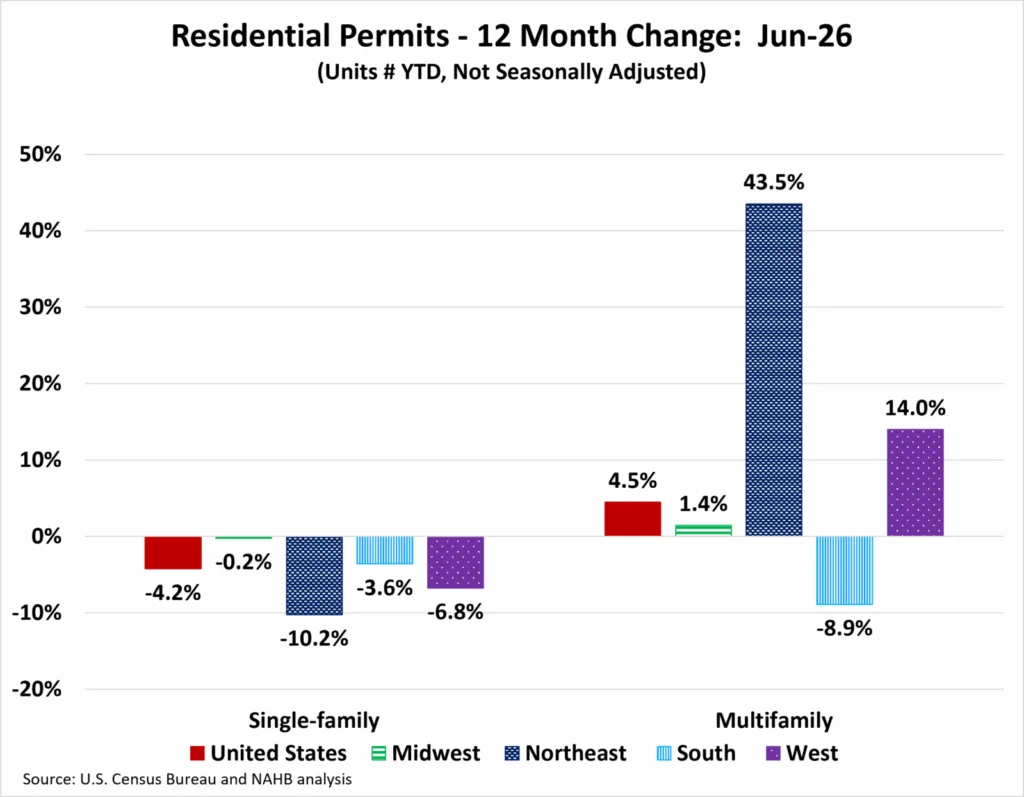
- Nationwide single-family permits slipped 4.2% to 465,301 in H1 2026, while multifamily permits grew 4.5% to 255,751.
- Regional declines in single-family permitting were largest in the Northeast, while multifamily gains were concentrated in the Northeast and West.
- The majority of multifamily growth is now coming from smaller markets, despite decreased activity in top metro areas.
Gap Widens Between Single-Family and Multifamily Permits
According to NAHB, single-family permitting slowed further through June 2026. The gap between detached and attached housing construction continues to grow. Danushka Nanayakkara-Skillington’s data shows the US issued 465,301 single-family permits in H1 2026. That figure fell 4.2% from the same period in 2025.
Meanwhile, developers increased multifamily activity. The US issued 255,751 multifamily permits, up 4.5% year-over-year. The split highlights changing supply strategies as builders respond to rates and renter demand.
This trend extends beyond national figures. Every region saw single-family declines, while multifamily growth centered on the Northeast and West. The data shows developers are shifting their housing focus.
Get Smarter about what matters in CRE
Stay ahead of trends in commercial real estate with CRE Daily – the free newsletter delivering everything you need to start your day in just 5-minutes
The Details
Single-family permit declines affected every region except the Midwest, which remained flat. The Northeast recorded the largest drop at 10.2%. The West followed with a 6.8% decline, while the South fell 3.6%.
Multifamily activity moved in the opposite direction. The Northeast jumped 43.5%, the West rose 14%, and the Midwest gained 1.4%. The South declined 8.9% as major cities reduced new activity.
Texas led single-family volume with 75,274 permits, despite a 3.6% decline. DC posted the largest percentage gain at 65.2%, while Nevada saw the steepest drop at 26%.
California helped drive multifamily growth with a 26.1% increase. DC more than doubled its multifamily permits, rising 137.5%. Texas and Florida moved lower, dropping 23.7% and 41.3%, respectively. The top 10 states produced 62.8% of single-family permits and 61% of multifamily permits.
Regional and Market-Level Shifts Underway
Multifamily growth is becoming more concentrated in the Northeast and West. Smaller states and DC are capturing larger gains. Meanwhile, Texas and Florida have pulled back from previous peaks.
Recent permitting data also shows mixed growth across markets, with some regions gaining momentum while others face slower activity. The shift reflects affordability pressures and changing migration patterns. Developers now favor markets with stronger demand and better pricing conditions. Secondary cities are gaining attention as major metros cool.
Single-family construction shows a similar divide. Only 13 states and DC posted annual growth. Most markets recorded declines, highlighting the impact of local economies and regulations.
Why It Matters
The permit split shows how rates, supply shortages, and housing preferences are reshaping construction. The National Association of Home Builders reports that high mortgage costs continue to pressure single-family demand.
Builders are responding by reducing new single-family starts. This shift affects suppliers, lenders, and future construction pipelines. Multifamily remains stronger, especially where rental demand and zoning support new projects.
The Northeast’s 43.5% multifamily growth signals renewed investment in urban housing. However, some major markets face slower demand and potential oversupply risks. Developers are becoming more selective across regions.
What’s Next
Higher borrowing costs will likely limit a quick single-family recovery. Developers may continue shifting toward multifamily projects through the rest of 2026.
Markets with tight vacancies and strong household formation should attract more activity. Local regulations and migration trends will shape future starts.
Since permits lead construction by several months, H1 2026 data points to new deliveries through early 2027.