




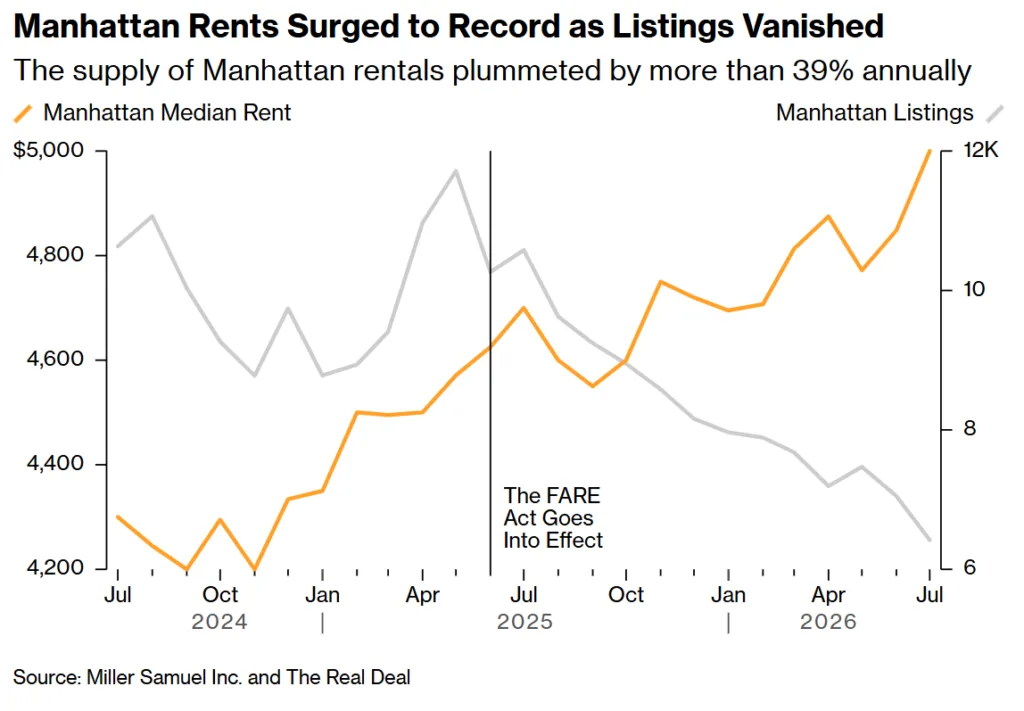
- Manhattan’s median rent hit $5,000 in July, a new all-time high, per Miller Samuel and The Real Deal.
- Rental inventory in Manhattan dropped over 39% year-over-year, intensifying competition among renters.
- Market scarcity and off-market listings are fueling demand, especially in the luxury segment, changing the city’s rental landscape.
Listings Dry Up While Rents Surge
Bloomberg reports that Median Manhattan apartment rents reached a record $5,000 in July, according to Miller Samuel Inc. and The Real Deal data. Rents climbed 6.4% year-over-year, far exceeding the 3.2% increase in broader US shelter costs. Meanwhile, available inventory collapsed, with listings falling more than 39% from last July. That marked the sharpest annual decline in a decade.
Brooklyn followed similar trends, with median rents reaching $4,500 and inventory falling 27%. In contrast, Los Angeles, Miami, and other cities reported flat or falling rents this summer, according to Zumper. Manhattan’s rental crunch stands apart in both scale and impact.
The supply-demand mismatch extends beyond typical summer volatility and signals deeper changes in how landlords market apartments. As market visibility shrinks, competition increasingly influences pricing alongside traditional rental demand.
Get Smarter about what matters in CRE
Stay ahead of trends in commercial real estate with CRE Daily – the free newsletter delivering everything you need to start your day in just 5-minutes
Scarcity Behind the Surge
The current rental squeeze reflects more than strong summer demand. Jonathan Miller of StreetMatrix says more Manhattan inventory has moved away from traditional listing portals. Landlords increasingly keep rentals off platforms such as StreetEasy and RentHop, placing units within private networks or behind paywalls.
Leasing activity reinforces this trend. Despite record rents, Manhattan closed nearly 19% fewer leases than last year. That decline suggests scarcity, rather than rental demand alone, is pushing prices higher.
Landlords also increasingly bypass online listings entirely. Buildings across the Upper West Side and West Village advertise off-market units at their entrances. Meanwhile, some brokers charge renters up to $4,000 for access to hidden listings. These practices reduce public inventory and intensify competition for remaining visible apartments.
Luxury Market Squeeze Intensifies
The visibility crunch has become even stronger at the top of Manhattan’s rental market. Luxury median rents jumped 31% year-over-year to $13,750 in July, according to Miller Samuel and The Real Deal. Meanwhile, luxury inventory fell about 50% from July 2025, exceeding the already steep market-wide decline.
Off-market leasing contributes to the shortage, while uncertainty around the proposed pied-à-terre tax adds another pressure point. Similar policies are spreading elsewhere as cities increasingly tax second homes and vacant properties to address housing shortages. That uncertainty has pushed some potential buyers toward rentals, increasing competition for upscale apartments.
Only San Francisco showed comparable luxury pressure among major US markets. One-bedroom rents there climbed 23%, while listings fell roughly 30%, according to Zumper. Manhattan’s luxury shortage gives landlords greater pricing power, particularly in highly sought-after amenity-rich buildings.
Why It Matters
Manhattan’s rental environment is reshaping the city’s multifamily market. More than one-quarter of apartment leases now close after bidding wars, according to Miller Samuel’s July report. Limited supply and off-market practices have intensified competition for available apartments.
Renters have responded with increasingly aggressive search strategies. Some pay substantial broker fees to access hidden listings. Others constantly monitor platforms or join crowded open houses. These behaviors highlight the consequences of increasingly restricted market visibility.
Landlords can capitalize on that urgency by limiting listing access and increasing rents. Luxury rents alone rose more than $1,000 month-over-month, adding pressure to the broader affordability crisis. Other major cities face softer conditions, making Manhattan a notable outlier. Regulatory responses could follow, but renters currently face fewer options and higher costs.
What’s Next
The coming months will test whether Manhattan can sustain record rental prices. Inventory traditionally rises after the summer rush, but the market has shown little evidence of a rebound. Landlords continue keeping units off-market, while uncertainty around measures like the pied-à-terre tax remains.
Market watchers will track whether persistent scarcity drives rents to new records. However, worsening affordability could eventually limit further increases. Either way, transparency and access now matter almost as much as price in Manhattan’s evolving rental market.