





- New York renters are increasingly paying brokers for access to off-market apartments, even as the FARE Act was designed to reduce tenant-paid broker fees.
- Public rental inventory fell 31% year over year in June 2026, while the share of renters paying broker fees dropped from 31% to 15%, according to Miller Samuel, The Real Deal and Openigloo.
- The widening gap between public and private listings could make apartment searches more competitive while creating a new premium market for broker-controlled inventory.
New York’s rental market is developing an unintended side effect from a law meant to make apartment hunting cheaper and more transparent, according to Bloomberg. A year after the Fairness in Apartment Rental Expenses Act, or FARE Act, took effect, some renters are paying thousands of dollars to brokers for access to apartments that never appear on major listing platforms.
The tradeoff is becoming especially visible in Brooklyn and Manhattan, where shrinking public inventory has made apartments harder to find and faster to lease.
Get Smarter About What Matters in New York
Subscribe to our free newsletter covering the biggest commercial real estate stories across the five boroughs — delivered in just 5 minutes.
A new paywall in the NYC rental market:
Alexandra Dye, a 29-year-old advertising professional, paid a Brooklyn broker more than $4,000 to find her apartment. She had spent months searching public listings. The two-bedroom unit ultimately rented for about 60% below market, helping justify the fee. But Dye’s experience also highlights a new wrinkle in New York’s post-FARE rental market.
The FARE Act took effect in June 2025. It requires the party who hires a broker to pay the fee. As a result, fewer renters are now paying commissions. Openigloo found that the share fell from 31% before the law to 15% after its implementation.
The details:
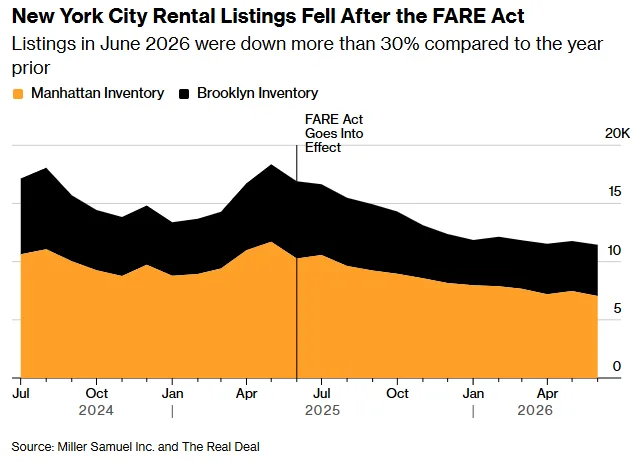
Some apartments are now staying out of public view. Miller Samuel and The Real Deal found that New York apartment inventory fell below year-earlier levels every month after the FARE Act took effect. In June 2026, inventory dropped 31% year over year. That stands out because June inventory typically rises 5.9% from the prior year.
Landlords have an incentive to keep units off-market. They can fill apartments through referrals and existing relationships without paying a broker or advertising online. Brooklyn owner Chris Athineos, who owns about 100 units, said he has relied heavily on tenant referrals this summer.
Brokers see an opportunity as well. They can build a pipeline of apartments before those units reach public listing sites. Peyton Yen of Charney Brokerage said about half of the 15 leases he expected to close in summer 2026 would never appear on a major listing portal. He charges one month’s rent for the service.
Off-market listings gain an edge:
The private rental market is becoming more valuable as public inventory shrinks. Openigloo found that publicly listed rent-regulated apartments commanded a 3% premium over off-market units before the FARE Act. After the law took effect, that premium grew to 18%.
Public listings are also leasing faster. RentReboot data showed average time on market falling from 13 days to eight. In Manhattan, more than one-quarter of apartments leased in June 2026 followed a bidding war, according to Miller Samuel and The Real Deal.
That gives renters with broker relationships an advantage. It also creates an unusual outcome from the FARE Act. Traditional broker fees are less common, but renters willing to pay for access can still gain an edge.
Why it matters:
The FARE Act aimed to shift broker costs away from renters who never chose to hire an agent. Instead, the market appears to be splitting into two channels: a highly competitive public market and a fee-based private market.
Not every off-market listing violates the law. Renters can still voluntarily hire brokers to find apartments that are not publicly advertised. However, brokers cannot use a specific advertised apartment, or an identifiable group of apartments, to pressure renters into signing a paid brokerage agreement.
New York’s Department of Consumer and Worker Protection had issued more than 79 FARE Act violation summonses as of July 2026. The city had also imposed $36,125 in penalties and returned $15,475 to renters.
What’s next:
The big question is whether off-market inventory becomes a lasting feature of New York’s rental market. It could also prove temporary as landlords and brokers adjust to the FARE Act.
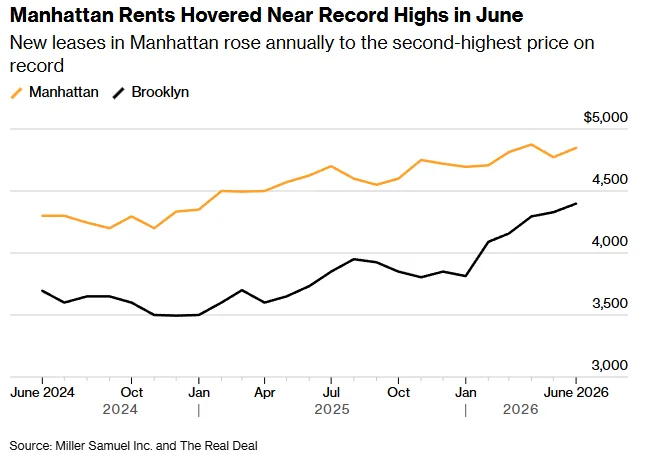
If public inventory stays tight and rents remain elevated, brokers could increasingly market early access as a premium service. Renters may have to rely more on networks and private listings, while landlords and brokers rethink how apartments are marketed and leased. Regulators, meanwhile, will continue watching for the line between legitimate off-market brokerage and illegal bait-and-switch tactics.