



CRE’s $65B Maturity Wall Is Finally Hitting
$65B in CMBS debt is coming due by year-end, forcing borrowers to refinance, inject fresh equity or finally hand back the keys.

Nina Dale
August 11, 2026
In partnership with

Good morning. Pain for yesterday’s owners could become opportunity for tomorrow’s buyers. The $65B CMBS maturity wall is forcing a long-delayed repricing that could finally shake loose distressed assets.
CRE Trivia 🧠
At 178,926 SF, which estate completed in 1895 remains the largest privately owned home in the United States?
IN PARTNERSHIP WITH ARBOR
An Innovative Financing Solution from Arbor and Freddie Mac

Arbor Realty Trust’s Proprietary Preferred Equity behind Freddie Mac Conventional Loans stands out because of how capital is deployed. Borrowers enjoy a streamlined experience that is frictionless and flexible.
✅ Capital drawn only when needed, not fully funded at close
✅ Boost leverage without the necessary cost or complexity
✅ Help preserve cash flow by avoiding interest on unused capital
Discover how this popular program and its phased contributions could add value to your next project.
*This is a paid advertisement. Please see the full disclosure at the bottom of the newsletter.
Market Snapshot
|
|
||||
|
|
*Data as of 08/10/2026 market close.
Maturity Crunch
CRE’s $65B Maturity Wall Is Finally Hitting
After years of extensions and rate-cut hopes, higher borrowing costs are forcing CMBS borrowers to refinance, recapitalize or hand back the keys.
The maturity crunch: Roughly $65B in CMBS loans mature by year-end, including $37B of hard maturities with no extensions left. Trepp estimates more than half of those properties will need fresh borrower equity to refinance at today’s rates. Interest-only loans face some of the largest funding gaps.
Distress ticks higher: The CMBS distress rate jumped 51 basis points in July to 7.86%, while seriously delinquent loans climbed to 7.6%. Office remains ground zero, with an 11.91% distress rate, more than four percentage points above the overall market. All five nonperforming CMBS loans maturing in August are offices, carrying a combined $1.8B in debt.

No more kicking the can: Borrowers spent years extending maturities while waiting for interest rates to fall, but volatile Treasury yields are making that strategy increasingly difficult. Higher yields reduce how much debt a property can support, even when its operations haven't changed. With CRE prices up 5.2% year over year in July, lenders may also have more incentive to resolve troubled loans rather than grant another extension.
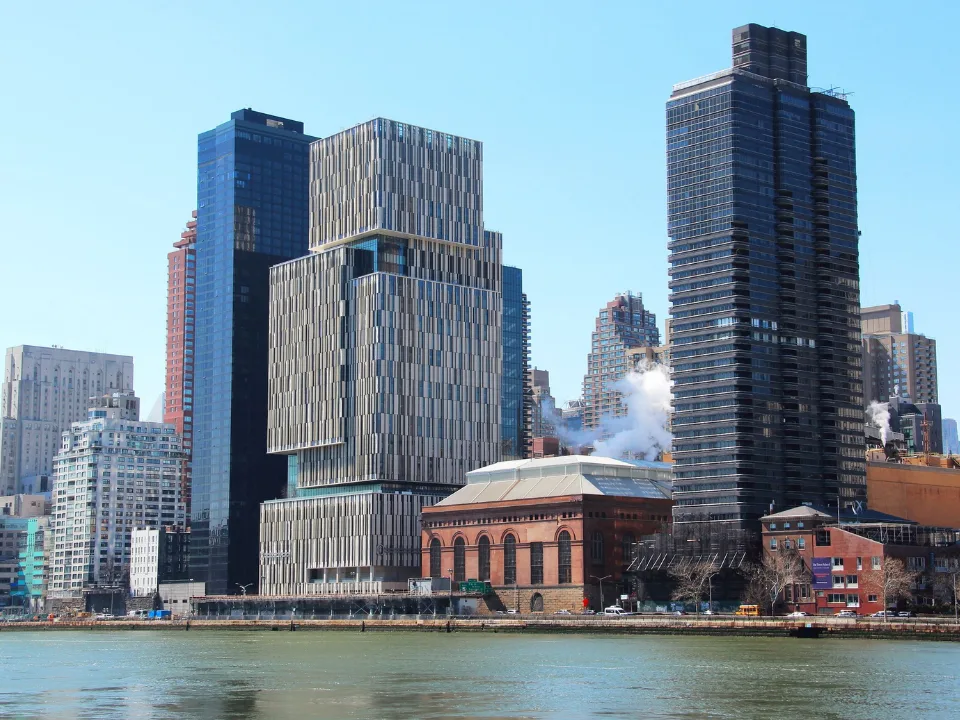
Cash flow is king: Capital remains available, but lenders are sizing loans around current property income instead of betting on future cap-rate compression. Trophy assets are still landing massive refinancings, including $1.8B for Manhattan’s 9 W. 57th St. and $1.7B for One Madison Avenue. Older properties face a tougher equation: Rithm Capital recently injected $73M of fresh equity to refinance a $500M maturity at 31 W. 52nd St.
The great repricing: Higher rates aren't the only problem — office and multifamily fundamentals have also shifted since many loans were originated. Owners unwilling to recognize lower valuations increasingly must contribute more equity or surrender the property. That reset is already producing losses, including a San Francisco office CMBS investment where investors recovered just $101M of their original $240M.
➥ THE TAKEAWAY
The waiting game is ending: The maturity wall could finally accelerate CRE’s long-delayed repricing. Strong assets can still find capital, but overleveraged properties — especially offices — face a painful reset, creating potential buying opportunities for investors with dry powder.
INVESTOR SENTIMENT
Where Do You Stand?

Capital markets are shifting and conviction is split across asset types. Tell us where you stand. It takes less than 5 minutes and your responses stay anonymous.
*This is a paid advertisement. Please see the full disclosure at the bottom of the newsletter.
✍️ Editor’s Picks
-
Sponsor alignment: Ziff Real Estate Partners has acquired over $200M of necessity-based retail in the past 18 months. 50%+ sponsor equity ensures alignment with its LP investors. (sponsored)
-
Lending rebound: Commercial and multifamily mortgage originations rose 16% YoY in Q2 2026, fueled by stronger retail, office, hotel, industrial and multifamily lending and a sharp jump in CMBS activity.
-
Pay squeeze: Real hourly compensation fell 3.1% in Q2 despite a 1.4% productivity gain, raising concerns for consumer demand and CRE tenant performance.
-
Put idle cash to work: Robora helps CRE firms automate cash management, maximize FDIC-insured yields, and manage every bank account from one platform. (sponsored)
-
Tariff stalemate: New U.S. tariffs provide greater policy stability but little relief for CRE, as elevated inflation, interest rates and construction costs continue to weigh on investment and development.
🏘️ MULTIFAMILY
-
Rent race: San Francisco rents have surged 18% to $3,728 as AI-fueled demand, high salaries, and limited housing supply intensify competition for apartments.
-
Bigger footprints: U.S. apartment sizes grew to an average 910 SF in 2025, with Southern markets leading the gains as developers increasingly favor more spacious floor plans.
-
Thin cushions: Recent-vintage multifamily CMBS is showing elevated early delinquencies as thinner DSCR cushions leave 2023 and 2024 loans with less room to absorb operating pressure.
🏭 Industrial
-
Permian pivot: West Texas landowners are positioning the Permian Basin as a data-center hub, leveraging abundant land, energy and water as AI developers face growing opposition elsewhere.
-
TPG bets: TPG-led investors are acquiring a $628M, 5.4 M SF industrial portfolio, betting on small-bay properties across the Southeast to drive long-term value.
-
ICE reversal: A shift away from converting warehouses into detention centers is funneling billions of dollars to private prison operators CoreCivic and GEO Group through facility sales and new ICE contracts.
-
Microsoft retreats: Microsoft is working to unwind local tax incentives for three Atlanta-area data centers amid growing backlash over subsidies and the infrastructure burden of rapid AI-driven development.
🏬 RETAIL
-
Mall meltdown: Pyramid Management is buying back Destiny USA’s $430M mortgage for less than 20 cents on the dollar, potentially leaving CMBS bondholders with losses exceeding $350M.
-
Wendy’s reset: Wendy’s new CEO expects more targeted store closures as the struggling burger chain works to reverse declining sales, improve food quality and strengthen franchisee portfolios.
-
Retail squeeze: Retail fit-out cost growth has slowed to 1.4%, but elevated construction and financing costs continue to constrain new development despite healthy fundamentals.
🏢 OFFICE
-
Office rebound: Expansion deals accounted for 58% of global prime office leasing in H1 2026, signaling renewed corporate growth and stronger demand for top-tier space despite rising occupancy costs.
-
Medical destinations: Healthcare providers are increasingly favoring mixed-use districts for outpatient facilities, leveraging nearby amenities and strong patient access as medical office demand outpaces traditional office.
-
Comcast consolidates: Comcast is consolidating its advertising and technology operations into 140,000 SF at 1540 Broadway, reinforcing momentum in Manhattan’s office leasing market.
-
Quality divide: Office leasing is recovering, but demand is concentrating in higher-quality buildings as tenants use less space and older properties face tougher competition.
🏨 HOSPITALITY
-
Orlando expansion: Ryman Hospitality Properties is acquiring the 409-acre Grande Lakes Orlando resort, including JW Marriott and Ritz-Carlton hotels, for $1.38B.
-
Hotel standout: San Francisco led hotel performance among the 11 U.S. FIFA World Cup host cities, with rate growth driving stronger revenue gains across the markets.
-
Luxury meaning: Luxury hospitality is entering a new era where brand identity, personalization, sense of place, and memorable experiences—not just amenities—are becoming key drivers of differentiation and pricing power.
📈 CHART OF THE DAY

Multifamily distress is rising but remains far from systemic, with problems concentrated in peak-era, floating-rate deals and a small slice of the debt market rather than newer, well-located assets.
The Biltmore Estate. Built for George Vanderbilt in Asheville by architect Richard Morris Hunt, the 8,000-acre property required a private railroad to deliver construction materials; it opened to paying visitors in 1930 to offset rising maintenance costs.
More from CRE Daily
-
📬 Newsletters: Stay ahead of the market with local insights from CRE Daily Texas and CRE Daily New York.
-
🎙️Podcast: No Cap by CRE Daily delivers an unfiltered look at the biggest trends—and the money game behind them.
-
🗓️ CRE Events Calendar: The largest searchable calendar of commercial real estate events—filter by city or sector.
-
📊 Market Reports: A centralized hub for brokerage research and market intelligence, all in one place.
-
📈 Fear & Greed Index: A fully interactive sentiment tracker on the pulse of CRE built in partnership with John Burns Research & Consulting.

You currently have 0 referrals, only 1 away from receiving Multifamily Stress Test Model.
What did you think of today's newsletter? |