






I’ve spent 10-plus years as a multifamily asset manager, and I co-founded CRE AI Studio, an AI education, training, and consulting company built for the commercial real estate industry. Every training session I run this year hits the same moment. Half the room is already three or four skills deep into their own workflow. The other half is still deciding whether they trust the thing enough to touch a real deal. Six months later that split shows up somewhere else: in who gets pulled onto the harder underwriting, who leadership hands the process nobody else wants to own, who gets the meeting invite.
I’ve watched junior analysts who doubted this a few months ago become the ones their team routes hard problems to now. I’ve watched senior people go from wanting a quick summary to asking how fast this can scale past their own desk. That part is real. JLL’s Future of Work Survey, out this July, found 78% of business leaders expect AI to reshape corporate real estate within the next few years. Only 15% have gotten past exploring it to actually run anything real with it. Adoption went up. Depth mostly didn’t. For most people, using Claude still means a question, an answer, a closed tab, repeat.
None of that requires being technical. It requires picking one recurring piece of your job and building something around it instead of asking a question once and closing the tab. Here’s what that looks like, tool by tool.
Underwriting: OM in, model out
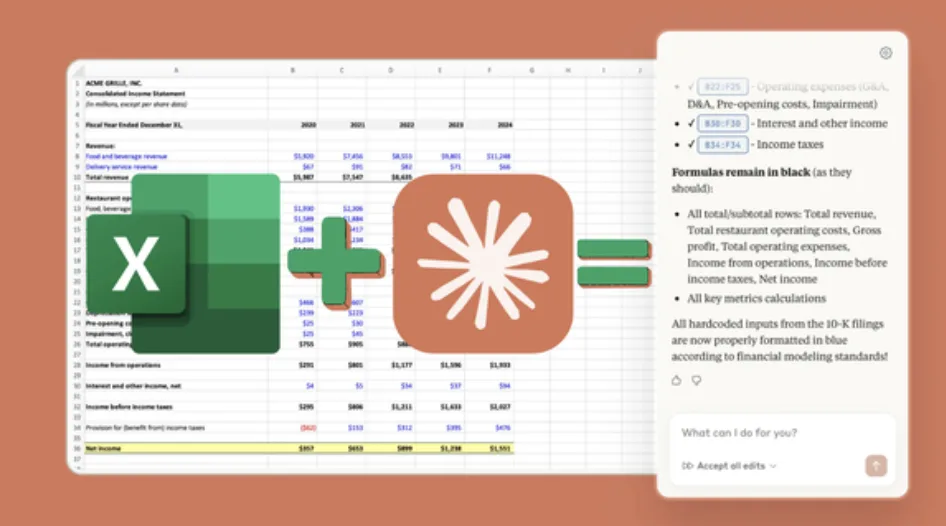
The underwriting skill is the one I use most. I drop in an offering memorandum and it reads the numbers, builds a five-tab model, assumptions, a five-year cash flow, debt analysis, returns, and flags pass or fail against a 15% IRR hurdle, a 1.4x equity multiple, and $200,000 a unit. What used to be ninety minutes of typing into a template is now a few minutes of reviewing someone else’s arithmetic instead of doing my own. I still adjust assumptions by hand, rent growth, exit cap, the stuff that requires actual market judgment. The model just stops being the bottleneck.
The real shift isn’t speed on the deals you were already going to model closely. It’s that the ones that used to get a pass without a second look, the mediocre flyer, the deal that came in on a Friday afternoon, now get the same five-tab treatment as everything else. Modeling took long enough that judgment calls got made before the numbers existed. Now the numbers exist first.
T12s: catching the anomaly before the lender does
A separate skill takes a trailing twelve-month financial statement and returns a narrative report on what moved and why: which expense lines are out of pattern, where the variance sits against the prior period, written in plain language instead of a spreadsheet full of red cells. I run it before a T12 goes to a lender or an investor, not after. Finding the one utility line that tripled in March is a five-minute read now instead of a scroll through twelve months of general ledger.
The same skill will take a static T12 built by hand years ago, the kind where every total is a typed-in number instead of a formula, and rebuild the totals as live SUM formulas so the workbook actually recalculates when you change an input. Half the T12s I inherit on newly acquired properties are static like that. Fixing it by hand is tedious in a way that nobody ever prioritizes until the numbers are wrong and nobody can tell why.
Rent rolls: occupancy risk before it shows up in the numbers
I feed it a rent roll and it comes back with occupancy, unit mix, loss-to-lease, a lease expiration schedule flagged by risk window, vacancy patterns, and down units a quick manual scan would have missed. It doesn’t care that the property management system export is formatted differently than the last one, which matters more than it sounds like when you’re pulling from five different systems across a portfolio. This is the one I hand to a new analyst on day one. It teaches them what to look for while also just doing the work.
Collections: an AR export becomes a call list
I export the Aged Receivable Detail from AppFolio and it sorts every delinquent tenant by aging bucket and severity, then writes a collections action report that tells the property manager who to call first and why. That used to be a spreadsheet somebody rebuilt from scratch every month. Now it’s an export and a prompt.
Leasing: a tenant profile a landlord can actually approve
This one’s for the brokerage side, not asset management. A leasing broker with a prospective retail tenant can build a landlord-facing tenant assessment, credit picture, concept, why it fits the space, packaged as a memo instead of a folder of PDFs and a verbal pitch. A cleaner memo is a faster yes, and a faster yes is a shorter vacancy period, the number ownership actually cares about.
Trade-outs and investor reporting: the monthly and quarterly grind

I give it two rent rolls from different periods and it measures renewal increases and new move-in rents across the whole portfolio, the kind of trade-out analysis that used to mean a junior analyst cross-referencing unit numbers by hand. On the reporting side, a separate skill pulls straight from AppFolio and builds a full investor report, twenty-five pages plus an editable deck, for a given portfolio and period. That report used to eat two or three days a quarter. It’s not perfect the first pass, I still rewrite the narrative sections by hand, but the data assembly and every chart are already built by the time I sit down to do that.
Submarket knowledge that doesn’t reset every time
The harder one to sell, but just as useful, is a Claude project set up per submarket: comps, permit filings, competitor rent surveys, news, dropped into one place. I ask it what’s changed since last quarter and it actually knows, instead of me re-Googling the same five sites every time a deal comes in.
Where the rest of the industry is catching up
JLL’s survey found something that hasn’t happened in 15 years of asking the question: talent shortages just overtook budget as the top obstacle to real estate tech adoption. Money isn’t the blocker anymore. Knowing how to actually use what firms already bought is. KPMG just put Claude in front of all 276,000 of its employees, with real use cases in tax and private equity portfolio company work. A lot of institutional CRE ownership sits inside those structures.
What actually makes it stick
The gap between piloting and getting real hours back comes down to one thing: whether you built something or just asked a question. A one-off chat that answers a question once doesn’t change your week. A skill that runs the same T12 check every month, or a project that already knows your rent roll format, does.
Start with the report you dread most, not the flashiest use case you saw in a demo. Build one thing that handles it end to end, not a prompt you’ll retype from memory and get half right next time. Check what your firm’s plan does with confidential data before you paste in a real OM, a consumer account and an enterprise account don’t handle it the same way.

If you’d rather do this with structured reps than figure it out alone, my co-founder Topher Stephenson and I run a Claude Cohort through CRE AI Studio built specifically around this stuff, underwriting, reporting, the tools above, hands-on. It starts August 13. Details are at creclaudecohort.com.
If you’re still opening Claude once a week to ask it a question, you’re the one leaving hours on the table.