




- Demand for South Florida multifamily apartments has started to outpace new deliveries for the first time in three years, per CoStar Group.
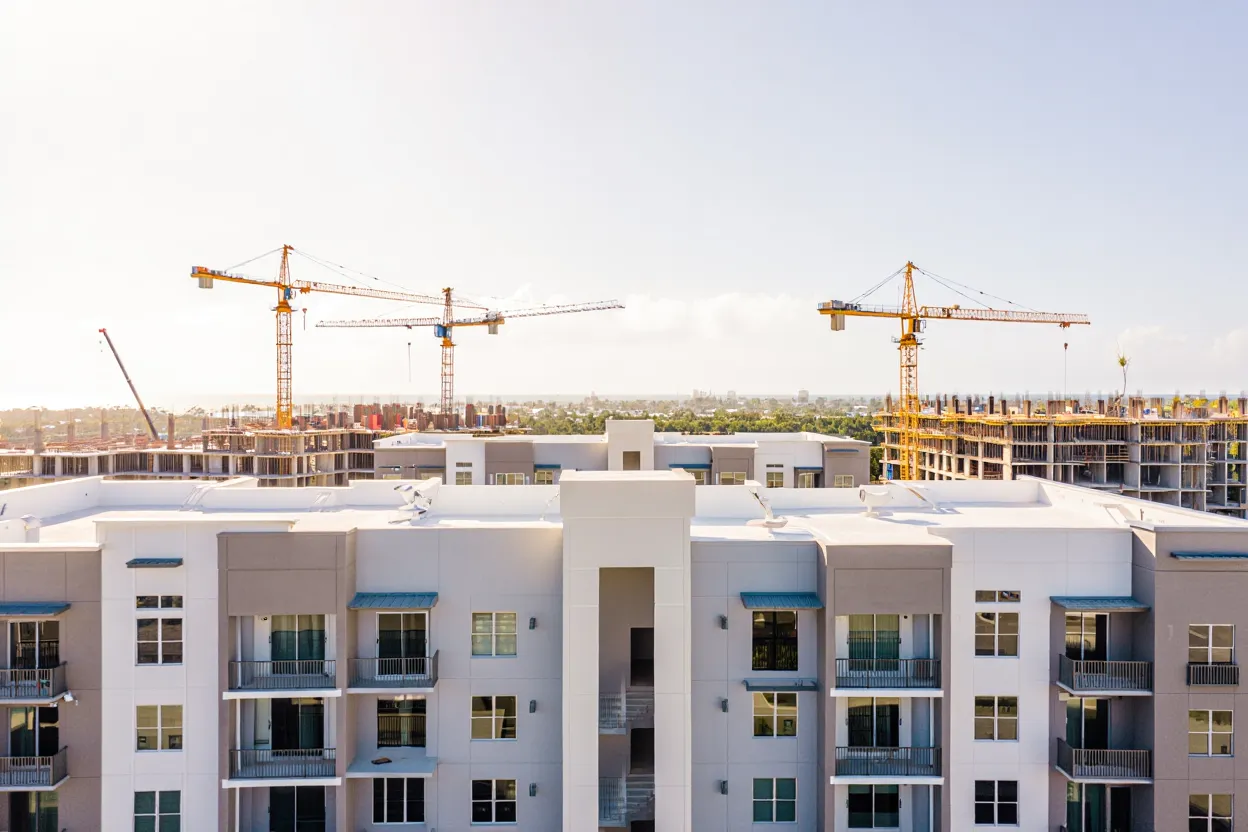
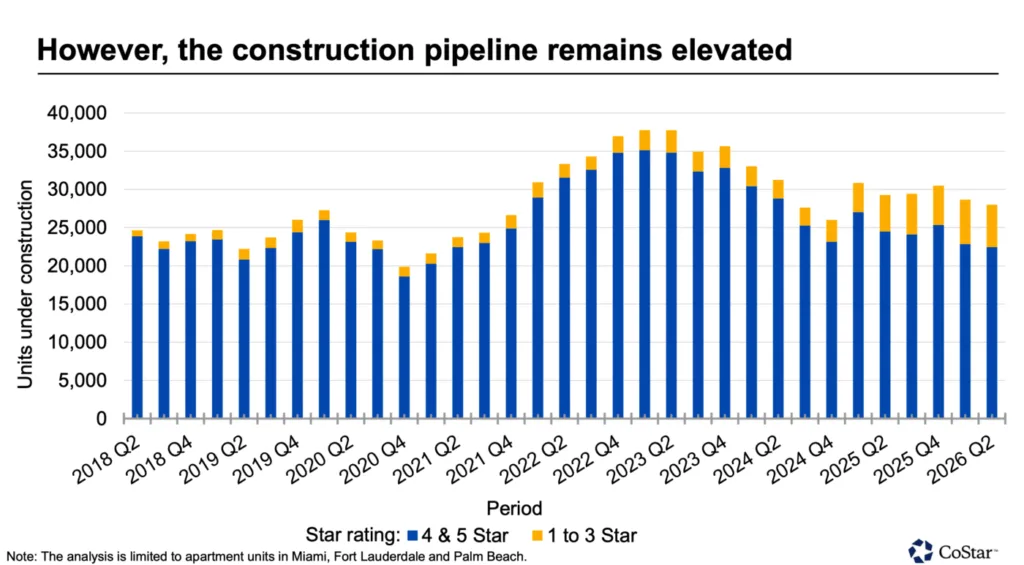
- Vacancies for market-rate and luxury units remain elevated, while nearly 28,000 new units are still under construction across the region.
- Developers and landlords face challenges to rent growth and profitability as a fresh supply wave threatens to stall recovery through 2027.
Pandemic Boom Gives Way to an Unsteady Rebalancing
South Florida’s multifamily market is showing early signs of recovery, but industry professionals aren’t celebrating yet. According to The Real Deal, a slow demand comeback has allowed some landlords to reduce move-in concessions that were common during the oversupply peak of 2024 and 2025. However, experts—including CoStar Group’s Juan Arias—emphasize that a hefty development pipeline and elevated vacancy rates continue to cap optimism.
That tension comes after a wild ride: South Florida soared as a pandemic-era hotspot, only to overbuild on expectations of permanent migration and rent growth. After peaking in 2021-2022, the surge in completions—18,600 new units in 2024 alone, per CoStar—outpaced a cooling in-migration, forcing landlords to lean on discounts and perks to fill units.
Get Smarter about what matters in CRE
Stay ahead of trends in commercial real estate with CRE Daily – the free newsletter delivering everything you need to start your day in just 5-minutes
The End of Generous Concessions
Landlords are attempting to scale back incentives as leasing picks up, but significant challenges persist. For the 12 months ending Q2 2026, new leases slightly exceeded new completions (13,774 vs. 12,751), marking the first such crossover in three years, per CoStar. Vacancy rates tell a nuanced story: across all asset classes, South Florida’s vacancies hovered at about 7% through the first half of 2026—largely unchanged year-over-year.
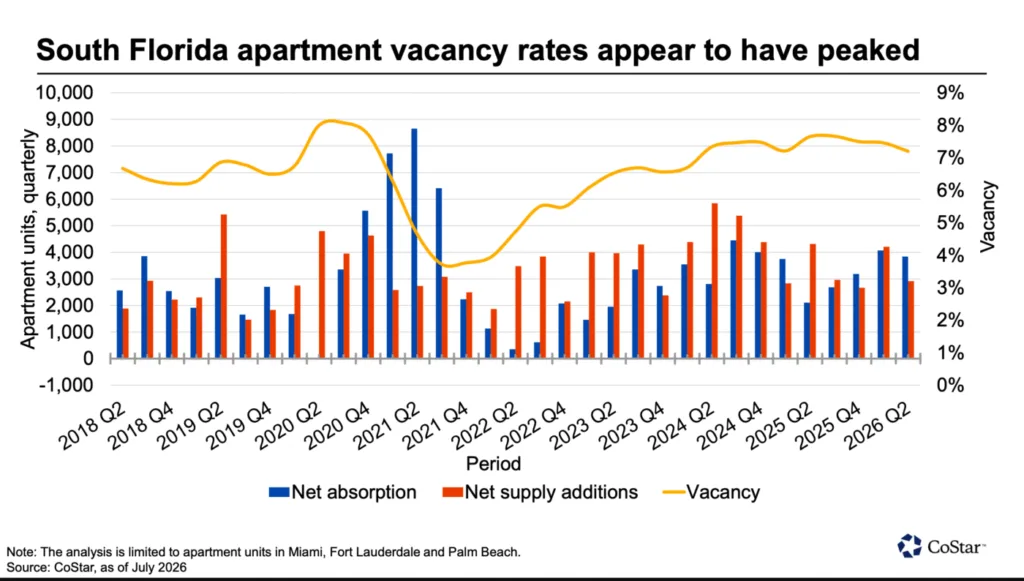
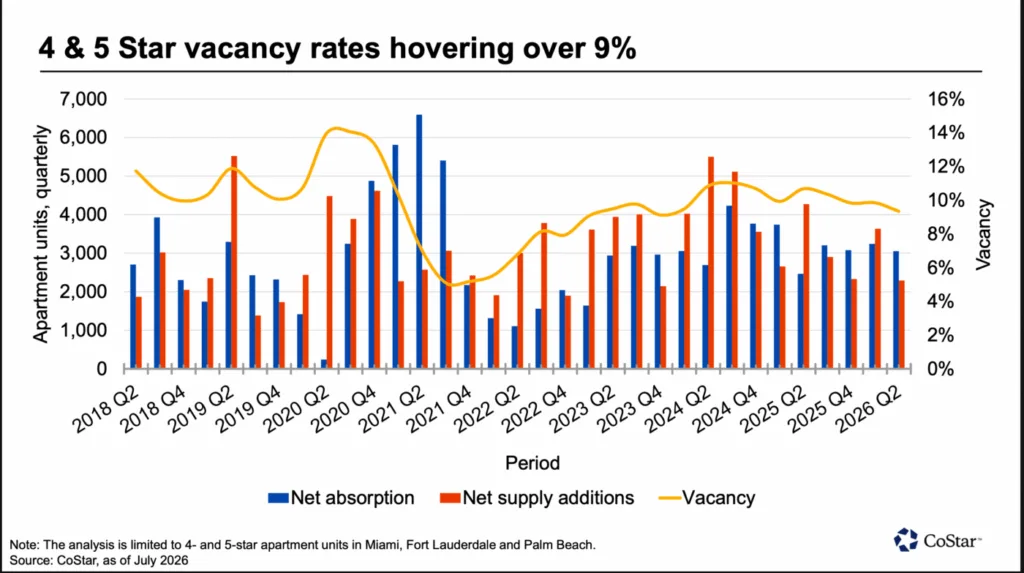
Once you separate by class, the contrast is sharper. Affordable and workforce apartments are leasing briskly, often near the industry benchmark of 95% occupancy. In contrast, market-rate and luxury properties still face 9%+ vacancy rates, with Miami-Dade at a high of 10.5% and Broward close behind at 9.7%. In submarkets flooded with pandemic-era developments, new projects like CMPND Miami are advertising two months’ free rent and additional perks just to stabilize occupancy.
Leasing Incentives Erode Net Operating Income
South Florida’s net effective rents remain under pressure even as face rents hold steady. Median apartment rent hit $2,277 in June 2026, which is 20% below the pandemic peak of $2,850 in June 2022, per Realtor.com. Landlords often prefer concessions over cutting face rents outright, but two free months on a 12-month lease ultimately hits collections more than a nominal rent trim. That approach reflects a broader national pattern, where fewer properties now offer concessions, yet those that do are providing deeper discounts to attract renters in competitive markets.
This margin erosion is widespread. Developers in oversupplied submarkets like Pompano Beach are spending aggressively on tenant events and online marketing to retain residents—sometimes offering two months’ free rent to keep occupancy above 85%. Higher marketing outlays and deferred rent growth mean even stabilized projects are falling short of initial income projections, as noted by TRG Management’s Andrew Rahman. Meanwhile, refinancing from construction to permanent debt is still possible for now, but future cash flows face fresh headwinds with nearly 28,000 units in the pipeline.
Submarkets and Segments Reveal Winners and Laggards
The recovery’s unevenness is forcing developers to rethink location strategies. Firms like Alta Developers and ABH Developer Group are targeting supply-constrained neighborhoods—South Miami or Wynwood Norte—where new apartment deliveries are minimal and tenant demand holds steady. ABH, for example, delivered Wyn 05’s 25 units in December 2025, leasing up in just two months without incentives; their rents undercut neighboring Wynwood by several hundred dollars, per RentCafe.
Yet, the broader region’s outlook still divides by product and location. In Palm Beach County, luxury and market-rate vacancies are just 6.4%, well below Miami-Dade’s 10.5%. Developers focusing on these more stable submarkets, and on attainable housing, are seeing the fastest lease-ups and fewest concessions. But in submarkets loaded with new inventory, every dollar counts—and tenant churn remains a fact of life.
Why It Matters
The interplay between South Florida’s still-elevated supply pipeline and gradually improving demand carries major implications for asset values, investor returns, and the regional development outlook. According to CoStar Group, the delicate balance—where new leases have finally overtaken new deliveries—may be short-lived. Analysts like Arias warn that as nearly 28,000 new apartments come online, the region’s market-rate and luxury niches could see renewed upward pressure on vacancy and incentives, especially if immigration slows or labor market growth stalls.
The vacancy risk is underscored by shifting demographics. Miami-Dade actually recorded a slight population decline (down 10,115 residents) between July 2024 and July 2025, per US Census Bureau. While South Florida’s 3.9% unemployment rate (BLS, June 2026) is strong, local labor force growth has leveled off. On the demand side, for-sale housing remains unaffordable for many—South Florida’s $499,000 median listing price (Realtor.com, Q2 2026) and 6% mortgage rates are strict barriers—which is keeping some pressure under the rental market.
For owners, the margin squeeze is real: net operating income misses, higher marketing spend, and ongoing concessions all eat into returns. For lenders and equity investors, the looming pipeline introduces further caution. Developers must bet on hyperlocal demand and carefully calibrate supply to avoid more years of stagnant rents and crowded competitive sets.
What’s Next
Market-watchers will be focused on the absorption of South Florida’s nearly 28,000 under-construction units over the next 18-24 months. The region’s rental market could tip either way: If economic and population growth rebound, landlords might see a sustained return to pricing power. Yet, as CoStar’s Arias cautions, immigration policy, labor market shifts, and continued high home prices will shape whether landlords or tenants and their concessions reign by late 2027. For now, developers and operators are pursuing a block-by-block strategy, targeting neighborhoods with limited new competition while bracing for a new test of South Florida’s post-pandemic apartment resilience.