




- US industrial rent growth is slowing, with just three major markets seeing rates above 7% year-over-year, per Yardi Matrix.
- Development pipelines remain active in logistics hubs like Atlanta, while Bay Area industrial sales prices rebound due to manufacturing deals.
- The sector faces volatility from the evolving electric vehicle industry, fluctuating occupancy, and increased tenant negotiating power.
EV Headwinds Reshape Industrial Sector
The push to electrify the US auto sector no longer drives industrial demand as expected. Yardi Matrix says EV manufacturing has missed earlier growth forecasts. Investment in US EV facilities topped $200B through 2024. However, delays, cancellations, and project changes slowed momentum.
Panasonic shifted part of its Kansas battery project toward data centers. Ford repurposed BlueOval City for gas truck production. Federal tax credits are ending, while tariff policy remains uncertain. High prices and limited charging networks also slow adoption. Still, charging infrastructure continues expanding. Long-term industrial demand from EV production remains intact, but the timeline has stretched.
Get Smarter about what matters in CRE
Stay ahead of trends in commercial real estate with CRE Daily – the free newsletter delivering everything you need to start your day in just 5-minutes
The Details
National industrial rents reached $9.20 PSF in June 2026. That marked a $0.08 monthly increase and 5.3% annual growth. Only Inland Empire (8.4%), Atlanta (8.1%), and Miami (7.1%) posted rent gains above 7%. Vacancy held at 9.1%, just 10 basis points above last year.
New leases averaged $10.02 PSF nationwide. That was only $0.82 above the market average, down from a $1.58 premium last year. Miami led with a $3.26 PSF premium, followed by Nashville, Bridgeport, and Dallas. More supply and balanced demand strengthened tenant negotiating power. Still, Miami, the Bay Area, and Los Angeles remained well above national rent levels.
Atlanta’s Development Resurgence
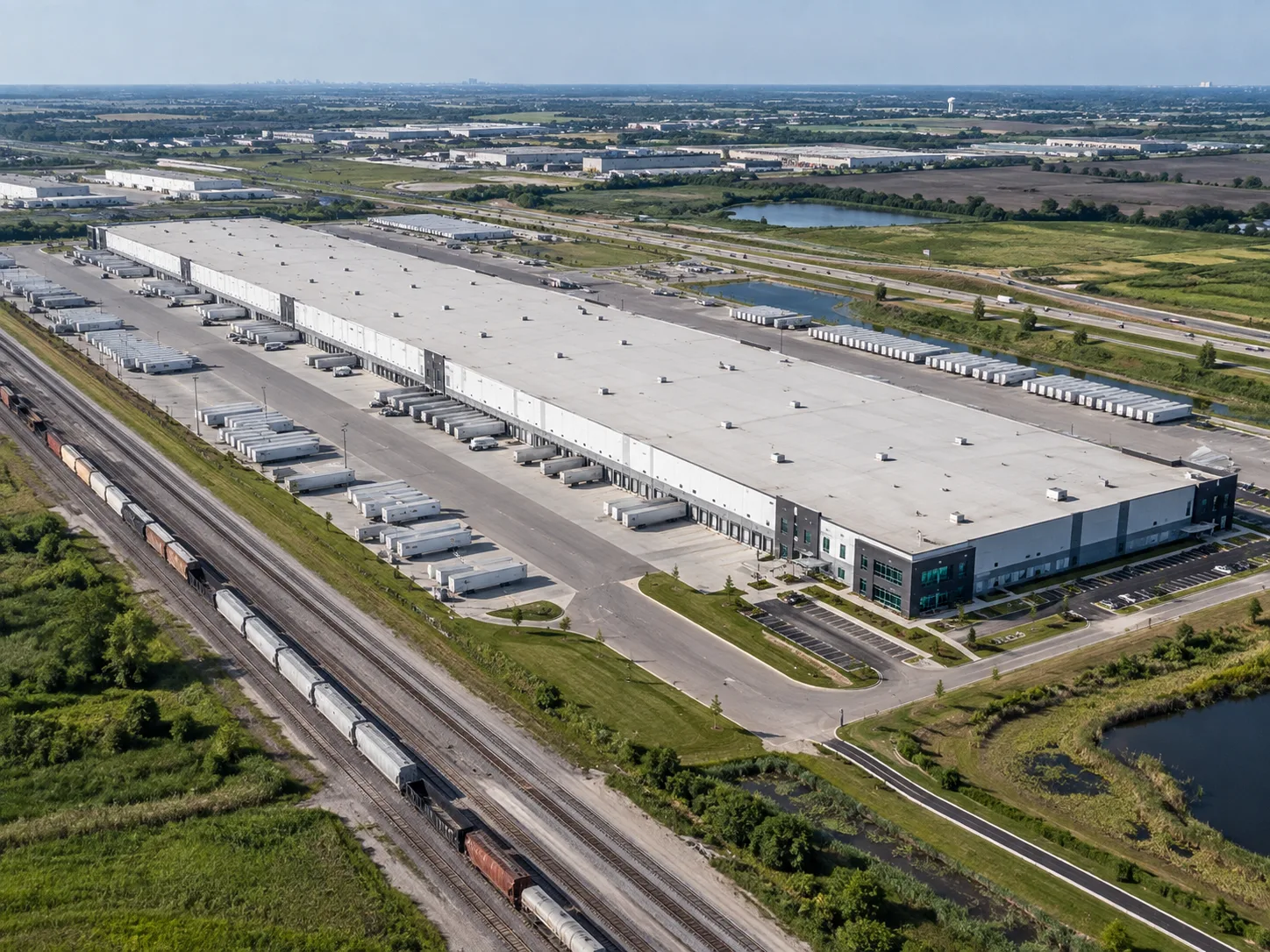
Atlanta’s industrial pipeline has regained momentum after two slow years. The market recorded just 9.2M SF of warehouse starts across 2023 and 2024. It added 8M SF in 2025 and another 5.3M SF during the first half of 2026.
River Park E-Commerce Center drives much of that activity. The 2,000-acre project adds space for tenants including Procter & Gamble and Amazon Web Services. Phoenix leads nationally with 6.7% of industrial inventory under construction. Dallas, Houston, and Columbus also maintain strong pipelines. Nationwide, developers are building 399.5M SF, or 1.9% of inventory. Another 3.7% remains in planning.
Why It Matters
Industrial rent growth continues slowing, giving tenants greater negotiating power. Average rents rose 5.3% year over year. However, double-digit rent gains have largely disappeared. Only Atlanta, Inland Empire, and Miami exceeded 7%. Local demand and tighter supply supported those markets.
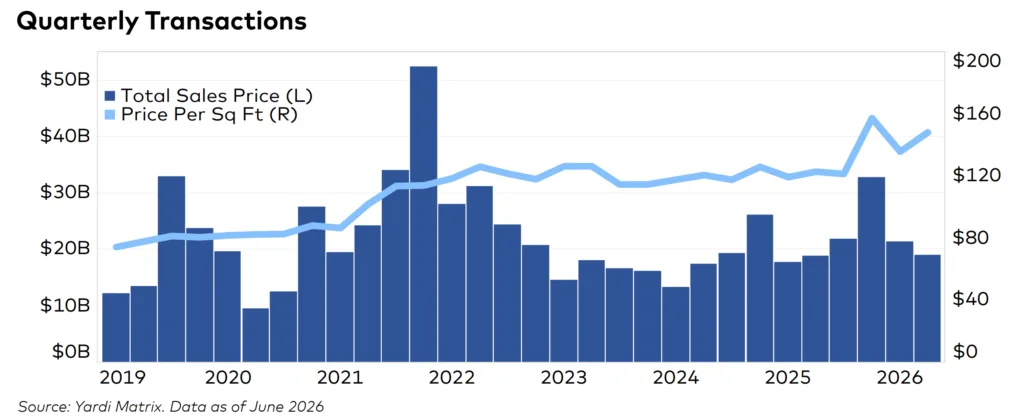
New lease premiums narrowed to $0.82 PSF from $1.58 last year. Vacancy remained stable at 9.1%. However, regional differences still create opportunities. Miami’s $3.26 PSF premium shows landlords retain pricing power in tighter markets.
The national pipeline remains active but measured. Atlanta’s rebound shows logistics markets can recover quickly as supply chains evolve. That contrasts with apartment markets, where rising supply continues limiting pricing power despite localized improvements. Meanwhile, Bay Area industrial sales climbed from $224 PSF in 2025 to $318 PSF in 2026. Manufacturing deals fueled that recovery, including Clarion Partners’ $132.3M purchase of Milmont Industrial at $495 PSF.
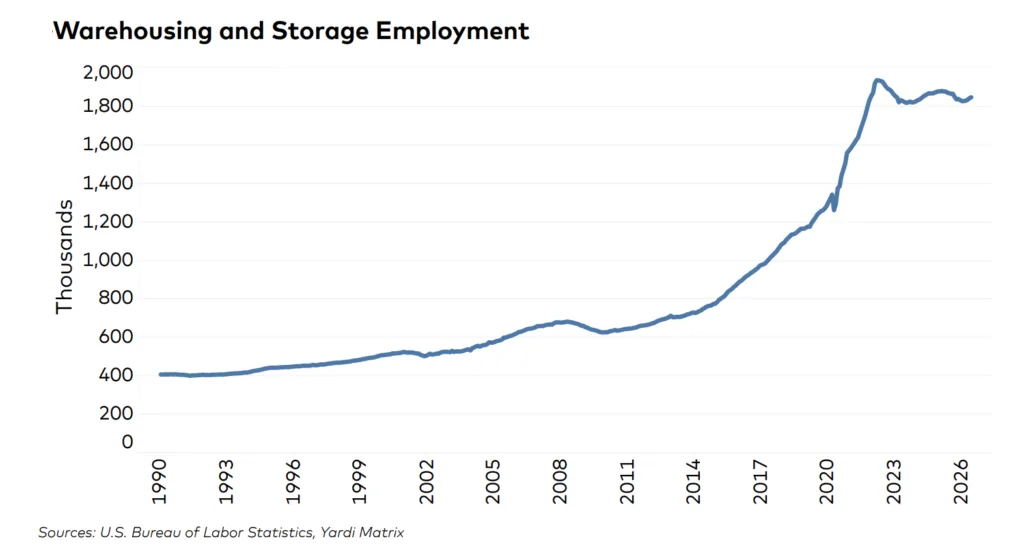
Warehousing employment also remains mixed. The sector added 20,000 jobs since January. However, employment still trails early 2025 levels by 30,000 jobs. Automation and cautious hiring continue shaping the labor market.
What’s Next
The industrial sector now depends on supply absorption, EV demand, and logistics market strength. Yardi Matrix expects continued volatility from EV adoption, federal policy, and broader economic conditions. Infrastructure, automation, e-commerce, and AI logistics should support stronger markets.
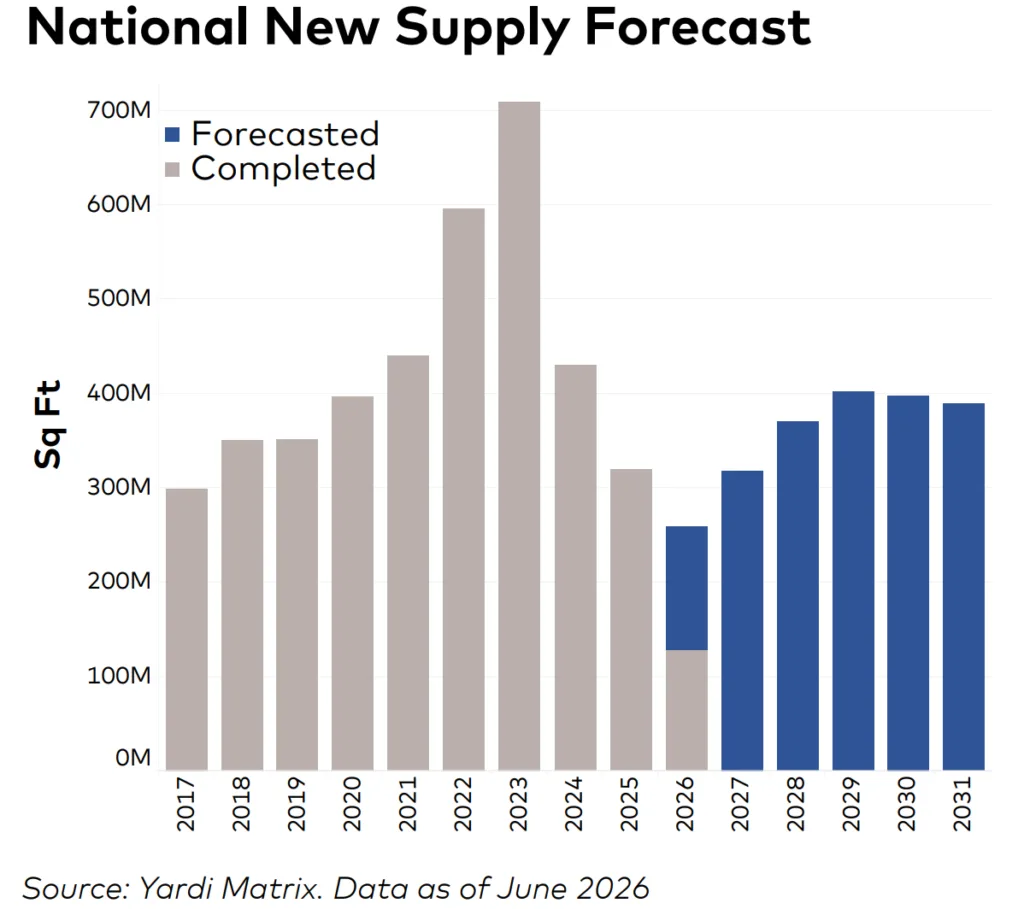
However, elevated supply continues favoring tenants. As a result, outsized rent growth will depend on local conditions instead of national trends. Atlanta’s development pipeline and Bay Area pricing remain important indicators to watch.