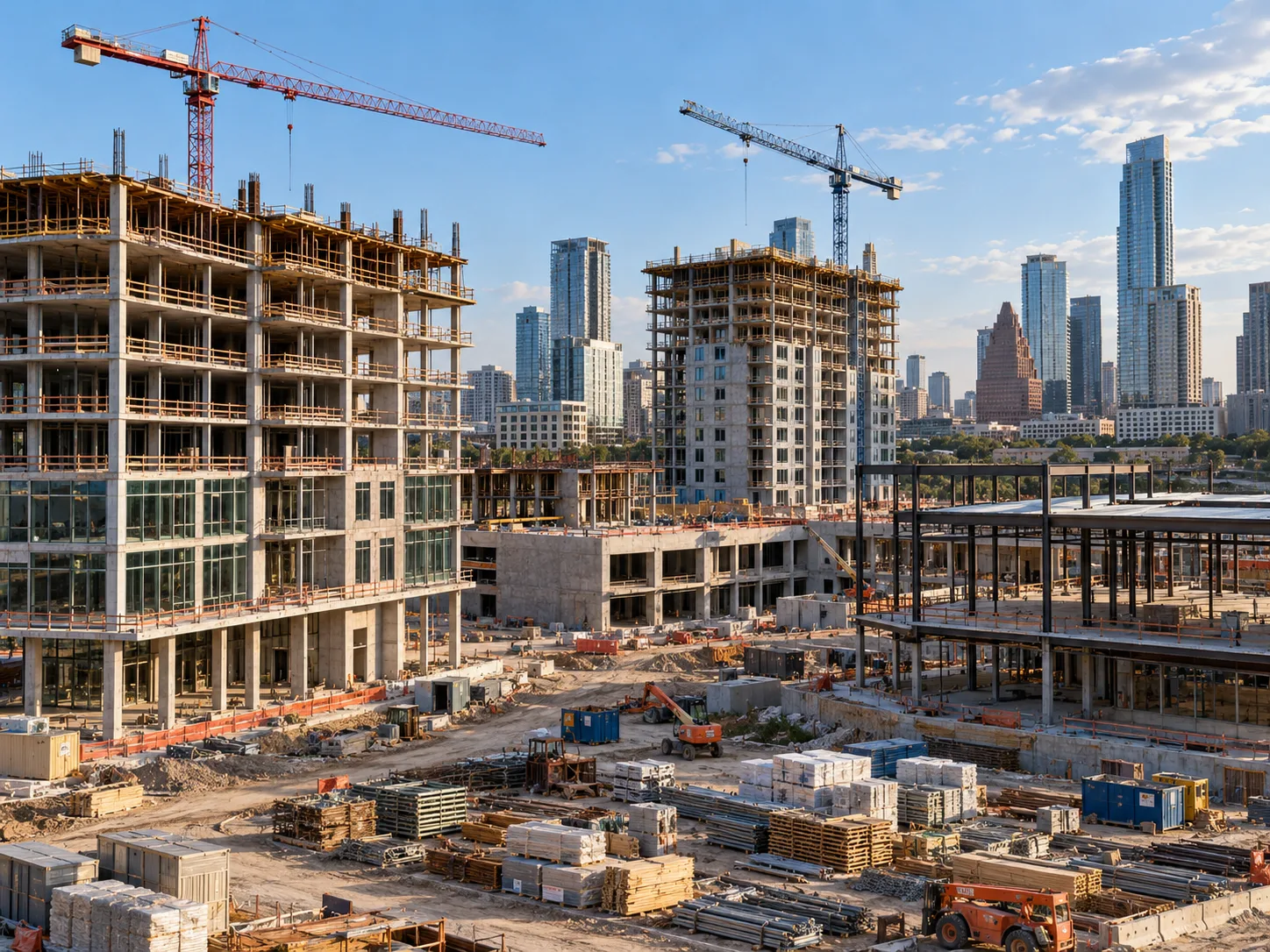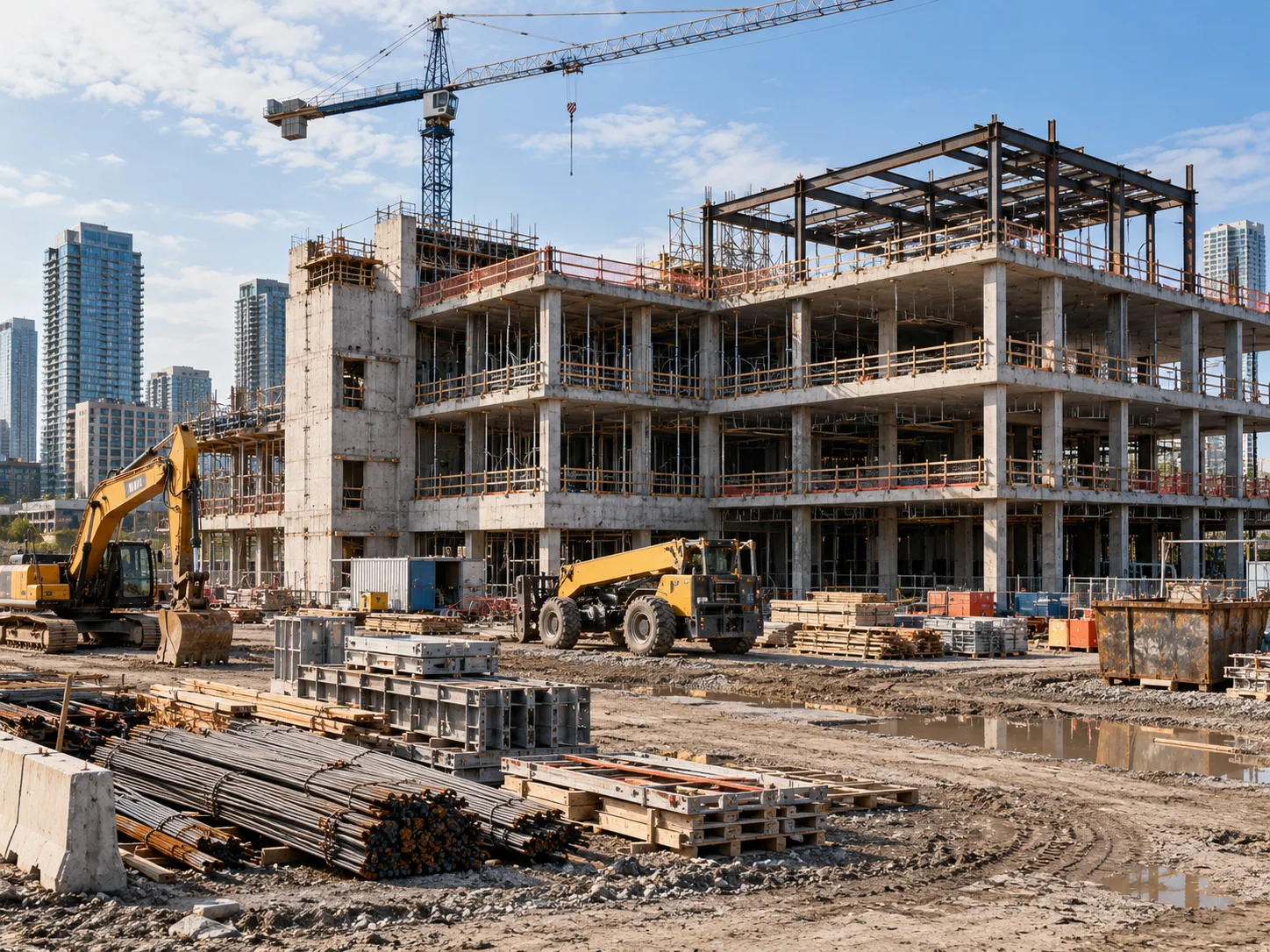







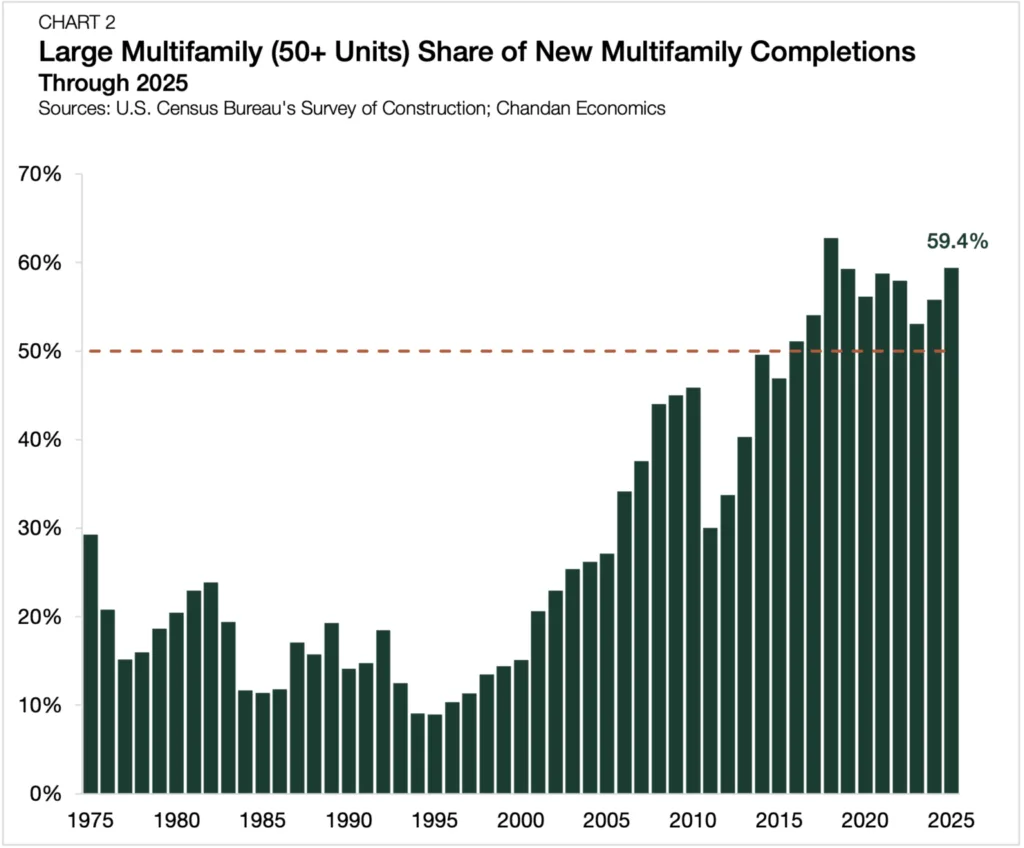
- Larger multifamily properties accounted for 59.4% of 2025 completions, maintaining a sector shift to 50-plus-unit buildings.
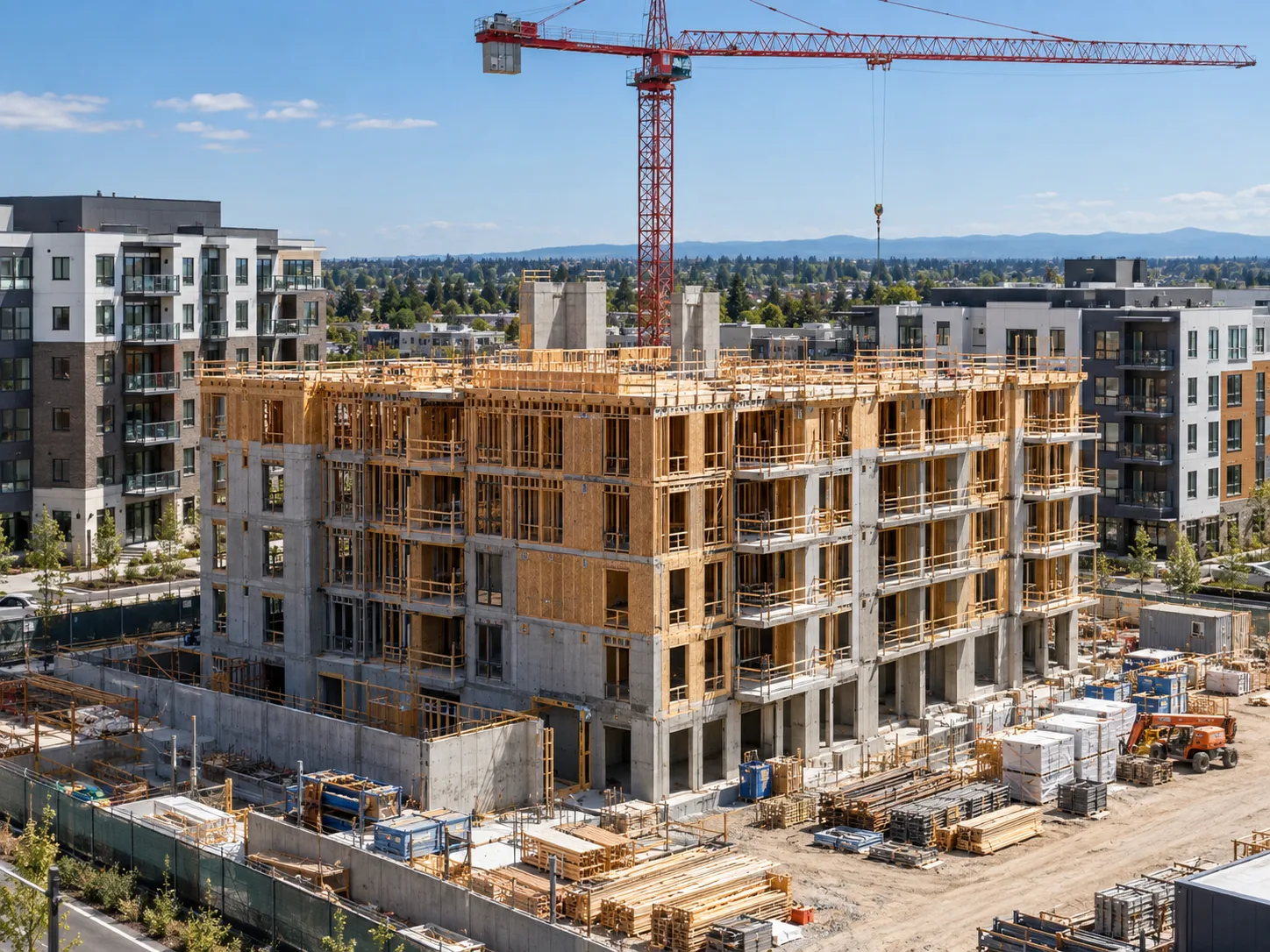
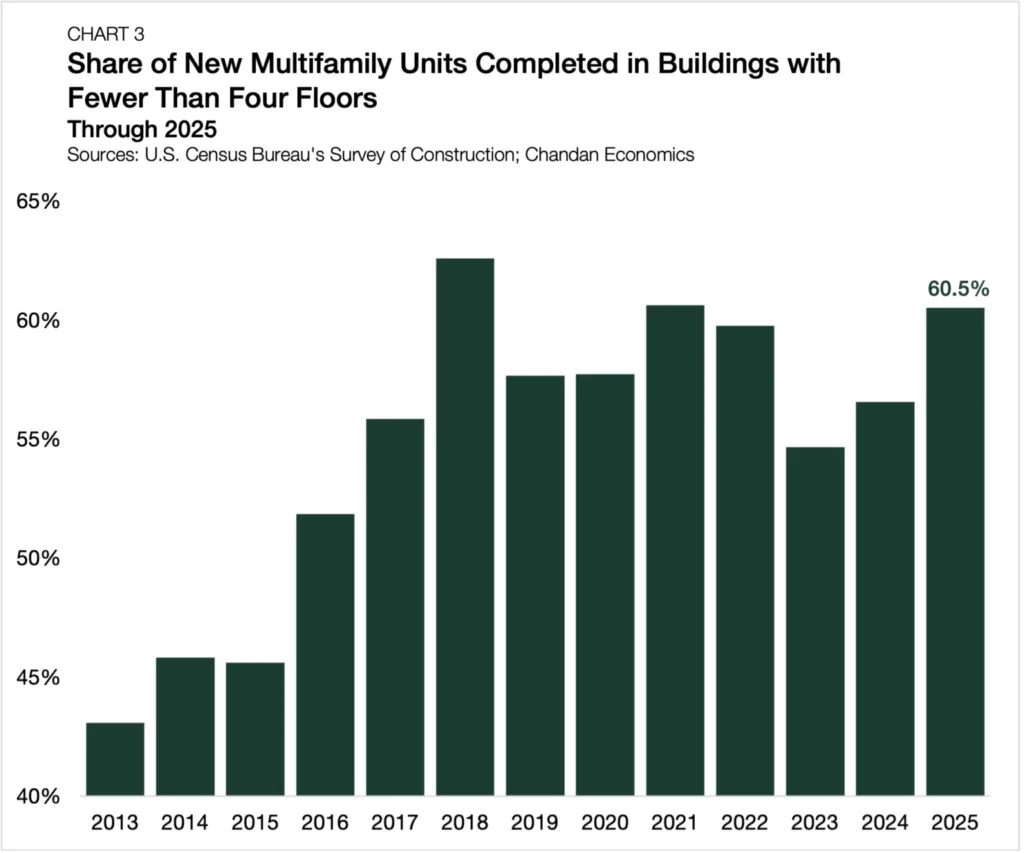
- Lower-rise construction led the way, with 60.5% of new multifamily units in buildings under four floors, per Chandan Economics and Arbor Realty Trust.
- This trend supports continued rental supply growth in suburban and lower-density markets, even as total completions fell from 2024’s record highs.
Post-Pandemic Supply Boom Normalizes
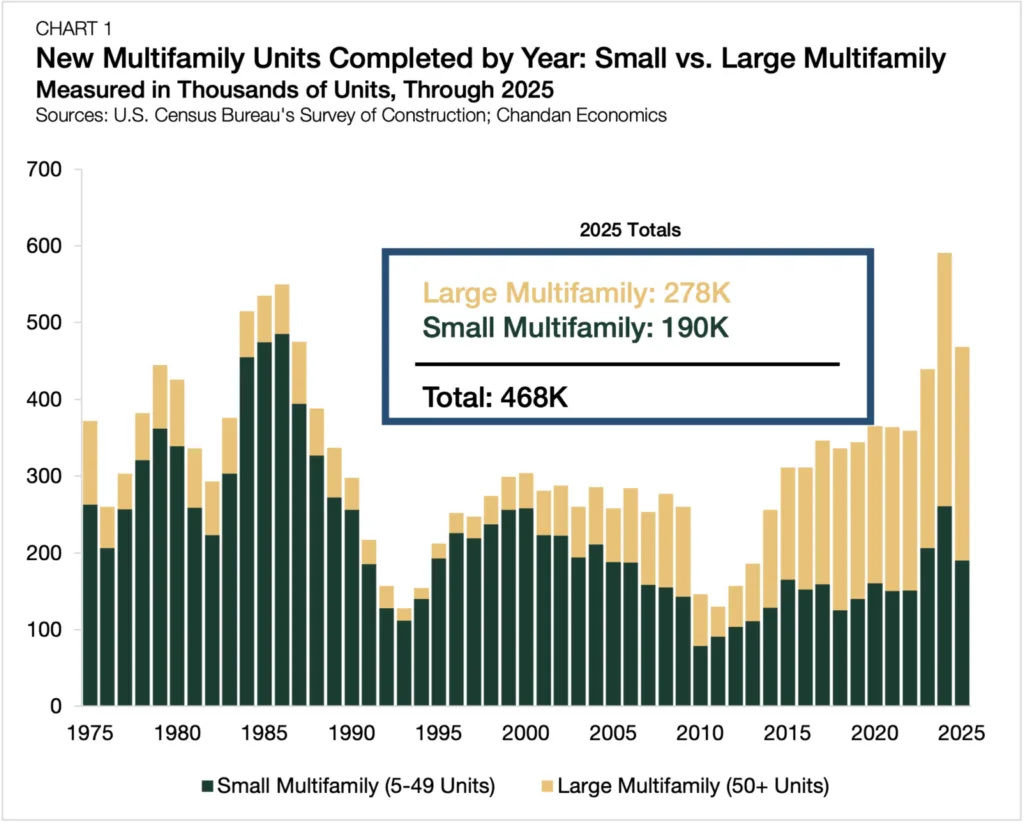
Multifamily construction slowed from historic highs in 2025. Developers delivered 468,000 units, down from 591,000 in 2024, according to Arbor Realty Trust, Chandan Economics. The US Census Bureau provided the underlying data.
Developers cut back smaller projects more sharply. However, completions of larger properties also fell from their 2024 peak. Even so, large projects remained a major part of the pipeline. They accounted for most new supply. This moderation reflects a normalized building cycle after the pandemic surge, not a dramatic pullback. The data also highlights changes in both project types and locations.
Get Smarter about what matters in CRE
Stay ahead of trends in commercial real estate with CRE Daily – the free newsletter delivering everything you need to start your day in just 5-minutes
The Details
Large multifamily buildings with at least 50 units accounted for 59.4% of completions in 2025, up from 55.8% in 2024. Deliveries in this segment fell 15.8% year over year. Meanwhile, buildings with 5 to 49 units declined 27.2%.
As a result, large properties claimed a bigger share of new supply. Their completion share reached the second-highest level in 50 years, behind only 2018’s 62.8%.
Developers continue pursuing scale. Urban Institute research shows larger projects ease financing pressures and spread risk. Those advantages matter as development costs keep rising.
Larger Projects, Lower-Rise Formats
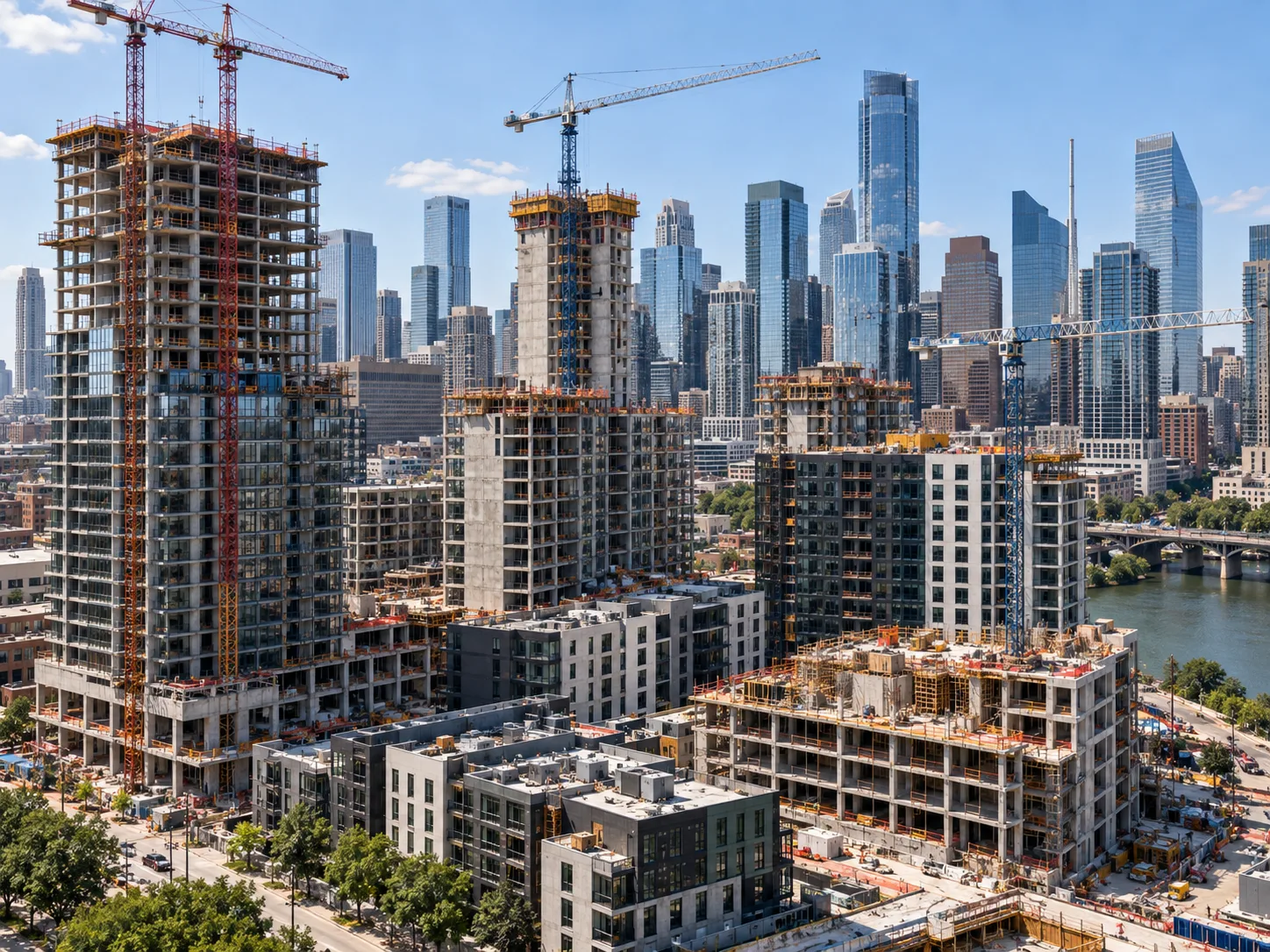
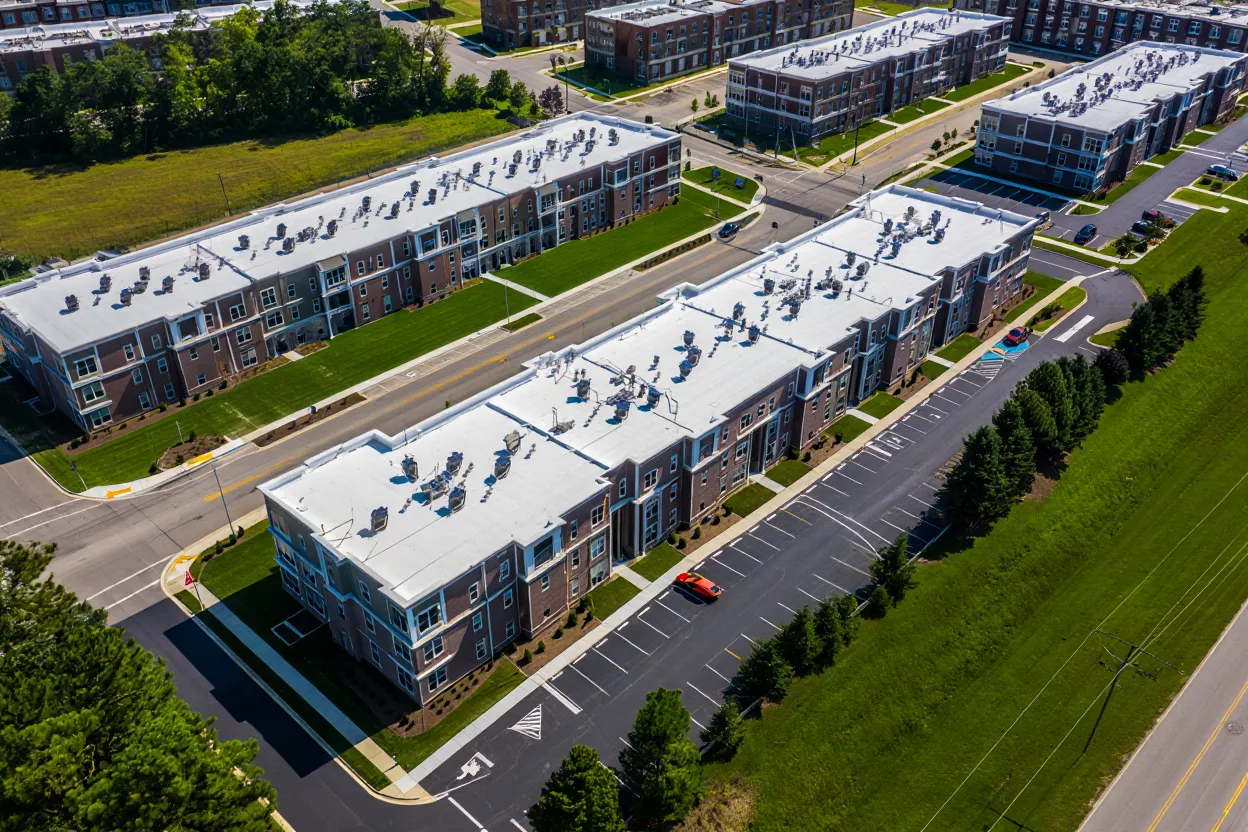
The shift toward larger properties has not created a high-rise construction boom. Instead, lower-rise buildings now supply most new multifamily units. Chandan Economics found that 60.5% of completions came from buildings under four stories. That figure rose from 56.6% in 2024.
This trend has continued for a decade. Since 2016, lower-rise properties have supplied more than half of annual completions nationwide. Developers increasingly favor garden-style and suburban communities. Rising land costs, construction expenses, zoning limits, and affordability challenges make taller projects less attractive.
Why It Matters
Changes in multifamily supply show how developers respond to today’s market pressures. The US Census Bureau’s Annual Survey of Construction supports this shift. Developers now favor larger, lower-rise projects that capture economies of scale. They also respond to regulatory hurdles and tenant preferences.
Higher land costs and persistent affordability pressures continue shaping development. At the same time, many renters still prefer larger living spaces, even in shorter buildings.
Garden-style and mid-rise communities also align with ongoing suburban migration. Renter demand continues spreading across more markets. That shift also matches stronger apartment demand and easing vacancy rates, giving developers more confidence in larger suburban projects. Meanwhile, the share of new units with multiple bedrooms reached 49.6% in 2025. That increase reflects continued demand for larger homes after the pandemic.
This trend also creates opportunities where high-rise projects struggle. Capital constraints, zoning rules, and neighborhood opposition often delay taller developments. Large, lower-rise communities offer investors an attractive balance between scale and demand. Ultimately, developers’ supply decisions will shape future rental growth. They will also determine which markets continue facing housing shortages.
What’s Next
Developers will likely keep favoring larger, low-to-mid-rise multifamily projects. Cost pressures, migration trends, and regulatory changes should reinforce that strategy. Suburban markets with favorable zoning remain especially attractive. Demand for larger rental homes also remains strong.
Affordability will continue shaping future development. As a result, developers and investors will likely expand scalable, lower-rise communities. These projects can deliver new housing faster in lower-density markets. Pipeline activity through 2026 will show whether supply and demand stay balanced. It will also reveal whether this normalization becomes the industry’s new baseline.