



- FB Society opened Shaver Hall, a 35,000 SF food hall in Amazon’s Midtown NYC office, aiming to be an all-day destination.
- This project features 11 eateries, three restaurants, two bars, and extended hours, blending dining with entertainment and nightlife to boost foot traffic.
- The model signals a national pivot as food halls embrace longer hours, event programming, and adaptive reuse strategies for mixed-use viability.
A Shift in Midtown Food Hall Strategy
Shaver Hall’s debut on Fifth Avenue marks a shift in how food halls approach urban activation. CoStar News reports that FB Society—developers behind Legacy Hall in Texas and Assembly Food Hall in Nashville—just launched the 35,000 SF destination inside Amazon’s largest New York office at 424 Fifth Ave, the landmark former Lord & Taylor flagship. The project targets office workers, tourists, and locals alike, not just lunch crowds. The NYC opening comes as the sector adapts after pandemic and post-pandemic volatility challenged the format’s staying power.
The food hall offers longer daily hours and broad culinary and entertainment offerings, underscoring its ambition to be an all-day anchor amenity. According to advisory firm Colicchio Consulting, closures and fresh openings show the model is evolving from a pure dining play to a curated social destination. Amazon’s involvement is notable, both as the landlord and as a stakeholder in reviving midtown activity.
Get Smarter about what matters in CRE
Stay ahead of trends in commercial real estate with CRE Daily – the free newsletter delivering everything you need to start your day in just 5-minutes
Experience-Driven Adaptive Reuse
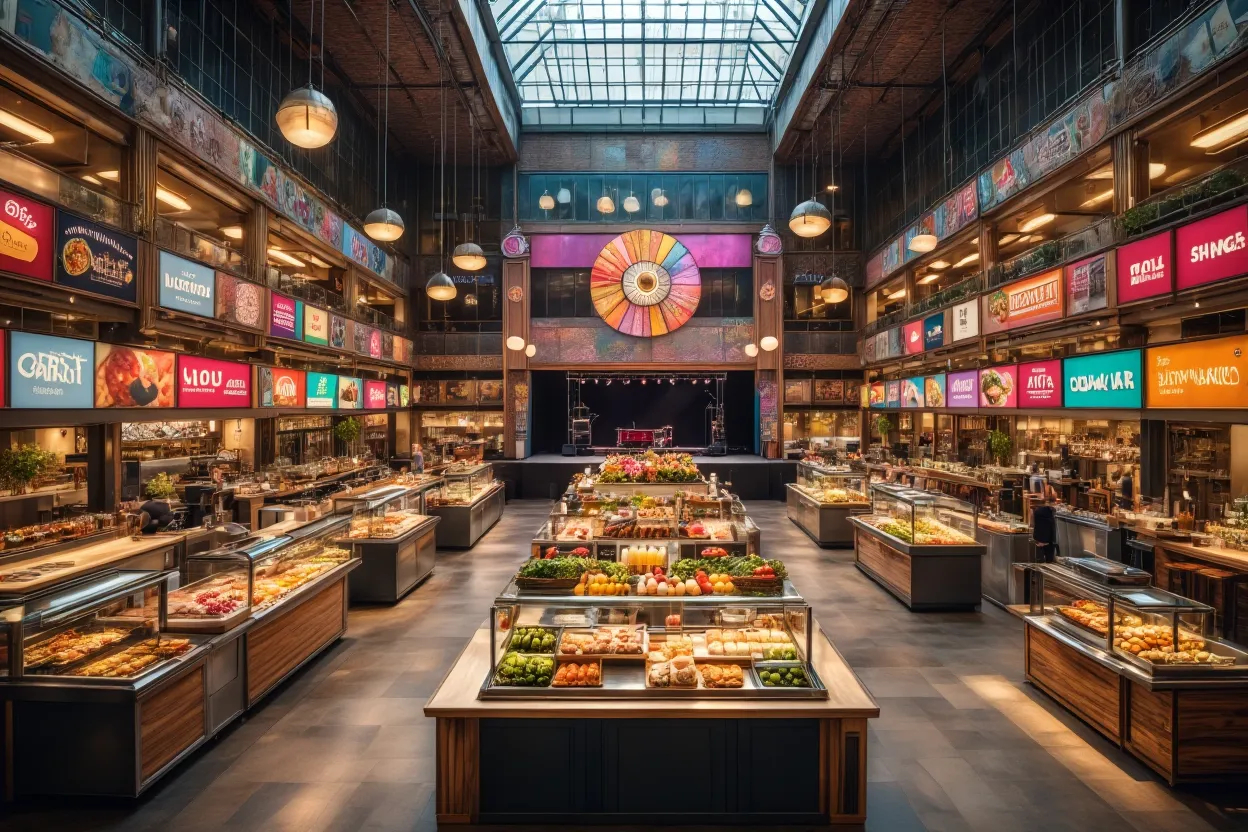
The transformation of the Lord & Taylor building reflects a broader adaptive reuse trend. It highlights changing strategies in major urban markets. Amazon bought the 13-story building in 2020 for its Midtown office hub. It partnered with FB Society to create a public ground-floor destination. The goal is to attract visitors beyond office tenants. Shaver Hall features 11 chef-driven food counters. It also includes three full-service restaurants, two bars, and a bodega. Layaway pays tribute to the building’s retail history. London’s Pick & Cheese is making its US debut. The concept features its signature conveyor-belt cheese service. Michelin-starred chef BK Park also leads a 12-seat omakase.
The venue will host live music, sports watch parties, and cultural events. Programming centers around a dedicated stage. Hours run from 7 a.m. to 11 p.m. on weekdays. Weekend hours extend until 1 a.m. The schedule supports breakfast, lunch, dinner, and late-night crowds. The food lineup spans Korean fried chicken, bagels, Mediterranean fare, and steak sandwiches. The mix is designed to maximize variety and experiential appeal.
Post-Pandemic Resilience and Category Evolution
The rise of experience-based food halls like Shaver Hall comes after pandemic-era turbulence recalibrated the sector’s fundamentals. According to Colicchio Consulting’s January report, since Gotham West Market helped launch the modern food hall movement a decade ago, over 500 locations have opened in the US—including nearly two-dozen closures during the pandemic. Major players like New York’s Market Line and Chicago’s Revival Food Hall didn’t survive hybrid work disruptions and elevated costs.
Yet, food halls continue to perform “on par with or better than traditional restaurants,” the report finds. At the start of 2026, about 460 locations were operating nationally, with at least 114 more in pre-opening pipelines and 23 abandoned projects. Developers are increasingly betting on suburban concepts (like Stix Asia in Las Vegas), while in urban settings, securing evening and weekend business is now critical, reflecting shifting office attendance patterns and local competition for leisure dollars. Operators are also placing new emphasis on vendor curation and event programming to sustain repeat visits.
Why It Matters
For Midtown and national CRE players, Shaver Hall reflects an evolving food hall model. Food halls are becoming community anchors, not just lunch destinations. They are activating ground floors and driving all-day foot traffic. Amazon’s dual role as landlord and tenant reinforces this strategy. The company is using hospitality amenities to strengthen neighborhood activity. That helps offset weaker daily office attendance.
The project spans 35,000 SF near Bryant Park and the Empire State Building. Its scale supports fast-casual, upscale, and experimental dining concepts. FB Society designed the mix to appeal to a broad audience. Several vendors have Michelin ties. Weekend hours extend until 1 a.m. Phil Colicchio says food halls with strong beverage programs are best positioned for long-term success. He also points to post-happy hour programming as a competitive advantage.
The Lord & Taylor redevelopment reflects the rise of adaptive reuse in prime retail corridors. Aging department stores are finding new life through experiential concepts. Food and beverage uses are claiming more ground-floor space. Successful operators will increasingly treat food halls as curated event venues. They are moving beyond traditional collections of food stalls.
What’s Next
At least 114 food hall projects are planned nationwide. Landlords and developers are watching Shaver Hall as an adaptive reuse case study. Strong opening crowds suggest demand for curated food and entertainment destinations. Industry consultants have also responded positively. Operators will continue testing vendor mixes and late-night programming. They are competing for foot traffic as office attendance remains uneven. Suburban expansion is also expected to fuel growth. Next-generation food hall concepts will continue to emerge. The sector’s long-term resilience will depend on innovation and all-day engagement.