



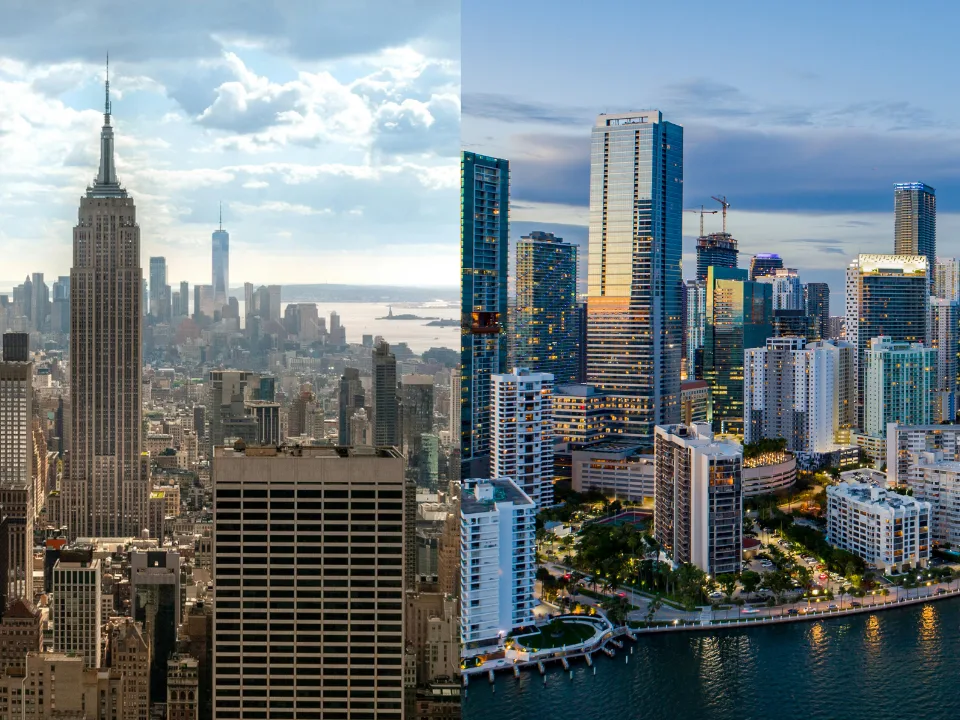
- More New York-based developers, lenders, and brokers now maintain active business operations in both New York City and Miami.
- Population growth, corporate relocations, and business-friendly policies have fueled development across Miami-Dade and surrounding markets.
- The growing two-city workforce highlights Miami’s evolution from a secondary market into a permanent hub for institutional real estate investment.
Commercial real estate professionals are increasingly treating New York City and Miami as a single business corridor rather than separate markets, per Bisnow. Weekly flights, dual residences, and packed meeting schedules have become common as firms expand their South Florida presence. The shift reflects years of corporate migration, new development activity, and growing investor demand across the region.
Get Smarter about what matters in CRE
Stay ahead of trends in commercial real estate with CRE Daily – the free newsletter delivering everything you need to start your day in just 5-minutes
Miami Commercial Real Estate Has Changed
Before the pandemic, many New York executives viewed South Florida primarily as a vacation destination. That perception has shifted. Developers, lenders, brokers, and investors now spend significant time building businesses across Miami-Dade and neighboring cities instead of making occasional visits.
According to the US Census Bureau, Miami-Dade added more than 100,000 residents between 2020 and 2025. That growth helped support new apartment towers, mixed-use developments, and office leasing activity. Corporate relocations also transformed neighborhoods like Brickell and Wynwood into major business districts, creating fresh opportunities for both local and out-of-state real estate firms.
The Details
Executives interviewed by Bisnow described highly structured travel schedules designed to maximize time in both markets. Integritas Capital Managing Principal Stephen Palmese often flies to Miami before sunrise, schedules meetings throughout the day, and returns to New York the same evening.
Other firms have adopted similar routines. Baron Property Group regularly sends leadership to oversee its expanding South Florida pipeline, including a 2.3M SF transit-oriented residential project in Hialeah and an 806-unit development in Coral Gables. RAL Cos. is helping develop Casa at FIU, a 297-unit, 820-bed student housing project expected to open by 2028. Brokers like Pulse International Realty founder Rena Kliot now travel between both cities whenever client demand requires.
NYC To Miami CRE Migration Accelerates
The business case extends well beyond lifestyle preferences. Florida continues to market its tax structure and business climate to executives considering expansion or relocation. The state also eliminated its commercial rent tax in 2025, reducing occupancy costs for office, retail, and industrial tenants.
Major corporate moves helped reinforce Miami’s momentum. Citadel relocated its headquarters to Miami in 2022 and continues planning a 1.7M SF headquarters tower. Since then, additional financial firms and corporate occupiers have expanded across South Florida. According to a 2025 MovingPlace report, Florida remained the top relocation destination for New York residents. Census migration data also identified New Yorkers as Miami-Dade’s largest domestic migration group through 2024.
Why It Matters
The growing connection between New York and Miami reflects more than temporary migration. It represents a structural shift in where capital, development, and decision-making occur. Instead of opening satellite offices with limited activity, many firms now manage projects across both markets simultaneously.
That trend continues supporting demand for development sites, office space, housing, and infrastructure throughout South Florida. According to TomTom’s 2026 Traffic Index, Miami ranked as the nation’s second-most congested metro area behind Los Angeles, underscoring how quickly business activity has expanded. Local brokers also report a noticeable increase in transactions involving New York-based clients and investors.
What’s Next
South Florida’s growth story now depends less on attracting newcomers and more on sustaining long-term expansion. Miami-Dade’s population declined by more than 10,000 between 2024 and 2025, according to the US Census Bureau, highlighting affordability pressures despite continued investment.
State leaders continue encouraging development through policies such as the Live Local Act, which offers incentives for projects that include workforce and affordable housing. As developers respond to housing demand and more firms deepen their South Florida operations, the connection between New York and Miami is likely to remain one of the defining themes shaping US commercial real estate.