



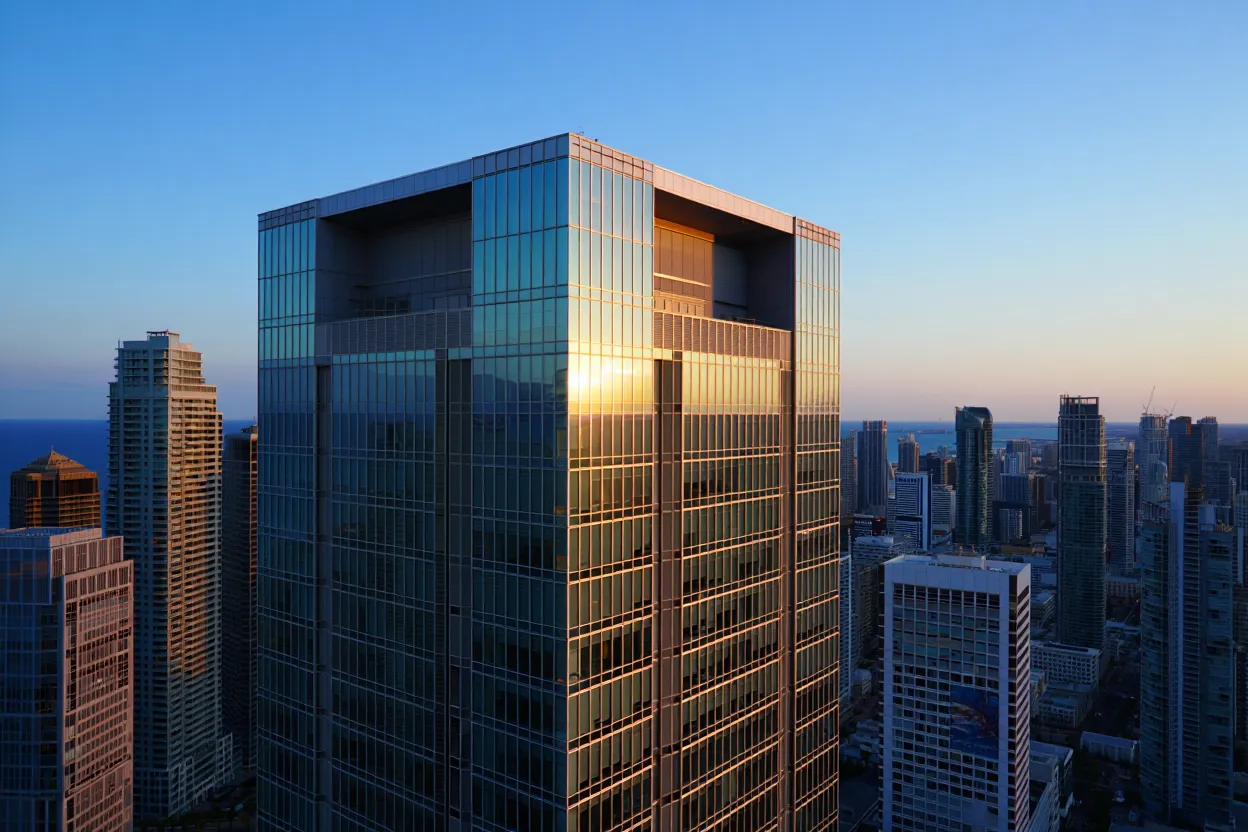
- Institutional investors are circling high-end office assets in top US markets, drawn by rising AI-driven tenant demand.
- Deal flow remains selective, with activity focusing on buildings that demonstrate pricing power and resilience to shifting work patterns.
- This trophy office trend highlights a flight to quality, even as overall office vacancy hovers near 20% and macro uncertainty persists.
AI Demand Rewrites Office Investment Playbook
Institutional investors are taking a hard look at trophy office assets, recalibrating after years of pandemic-driven volatility and sharp declines in office valuations. According to Bisnow, the surge in AI and tech leasing is reframing strategies for buyers like Heitman, which manages $47B in assets. Rather than chasing broad sector rebounds, these capital allocators are picking their spots—favoring the premium towers that continue to attract AI and tech tenants, especially in coastal markets.
The renewed attention follows a year when some office values fell further than any other property type, prompting investors to scrutinize where pricing power will be most durable. “Office is repriced more than any other sector, and so that discount relative to past values is reason enough to reexamine the sector,” Heitman’s Daniel Vickerman told Bisnow.
Get Smarter about what matters in CRE
Stay ahead of trends in commercial real estate with CRE Daily – the free newsletter delivering everything you need to start your day in just 5-minutes
The Details
Institutional buyers are targeting trophy offices in gateway cities like New York, San Francisco, and Chicago. They are also pursuing Sun Belt markets with growing tech demand. Recent deals highlight that trend. Meadow Partners paid $312M for a 37-story Midtown Manhattan tower. The property last traded for $252M in 2012.
Meanwhile, Zara founder Amancio Ortega is negotiating to buy 1 N. Wacker Drive in Chicago for more than $500M. A $353M CMBS loan supports the deal. Elsewhere, Invesco and SteelWave are marketing Anduril’s 634K SF California headquarters. They are targeting a sale near $400M.
Still, many institutional investors remain in a “window shopping” phase, according to Bisnow. They want deeper discounts and stronger tenant demand before closing major deals.
Flight to Quality Replaces Broad Market Bets
Office investment remains uneven. US office sales reached $4.1B in May. That was down 46% year over year but up 44% over the past 12 months. One-fifth of US office space sat vacant at the end of Q1. Meanwhile, new development fell to a 14-year low. Conversions and limited supply helped curb new competition.
However, headline numbers hide a divided market. Trophy towers continue attracting most leasing and investment activity. Older and commodity buildings continue to struggle. That trend reflects earlier capital flows, with Manhattan and Washington, D.C., leading office investment activity as buyers favored top-tier assets. This split mirrors the broader K-shaped economy. Growth remains concentrated among top earners and premium assets.
Why It Matters
Investors are changing how they value office properties. Location and tenant quality now matter more than total square footage. According to Newmark, top-tier buildings in amenity-rich urban cores capture most AI-driven leasing demand. Companies accept higher rents but lease less space as AI boosts productivity.
As a result, suburban offices and lower-quality towers face growing pressure. Strong buildings can still lose tenants if they lack access to key business clusters. Value-add investors increasingly favor Class-A buildings with upgrade potential. That strategy remains especially popular in dense markets like New York and San Francisco. Leasing momentum has also lifted nearby asset classes.
Newmark’s Joe Biasi and Manulife’s Erin Patterson stress detailed underwriting. Investors must closely examine rent rolls and tenant exposure to AI-driven disruption. Many also compare today’s office market with retail’s response to e-commerce and the pandemic. Prime locations held value while weaker assets lost demand. Investor confidence remains cautious. Still, premium office assets continue proving they can preserve value through structural market changes.
What’s Next
Trophy offices should remain the strongest part of the market. Institutional buyers will likely pursue off-market deals and value-add opportunities in leading tech markets. However, underwriting standards will stay strict. Inflation and global uncertainty continue shaping investment decisions.
AI will keep reshaping office demand. Secondary locations may lose more tenants as demand concentrates in top markets. For owners outside those hubs, conversions and repositioning will become more attractive. Competition for core office assets will only intensify.