




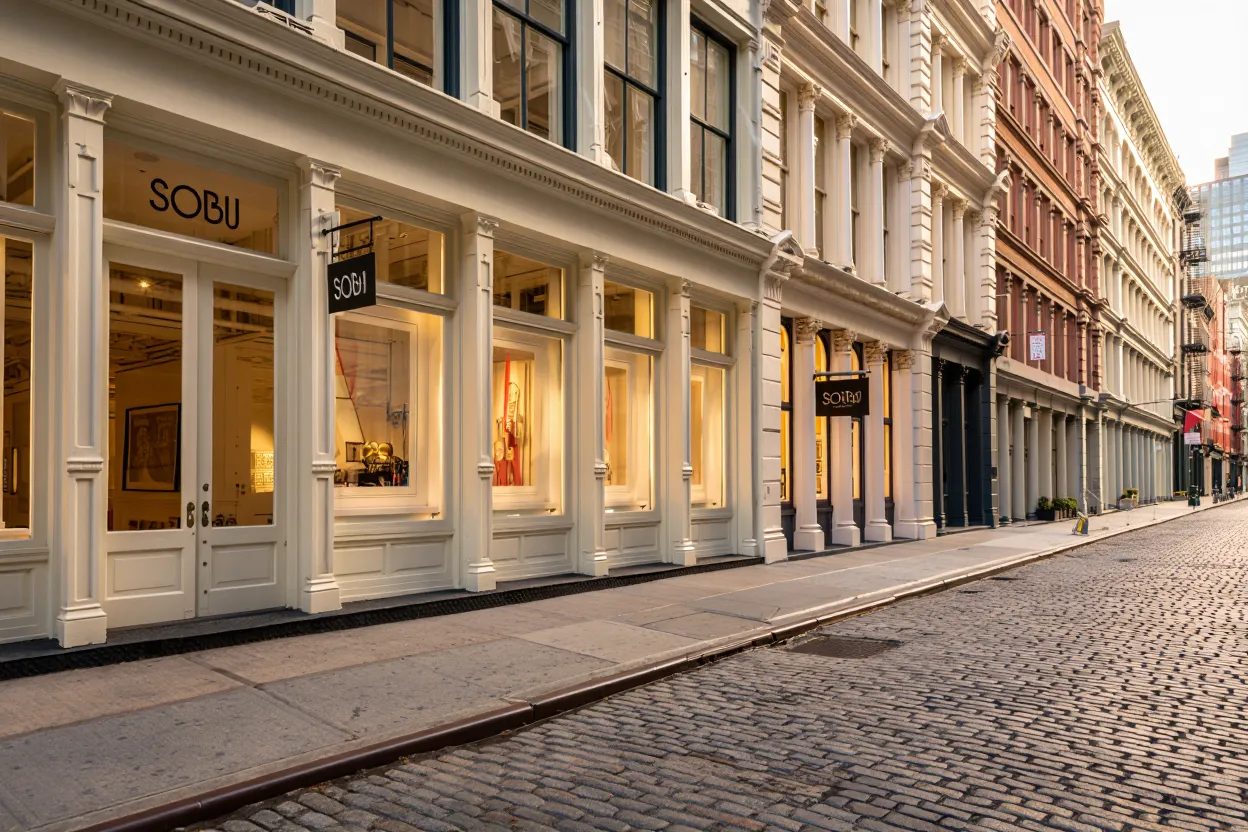
- SoHo accounted for 43% of trophy retail trades tracked in Q1 2026, leading all US shopping corridors with $195M in sales volume, per ACP.
- Foreign buyers and brand owner-occupants drove activity, targeting boutique trophy assets in the $10M–$50M range as hedge against rising rents.
- Rising rents and low vacancy are prompting luxury brands to acquire their flagship locations outright in multiple gateway markets.
Manhattan’s SoHo became the epicenter of US trophy retail investment in the first quarter of 2026, outpacing all other premier shopping corridors. According to Commercial Observer, a report from Adirondack Capital Partners (ACP) tracked $704M of trophy retail sales nationally between January and March, with SoHo leading the pack. Six of the fourteen deals identified by ACP were in SoHo, representing 43% of this high-stakes market segment. The largest SoHo trade was 120 Spring Street, which fetched $18.5M—or a record-setting $8,043 PSF—from a Japanese private investor in January for Birkenstock’s flagship store.
ACP’s findings highlight a significant turnaround for luxury retail following several challenging years post-2018. SoHo’s resurgence is fueled by cross-border capital, particularly from Japan, as well as brands looking to secure control over their retail footprints amid escalating rents and fierce competition for street-level locations.
Get Smarter About What Matters in New York
Subscribe to our free newsletter covering the biggest commercial real estate stories across the five boroughs — delivered in just 5 minutes.
Foreign Capital and Owner-Users Reshape the Landscape
High street trophy retail has rebounded as international investors and retail brands pursue stable, high-profile locations in major cities. According to ACP, cross-border buyers, especially from Japan, drove several recent SoHo deals. The Japanese investor behind 120 Spring Street bought the Cartier building at 102 Greene Street for $46M in 2024. Meanwhile, Yoshida & Company paid $34M for its Williamsburg flagship in March 2026.
Richemont also bought the Van Cleef & Arpels store at 690 Madison Avenue for $54.5M. The deal shows luxury brands increasingly buy prime locations instead of leasing them. This strategy helps them manage rising occupancy costs and secure long-term flagship locations.
The Details
SoHo recorded $195M in Q1 investment volume across trophy assets and “jewel box” properties. These buildings are small, prime, single-tenant assets valued between $10M and $50M. ACP arranged the off-market $18.5M sale of 120 Spring Street. The deal set the nation’s highest price per square foot this year. The pricing also reflects stronger leasing momentum, as retailers expanded aggressively across Manhattan before buyers accelerated acquisitions.
Other major deals included Richemont’s $54.5M purchase of the Madison Avenue Van Cleef & Arpels flagship. Alo Yoga’s owner also acquired its SoHo store for $44M. REBNY reported median asking rents of $750 PSF along SoHo’s Broadway in late 2025. Low vacancy rates also intensified competition. ACP found that nearly 30% of Q1 deals involved brands buying stores for their own use. The trend reflects a tactical response to rising rents.
Luxury Corridors Compete as Brands Double Down
SoHo led Q1 activity, but Worth Avenue in Palm Beach and Newbury Street in Boston remain strong competitors. ACP reported that investors have shifted away from Fifth Avenue’s $350M to $400M megadeals. Instead, buyers now favor mid-market transactions.
ACP founder Michael Hunter Coghill said $40M to $60M deals now dominate because investors and brands can manage them more easily. Brands also buy properties to protect themselves from rent increases. SoHo rents have climbed 400% over five years. Apple and Ralph Lauren followed this strategy by buying their Boston stores for $88M and $38M.
Why It Matters
The surge in SoHo trophy retail sales marks a broader reset across luxury retail real estate. ACP found that foreign investors and owner-users now drive liquidity at the market’s top end. Their activity contrasts sharply with the post-pandemic collapse many expected in 2022. Buyers continue paying record prices per square foot because they believe premier retail locations will retain long-term value.
At the same time, rising rents strengthen the ownership case. REBNY reported median asking rents of $750 PSF along SoHo’s Broadway in 2025. Buying flagship properties now serves both branding and financial goals. Ownership also protects retailers from volatile leasing costs.
Luxury brands now favor ownership over leasing far more than before the pandemic. ACP found that owner-users or their affiliates accounted for nearly 30% of Q1 trophy deals. Property ownership has become a competitive advantage as rents rise and inventory tightens. The trend also reflects stronger demand for real assets as inflation hedges. SoHo’s leadership early in 2026 highlights changing rent dynamics, global capital flows, and evolving luxury retail strategies.
What’s Next
ACP expects SoHo to remain the leading luxury retail market this year. However, competition from Worth Avenue and Newbury Street will likely intensify. International and institutional investors continue targeting premier high street assets. Brands also prefer ownership, so more owner-user acquisitions should follow across gateway markets.
Investors will closely watch the Q2 pipeline for additional marquee SoHo deals and record pricing. Rising rents and limited vacancy should also support boutique, single-tenant trophy sales. As a result, mid-market transactions will likely continue outpacing megadeals.