
- The West became the most popular region for apartment hunters in Q1 2026, placing 11 cities in RentCafe’s top 30 renter demand rankings.
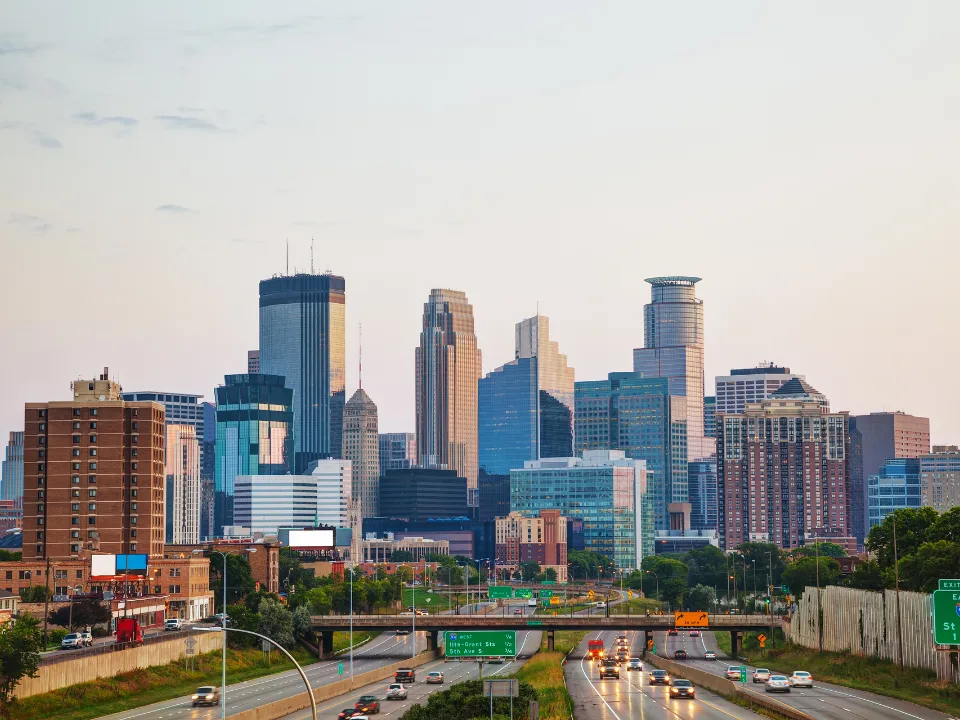
- Minneapolis ranked as the most sought-after rental market, while Miami surged 24 spots to enter the top five for the first time.
- Growing renter interest is spreading beyond traditional gateway markets into secondary cities benefiting from affordability, job growth, and hybrid work trends.
According to RentCafe’s Q1 2026 Renter Engagement Tracker, the West has become the country’s most sought-after region for apartment hunters, marking the first time in more than a year that it has outperformed both the South and Midwest. The ranking measures renter activity across the 150 largest US cities using listing availability, page views, favorites, and saved searches.
The regional shift comes just ahead of the peak summer leasing season, when apartment demand typically accelerates. RentCafe’s data suggests renters are becoming more intentional in their searches, focusing on markets with strong employment bases, economic investment, and relative affordability as housing costs remain elevated across many major metros.
Get Smarter about what matters in CRE
Stay ahead of trends in commercial real estate with CRE Daily – the free newsletter delivering everything you need to start your day in just 5-minutes
A New Regional Leader Emerges
For much of the past several years, renter demand has largely centered on Sun Belt metros and select Midwestern markets. Q1 2026 marked a notable change. The West placed 11 cities in RentCafe’s top 30 rankings, compared with nine in the South, seven in the Midwest, and three in the Northeast.
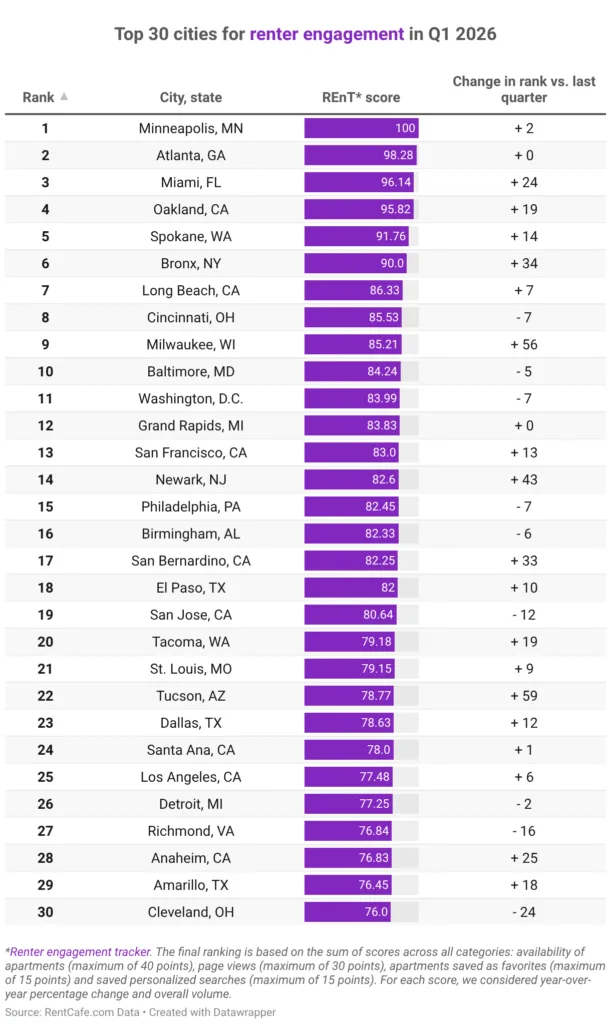
Several Western markets posted particularly strong gains. Oakland climbed to fourth nationally, Spokane reached fifth, and Long Beach secured seventh place. New entrants including Tacoma, Tucson, Los Angeles, Anaheim, and San Bernardino further strengthened the region’s presence.
The shift appears to reflect a combination of return-to-office requirements in major tech hubs, migration toward lower-cost alternatives within the region, and continued demand for markets offering a balance between affordability and access to employment centers.
The Details
Minneapolis reclaimed the top position nationwide after ranking third in late 2025. The city posted a 35% increase in saved searches and a 10% rise in listings added to favorites, signaling strong engagement from prospective renters.
Atlanta held steady at No. 2 for a second consecutive quarter, ranking first nationally for listings added to favorites and second for saved searches. Miami delivered the quarter’s most notable top-tier jump, climbing 24 positions to reach No. 3. The South Florida market also led the nation in apartment listing page views, while saved searches increased 102%.
Rounding out the top 10 were Oakland, Spokane, the Bronx, Long Beach, Cincinnati, Milwaukee, and Baltimore. Among those markets, Milwaukee posted one of the strongest gains, rising 56 positions to enter the top 10, while the Bronx broke into the ranking for the first time after a 110% increase in favorites activity.
Secondary Cities Gain Ground
One of the most significant themes in the latest rankings is the growing appeal of secondary and tertiary apartment markets. Cities such as Spokane, Milwaukee, Tacoma, Tucson, and Amarillo all registered meaningful gains in renter engagement.
Many of these markets benefit from affordability advantages relative to nearby major metros. Spokane continues to attract renters seeking alternatives to Seattle, while Oakland and Long Beach benefit from spillover demand from the Bay Area and Los Angeles, respectively.
The trend also reflects changing workplace dynamics. Hybrid work arrangements have expanded the geographic range renters are willing to consider, allowing cities outside traditional employment hubs to compete more effectively. Economic development projects, healthcare employment growth, and infrastructure investments have further increased the attractiveness of several emerging rental markets.
Why It Matters
The rankings provide an early look at where apartment demand may concentrate during the industry’s busiest leasing period. While renter engagement does not directly translate into occupancy or rent growth, it often serves as a leading indicator of future leasing activity.
For multifamily owners and investors, the results reinforce the importance of looking beyond traditional gateway markets. Several of the strongest-performing cities in RentCafe’s rankings are not among the country’s largest metros, yet they continue attracting meaningful renter interest due to affordability, employment growth, and quality-of-life advantages.
The data also highlights the ongoing evolution of migration patterns. Miami’s rise, Oakland’s continued strength, and growing interest in markets such as Spokane and Tacoma suggest renters remain willing to relocate in pursuit of better value and lifestyle opportunities. At the same time, established urban centers continue to maintain relevance when supported by strong job creation and economic investment.
As competition for renters intensifies, markets that combine housing affordability with employment opportunities may be best positioned to capture demand through the remainder of 2026.
What’s Next
Investors will also be watching whether the West can maintain its newfound lead. The region’s dominance was driven by a broad collection of markets rather than a handful of standout cities, suggesting the trend may have staying power if affordability and employment conditions remain favorable.
Meanwhile, emerging markets such as Milwaukee, Newark, Tacoma, Tucson, and the Bronx will be closely monitored as potential growth stories.