




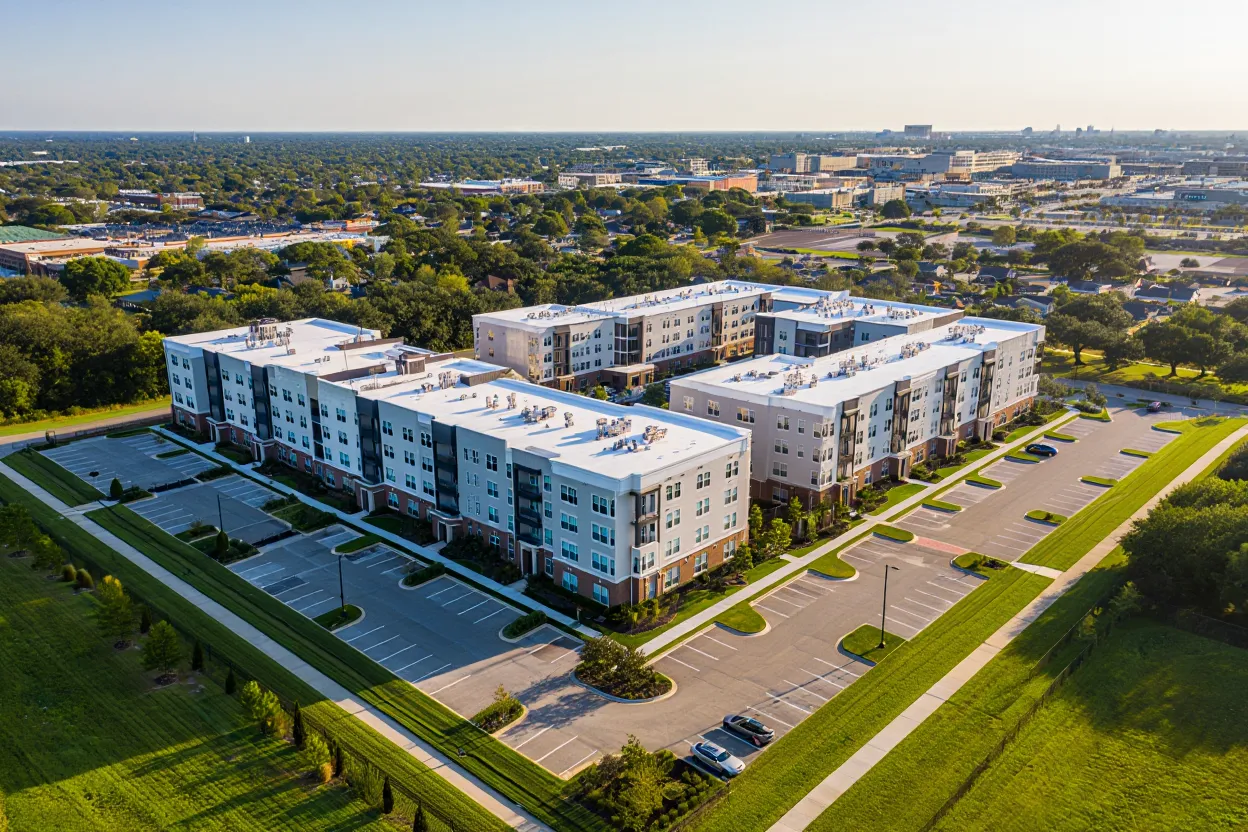
- Houston multifamily rents are projected to increase 2.3% in 2026 to $1,410/month.
- New multifamily supply will hit its lowest point since 2013, with delivery contraction most intense inside the 610 Loop.
- Investor interest is strong for sub-$10M properties and units built after 2000, with significant transaction volume growth in 2025.
- Despite strong rent growth, Houston’s vacancy rate is expected to rise to 6.3% in 2026, remaining among the highest nationally.
Rents Climb as Supply Plummets
According to Globe St, Houston multifamily rents are on the rise, as Marcus & Millichap projects a 2.3% increase in 2026. The average monthly rent is expected to reach $1,410. These gains parallel a drop in new supply, with deliveries at their lowest since 2013. The 610 Loop will see the sharpest decline in completions, forecasted at a 10% drop next year. However, the Northwest, Katy, and Sugar Land-Stafford submarkets may see a moderate increase in new units.
Investor Demand Shifts
Investor demand remains solid in Houston’s multifamily sector. Transactions surged for smaller properties under $10M, jumping 60% year over year in late 2025. Demand for assets built after 2000 also climbed, with a 50% increase in activity last year. Investors are focusing on supply-tight areas like River Oaks and on submarkets with persistent low vacancies, such as Clear Lake, Pearland, Pasadena, and Galveston. At the same time, performance gaps across Texas markets are widening, with some metros recovering faster than others. These areas benefit from steady working-class demand despite softer white-collar job trends across the US.
Get Smarter About What Matters in Texas
Subscribe to our free newsletter covering the biggest commercial real estate stories across Texas — delivered in just 5 minutes.
Why Houston Draws Investors
Houston multifamily offers the highest average cap rates among Texas’s major metros, further driving capital into the region. Still, not all metrics trend positive: 2026 multifamily vacancy is forecast to rise 20 bps to 6.3%, which is 120 bps below the historical city average but still among the top three US metro vacancy rates. Job growth is also expected to slow, marking the second weakest increase since 2016 at just 0.2%.
What’s Next for Multifamily
As new multifamily supply dries up, Houston’s affordability and high cap rates should continue to attract investors and renters. The market’s outlook depends on whether steady rent growth can offset rising vacancies as employment growth cools.