




- Dallas Fed projects Texas jobs to grow by 1.9% in 2026, or nearly 280,000 positions.
- Strong gains in construction and health care drove recent employment growth.
- Labor supply constraints and economic uncertainty could slow job growth.
- Major Texas metros, especially Dallas, Austin, and San Antonio, are leading state-level gains.
Dallas Fed Projects Stronger Texas Jobs Growth
The latest forecast from the Federal Reserve Bank of Dallas signals steady job growth for Texas in 2026. Federal Reserve economists now expect the state to add about 280,000 jobs, a gain of 1.9%—a pace close to Texas’s long-term trend, reflecting recent robust hiring, especially in construction and health care.
The Dallas News reports that this updated outlook is more positive than previous estimates and is based on solid monthly growth in December and January. The projection uses modeling that factors in national GDP, oil prices, and state and national data.
Resilient Sectors Drive Gains
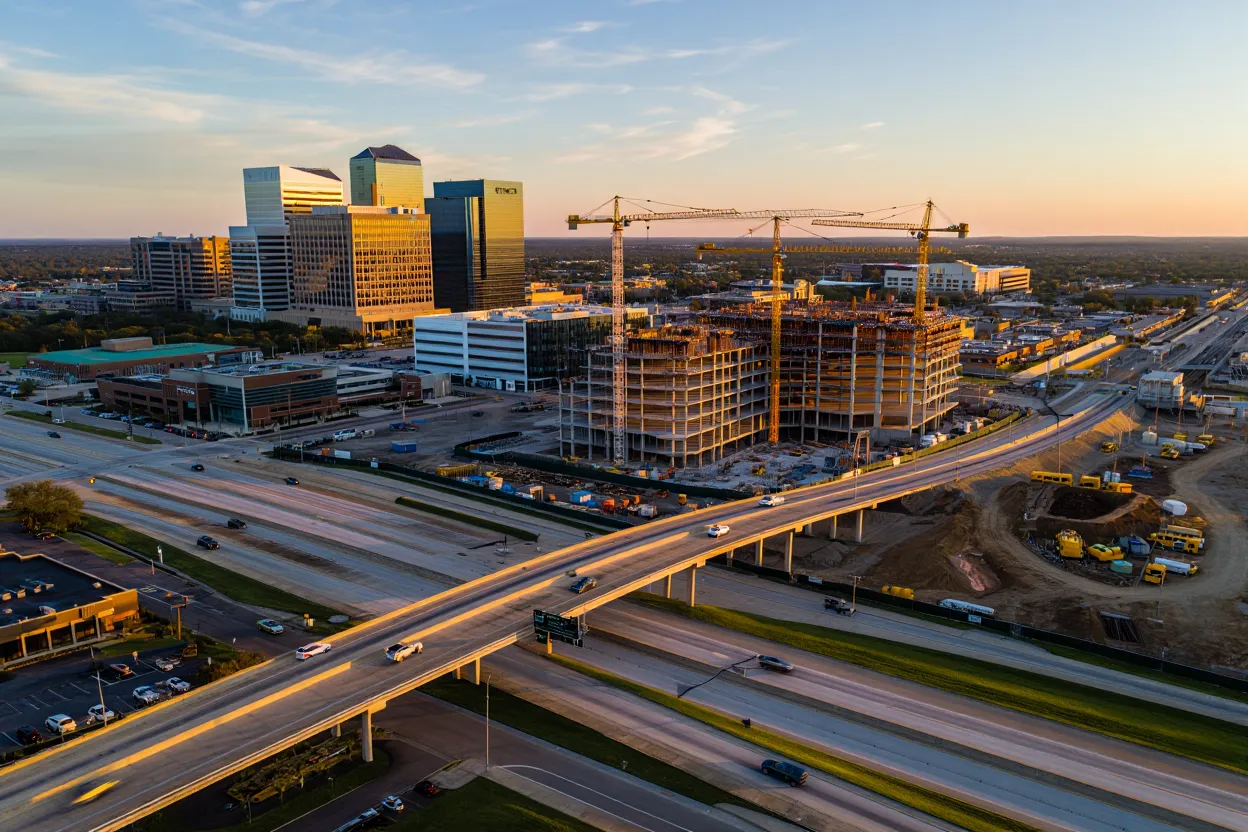
Construction, leisure and hospitality, education and health care services, and professional business services accounted for much of Texas jobs growth in early 2026. Across the state, major metro areas posted strong numbers: Dallas added jobs at a 4.8% annualized rate in January, Fort Worth at 2.9%, and Austin and San Antonio at 5.9%. Unemployment rates held steady in Dallas-Fort Worth, while ticking up in Austin and San Antonio amid rapid expansion.
Get Smarter About What Matters in Texas
Subscribe to our free newsletter covering the biggest commercial real estate stories across Texas — delivered in just 5 minutes.
Headwinds Remain for Texas Jobs
Despite the optimistic Texas jobs forecast, economists at the Dallas Fed urge caution. They cite limitations such as declining immigration, which restricts labor supply, and higher productivity, which reduces labor demand. Similar mixed signals are showing up across major metros, where some cities continue to lead hiring while others are starting to cool despite recent gains. Business outlook surveys in both manufacturing and services indicate a slowdown in growth and increasing uncertainty, due to factors like geopolitical tensions and fluctuating oil prices.
The bank’s projection includes a wide confidence range: Texas jobs growth could finish anywhere from 1.1% to 2.7%. While higher oil prices may boost activity if sustained, labor constraints and ongoing global risks mean trend growth may remain out of reach in the near term.
National Context Adds Caution
US labor market signals are mixed. The March national jobs report showed 178,000 new positions—surpassing expectations and led by health care and construction. However, a weak February and temporary effects like strike reversals suggest momentum may not be as strong as the headline number implies. Overall, while Texas jobs show steady gains, broader market volatility and uncertainty could temper future growth.