

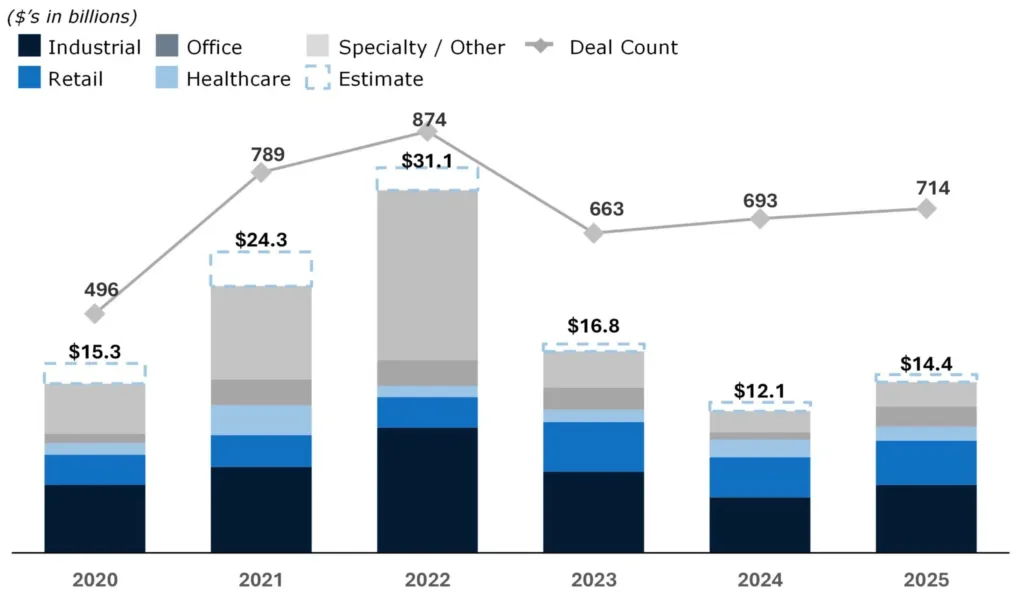
- US sale leaseback transactions rose 3% in 2025, with volume reaching $14.4B.
- Fourth quarter dollar volume jumped 56% from Q3 to $4.7B.
- Growth aligns with a rebound in M&A activity and corporate capital demand.
- Sale leaseback pricing improved with cap rate compression into 2026.
Market Momentum Builds
According to IREI, the US sale leaseback market posted a strong recovery in 2025, with 714 closed transactions, up 3% year-over-year. Aggregate transaction volume climbed 18% to $14.4B, the highest level since 2022, according to SLB Capital Advisors. The increase signals renewed appetite for unlocking real estate value through sale leaseback deals, particularly as M&A activity returned in the latter half of the year.
Q4 Surge and M&A Link
Sale leaseback activity picked up sharply in the fourth quarter, with dollar volume up 56% from the prior quarter. Industry experts attribute the momentum to larger deal sizes and an uptick in corporate M&A transactions. Historically, improved M&A environments lead to more sale leaseback transactions as companies seek to monetize real estate holdings for liquidity.
Get Smarter about what matters in CRE
Stay ahead of trends in commercial real estate with CRE Daily – the free newsletter delivering everything you need to start your day in just 5-minutes
Strategic Capital Solution
Corporations continued to leverage sale leaseback structures as a cost-effective way to access capital. Monetizing owned real estate allowed firms to boost liquidity without issuing equity or increasing traditional debt. Advisors note that a stronger pricing environment and compressed cap rates made these deals more attractive heading into 2026. This financing flexibility is particularly valuable as lenders and regional banks navigate profitability pressures and shifting interest-rate dynamics, which have been weighing on balance sheets across the banking sector.
Outlook for 2026
With corporate transaction activity trending upward, SLB Capital Advisors expects a particularly active sale leaseback market in 2026. The combination of robust M&A, competitive pricing, and rising demand from owners seeking alternative financing points to sustained growth in sale leaseback transactions.