







- Gen Z renter households increased sixfold nationwide over five years.
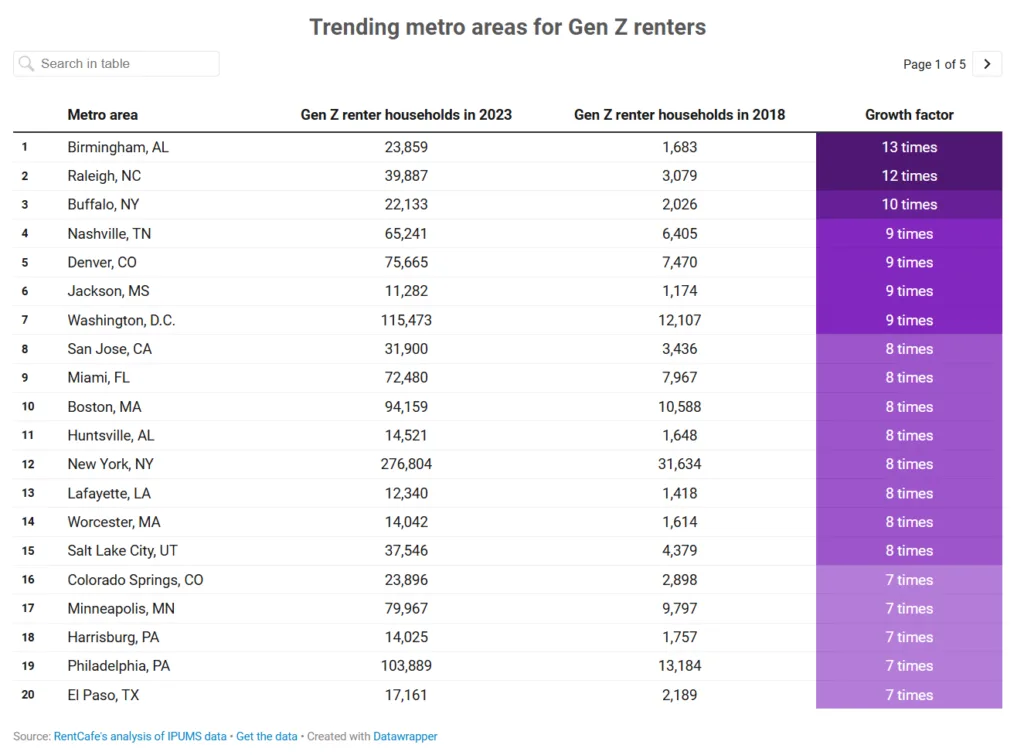
- Southern metros like Birmingham, Raleigh, and Nashville outpace others in renter growth.
- Gen Z homebuying is rising fastest in affordable Midwest and Southern markets.
- San Jose, CA, and Ogden, UT, lead in Gen Z renter and homeowner concentrations, respectively.
Gen Z Housing Trends Reshape Markets
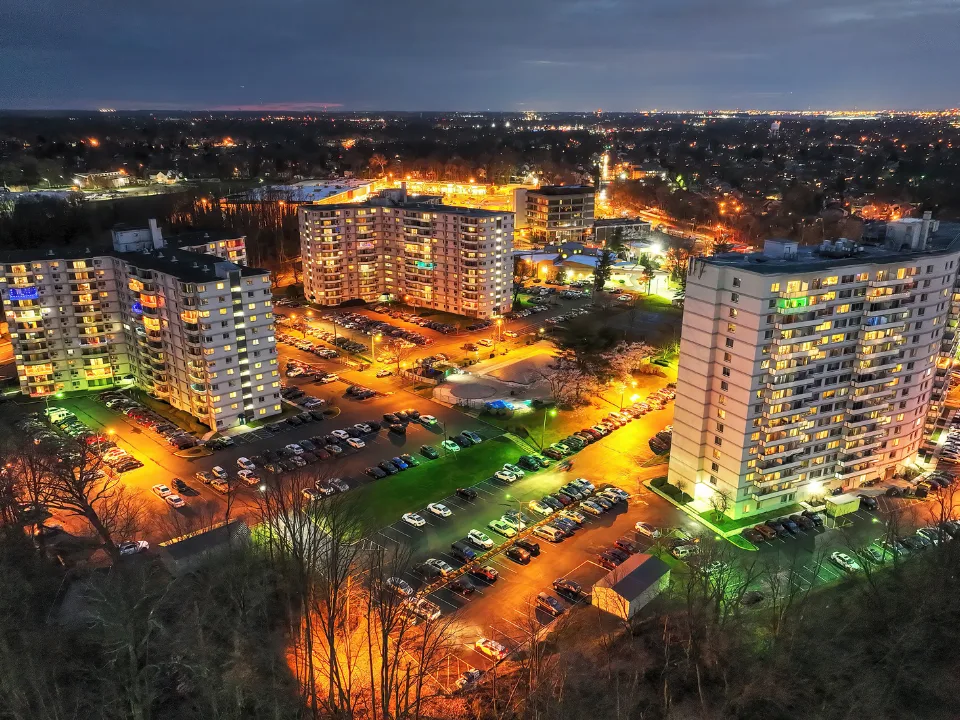
Gen Z is rapidly impacting US housing patterns, with both renters and buyers gravitating toward new regional hotspots. According to RentCafe research, Gen Z renter households have surged from 700,000 to 4.4M between 2018 and 2023, a sixfold increase, as this demographic seeks affordability, career opportunities, and lifestyle benefits.
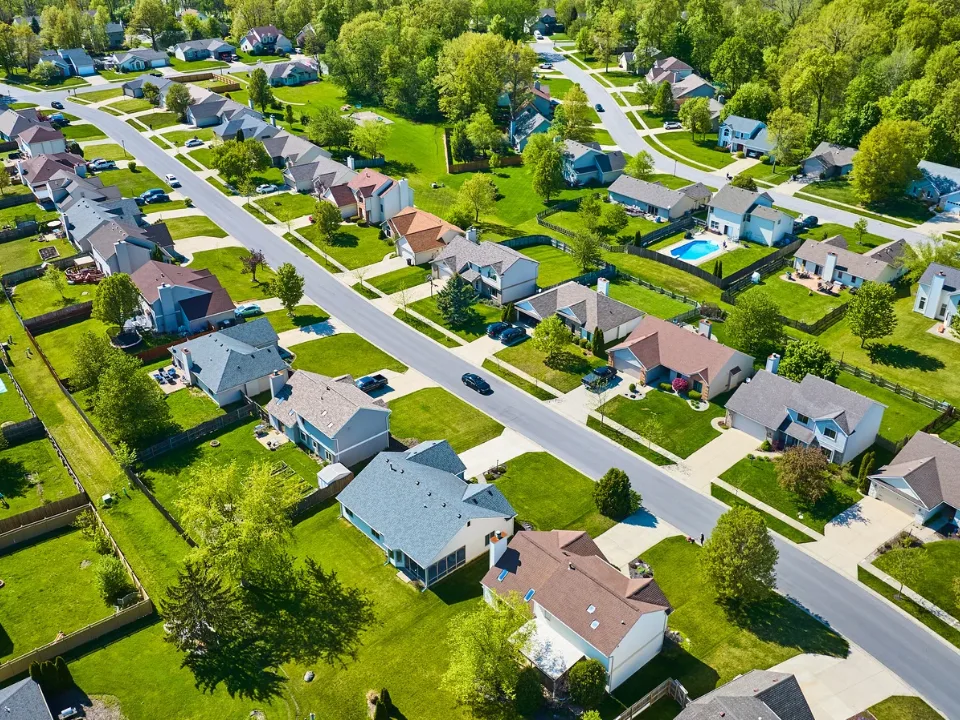
While 83% of Gen Zers still rent, the number of Gen Z homebuyers is climbing—especially in the Midwest and South where lower prices and rising wages make homeownership more attainable. Only 17% of Gen Z currently own a home, trailing Millennials at the same stage, but that share is expected to keep rising in less costly metros.
Southern Metros Drive Renter Growth
Southern cities dominate growth among Gen Z renters. Birmingham, AL, leads the nation with a thirteenfold jump in renter households since 2018, followed closely by Raleigh, NC, and Nashville, TN. Lower costs of living and strong job markets are drawing young residents to these metros.
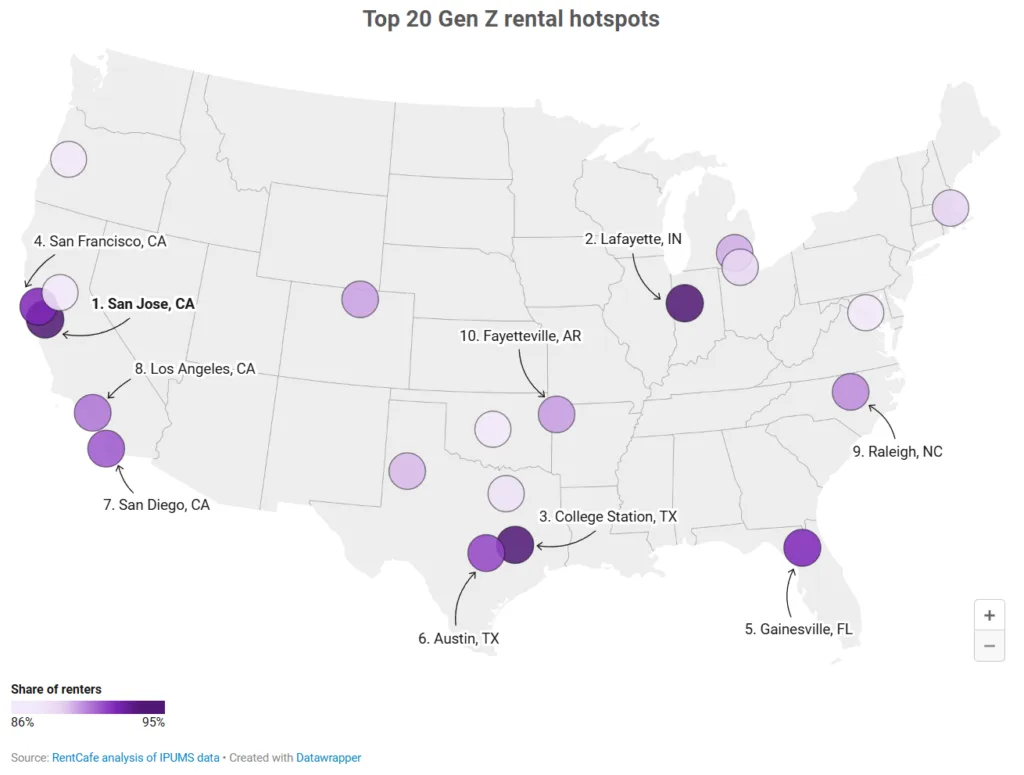
Other notable hotspots include Buffalo, NY; Denver, CO; Jackson, MS; and Washington, D.C. Even traditional coastal hubs like San Jose, CA, and Miami, FL, continue to attract young renters, although absolute growth rates are higher in the South and Midwest. In San Jose, nearly 95% of Gen Z households rent—a national high.
Tech Hubs and College Towns Offer Dense Rental Markets
California and Texas metros stand out for high shares of Gen Z renters—driven by tech sector jobs, rising incomes, and unaffordable house prices. San Jose, San Francisco, San Diego, and Los Angeles all rank among the highest concentrations, as do Austin, College Station, and Dallas, TX. This concentration of young renters in innovation-driven metros reflects how the tech sector continues to shape housing demand and rental market performance across major US hubs.
College towns like Lafayette, IN, and Ann Arbor, MI, also see most Gen Zers renting, supported by expanding education-driven demand and rapidly growing local economies.
Midwest and South See Fast-Rising Gen Z Homeownership
Gen Z homebuying is gaining momentum outside traditional housing markets. Tucson, AZ, posted a 170-fold increase in Gen Z owner households in five years, with other fast-growing cities including Jacksonville, FL; Dayton, OH; and Omaha, NE.
Ogden, UT, has the highest share of Gen Z homeowners—41%. Detroit, Birmingham, Jackson, and Greenville are also leading homeowner hotspots due to affordable housing, strong income growth, and targeted assistance programs.
Get Smarter about what matters in CRE
Stay ahead of trends in commercial real estate with CRE Daily – the free newsletter delivering everything you need to start your day in just 5-minutes
Why It Matters
- Gen Z housing preferences are altering city demographics, retail demand, and multifamily absorption across US regions.
- The shift toward affordable markets in the South and Midwest signals opportunities for investors and developers in these zones.
- Renting remains dominant for Gen Z, but homeownership is poised to increase as this cohort ages and more metros prioritize affordability.
What’s Next
Expect continued growth in Gen Z renter numbers in Southern and college-focused metros through the coming years. Meanwhile, homebuying activity should accelerate in affordable Midwest and Southern markets, driving residential investment and ancillary CRE activity in these emerging Gen Z housing hotspots.