



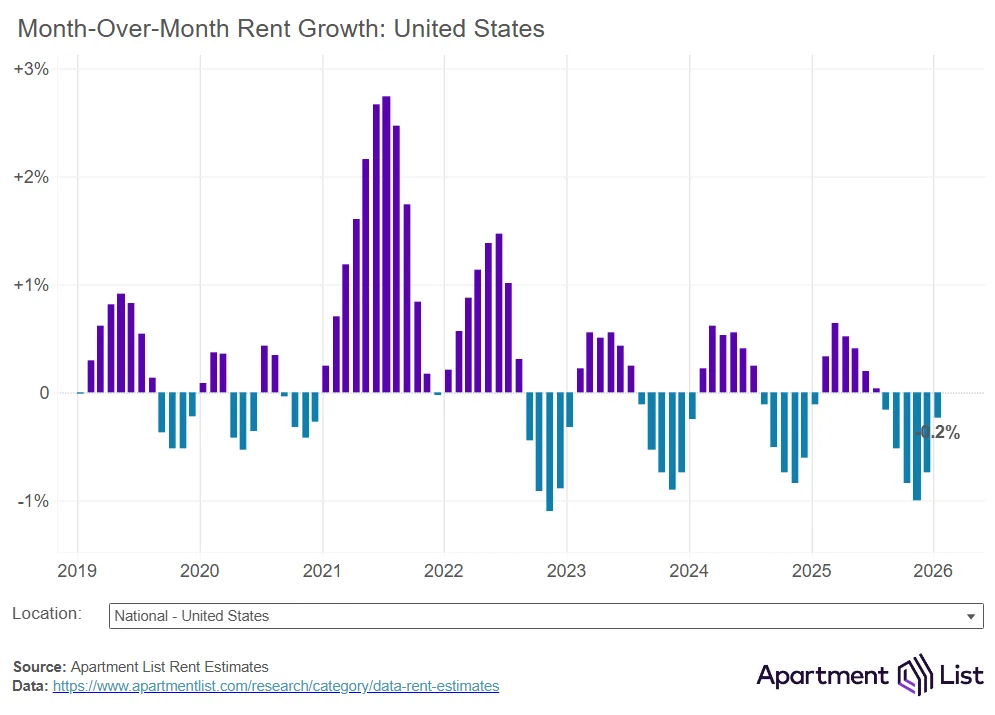
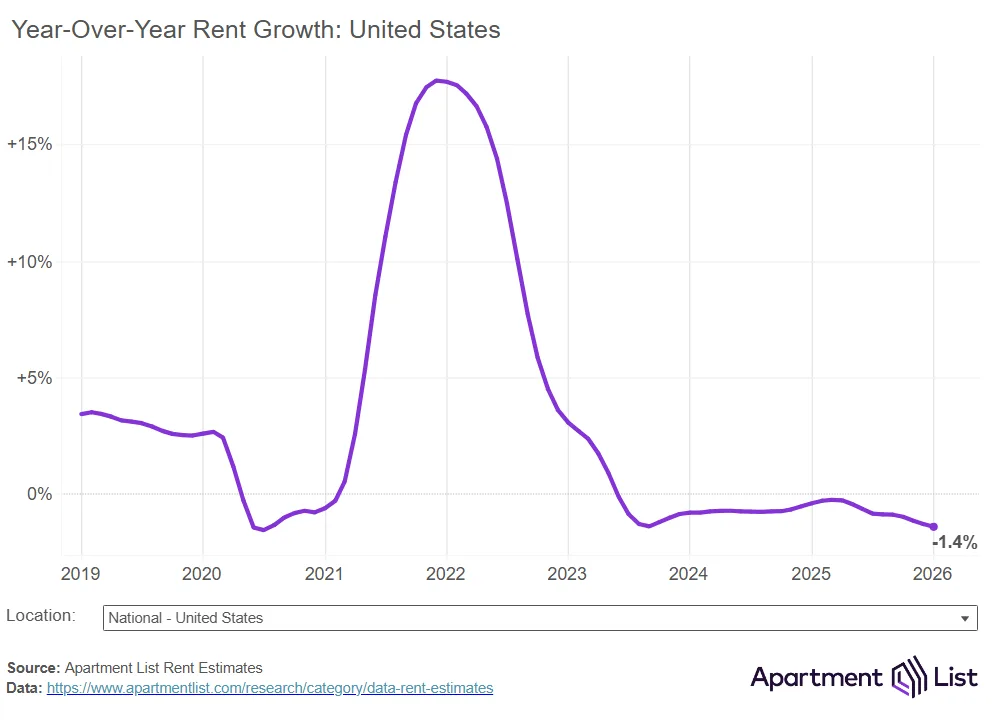
- Apartment List shows national median rent down 0.2% in January to $1,353.
- Multifamily vacancy rate rises to 7.3%, highest since tracking began in 2017.
- List-to-lease time hits record 41 days, indicating slower market activity.
- Annual rent declines are sharpest in Sun Belt metros, led by Austin, TX.
Winter Brings Another Rent Dip
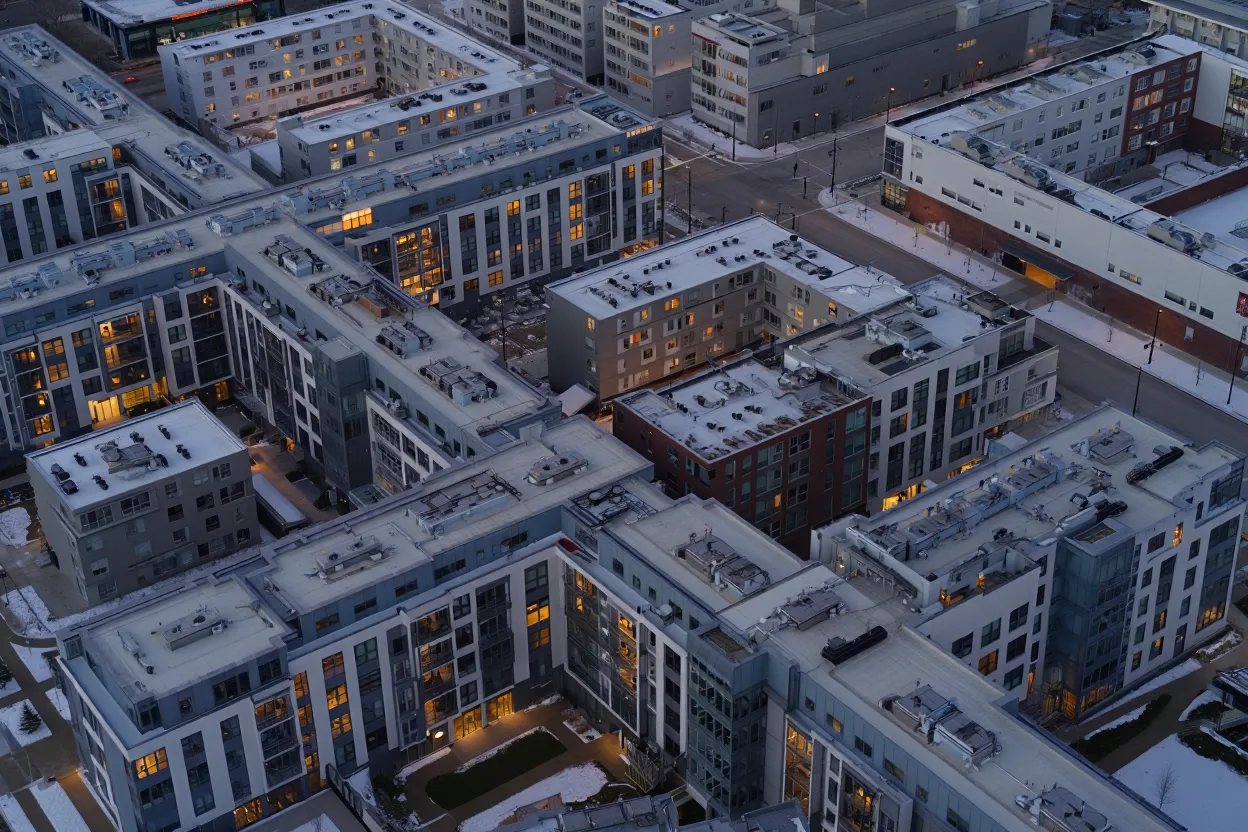
The Apartment List National Rent Report finds US rents dropped for the sixth month in a row, easing another 0.2% in January. The median apartment rent is now $1,353—a 1.4% decrease year-over-year and a 6.2% drop from the 2022 market peak. This trend marks the fourth consecutive winter with pronounced off-season rent dips, expanding a pattern seen since the surge in multifamily construction post-pandemic.
Market Softness Dominates
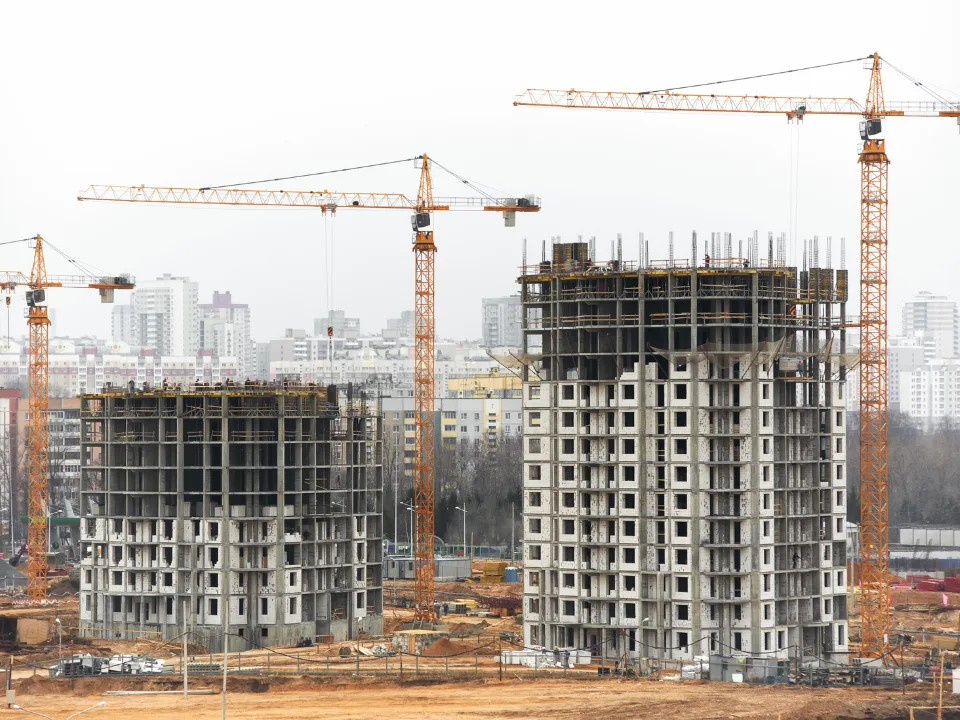
Apartment List notes that current market softness is driven largely by high multifamily supply. Over 600,000 new units delivered in 2024 pushed the vacancy rate to 7.3%—a record since the index began in 2017. This trend reflects broader industry data showing rising vacancies across the multifamily sector, as supply continues to outpace demand. With supply still above long-term averages and demand muted by economic uncertainty, landlords have reduced pricing leverage and competition for tenants is rising.
Slower Leasing Activity
Apartments now take longer to lease. In January, the average list-to-lease time hit 41 days—a new high. That’s four days slower than last year and more than twice the speed seen in summer 2021. More available units are sitting on the market, pushing leasing times higher. The growing supply continues to shift key Apartment List metrics across the country.
Get Smarter about what matters in CRE
Stay ahead of trends in commercial real estate with CRE Daily – the free newsletter delivering everything you need to start your day in just 5-minutes
Regional Divergences Emerge
Sun Belt metros are seeing the steepest rent declines. Austin rents fell 6.3% over the past year and over 20% from the 2022 peak. Other supply-heavy cities like Denver, Phoenix, San Antonio, Tampa, and Raleigh also posted sharp annual drops. In contrast, some metros are still growing. Virginia Beach, San Jose, and San Francisco saw rents rise, helped by strong local economies and tech-driven demand.

What’s Next
Apartment List foresees market conditions remaining soft as elevated vacancy and slow leasing coincide with a tapering construction pipeline. The rental outlook will hinge on labor market strength and general economic trajectory. With construction moderating but demand uncertain, a faster market recovery will depend on how quickly the sector can absorb the existing supply surplus.