

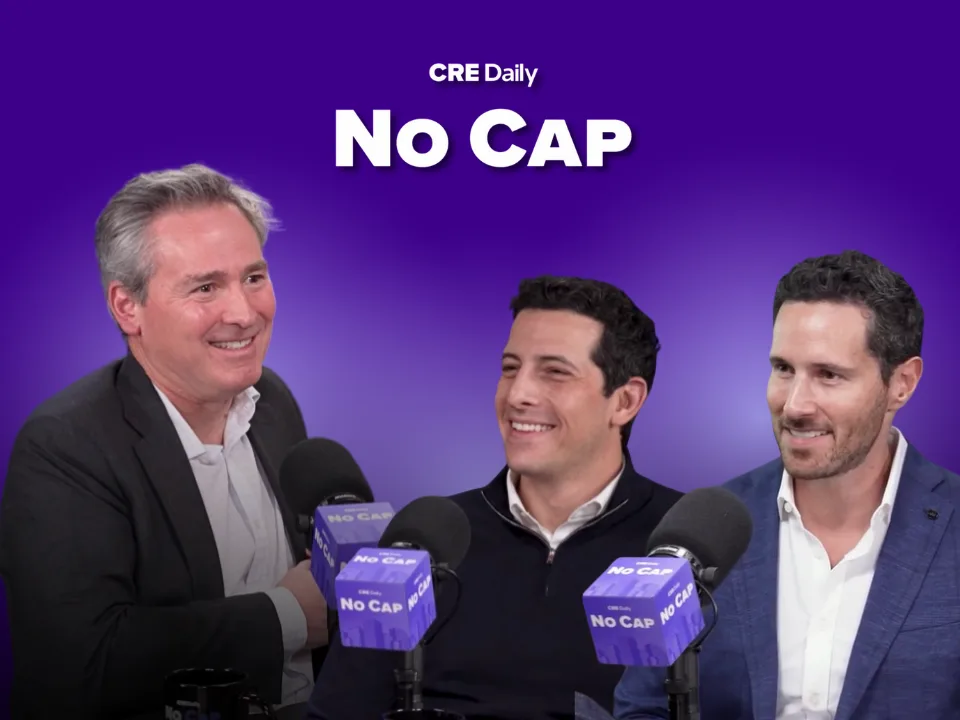
Season 5 of the No Cap podcast continues with a conversation with Bill Sexton, CEO of Trimont, the largest independent commercial real estate loan servicer in the US.
Trimont oversees more than $700B in CRE loans globally. After acquiring Wells Fargo’s non agency servicing business, the platform now touches roughly 11% of all commercial real estate debt in the US.
Bill walks through what loan servicing actually is, why “special servicing” matters when loans go sideways, and what Trimont is seeing across multifamily, office, lodging, and the broader credit cycle. He also explains why borrowers should care who their loan is sold to, and why Trimont’s data shows a subtle shift in payment behavior across nearly every asset class.
Conversation Highlights
Alex: Give us your background. How did you end up in loan servicing?
Bill Sexton: I started in the late 80s advising German investors buying offices and shopping centers across Europe. I spent time in investment banking at Citigroup, then built and sold an industrial real estate business in 2007. After the GFC, I moved into credit and loan servicing, working through distressed CMBS. That eventually led me to Trimont.
Jack: Trimont manages a massive amount of debt. What does that scale really mean?
Bill Sexton: About 11 cents of every dollar lent against commercial real estate in the US flows through Trimont in some way. We oversee roughly $700B in loans globally. That scale gives us a broad, real-time view of the market.
The conversation then shifted from Trimont’s scale to how loan servicing actually works when deals start to crack.
Alex: Walk us through the basics. What’s the difference between primary and special servicing?
Bill Sexton: Primary servicing is the back office. It’s interest calculations, escrows, taxes, insurance, and loan compliance. Special servicing starts when something breaks. A loan defaults or hits maturity and can’t refinance. At that point, the servicer drives outcomes for the entire capital stack.
Jack: Why is independence so important in special servicing?
Bill Sexton: Because decisions affect multiple stakeholders. In securitized deals, information has to flow evenly and actions must follow the servicing standard. As a result, as a third-party servicer, we don’t own the asset or have capital at risk. Our role is to act solely for bondholders.
Alex: How would you explain Trimont’s role to someone new to real estate?
Bill Sexton: Think of us as a third-party property manager, but for lenders. We manage a financial instrument backed by real estate. Credit focuses on risk. Equity focuses on upside.
Jack: The Wells Fargo acquisition was a big step. Why did it matter?
Bill Sexton: Trimont historically focused on private credit. However, the Wells Fargo deal added a major CMBS platform and expanded public credit exposure. Therefore, it reflects where the market is heading. Banks are pulling back from CRE, while private credit and securitized debt continue to grow.
From there, the discussion turned to what Trimont’s data is starting to signal beneath the surface of a more active market.
Alex: With all the data you see, what’s standing out right now?
Bill Sexton: We track how many loans pay principal and interest in full each month. Historically, most asset classes stayed within a tight range. Office has been the outlier. What’s new is that over the last two to three months, nearly every asset class has moved in the same negative direction.
We’re almost like the canary in the coal mine. We see things happening before most people do.
Jack: That’s happening while market activity is improving. How do you read that?
Bill Sexton: CMBS issuance is up. Cap rates appear to have bottomed. Valuations feel more stable. Yet payment behavior is softening. It may correct, but it’s something we’re watching closely.
Alex: Are you seeing anything like 2007?
Bill Sexton: No. That period was unique. Outside of office, underlying real estate has held up reasonably well. That’s why lenders have been willing to extend and modify loans. Some assets will refinance successfully. Others won’t.
That led into a broader discussion about where stress is actually emerging, and how this cycle is diverging by asset class.
Jack: Where is stress showing up most clearly?
Bill Sexton: Multifamily stress is concentrated in B and C assets in certain markets. In many cases, oversupply plays a role. As a result, new A product pulls renters up the quality curve, leaving older stock exposed. Meanwhile, rising expenses and deferred maintenance add pressure. Still, multifamily remains our largest exposure.
Alex: What about office and lodging?
Bill Sexton: Office remains challenged, but we’re seeing more office loan originations than in recent years. That suggests some lenders believe values are near the bottom for the right buildings. Lodging shows up disproportionately in special servicing, especially large conference hotels in regional markets.
Jack: What typically triggers special servicing?
Bill Sexton: Payment default, often at maturity. A loan reaches maturity and can’t refinance. Many lenders, especially banks, don’t want to own assets. Private credit lenders are generally more comfortable stepping in.
At the end of the day, no one thinks a loan is going to default the day you write it.
Alex: When should a sponsor stop supporting a deal?
Bill Sexton: It’s a judgment call. In practice, we look for a plan, the ability to execute, and capital. Above all, capital is the clearest signal of conviction. Generally, professional sponsors tend to be pragmatic. By contrast, smaller owners can be more emotionally attached.
Jack: How do you feel about 2026?
Bill Sexton: I’m cautiously optimistic. There’s still a wall of maturities, but values feel more normalized and short-term rates are easing. That creates refinancing opportunities. Not every asset makes it, but overall activity should improve.
Alex: Final thought. What should people be watching most closely?
Bill Sexton: The 10-year. Prime cap rates historically track within about 150 basis points of it. Short-term rates matter, but long-term yields drive valuations.
That’s the one number that historically has impacted our industry the most.
Watch the full episode on our YouTube Channel or your favorite podcast app.
Tune in weekly for new episodes of No Cap by CRE Daily!