



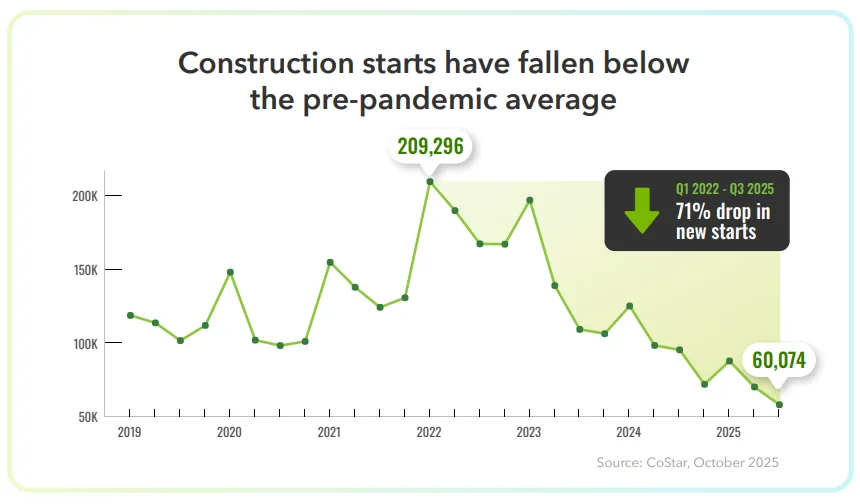
- Multifamily trends in 2026 point to a sharp decline in new construction, with a 71% drop in starts since 2022.
- Operators are embracing automation and AI tools for leasing, marketing, and operations to boost efficiency and renter experience.
- Luxury properties face high vacancy rates, driving continued use of concessions and greater focus on resident retention.
A Post-Boom Era
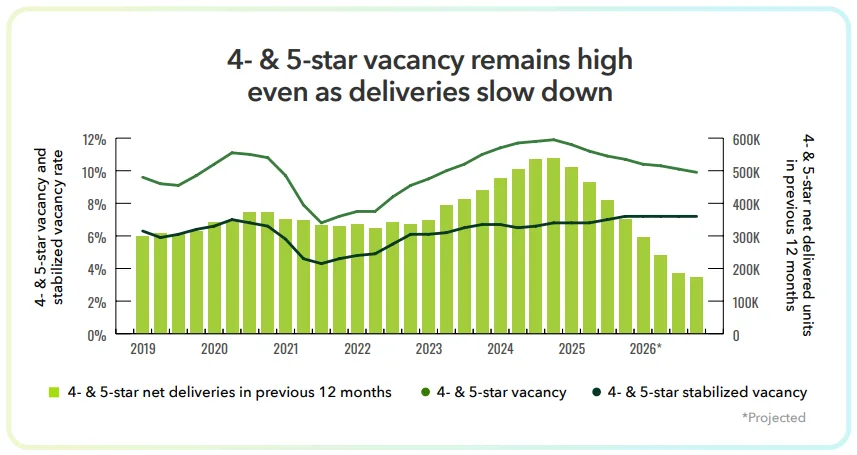
After record-setting deliveries in 2024, when 700K new units came online, multifamily construction is entering a slowdown, reports Apartments.com. In 2026, the pipeline will shrink considerably. Starts have already dropped 71% from their peak in Q1 2022. Projections show just 60K units will break ground in Q3 2025 — well below historical averages.
Markets expected to see the largest year-over-year declines in deliveries include Orlando, Salt Lake City, and Austin, which could feel the brunt of this deceleration.
Get Smarter about what matters in CRE
Stay ahead of trends in commercial real estate with CRE Daily – the free newsletter delivering everything you need to start your day in just 5-minutes
Rent Growth Returns, But Slowly
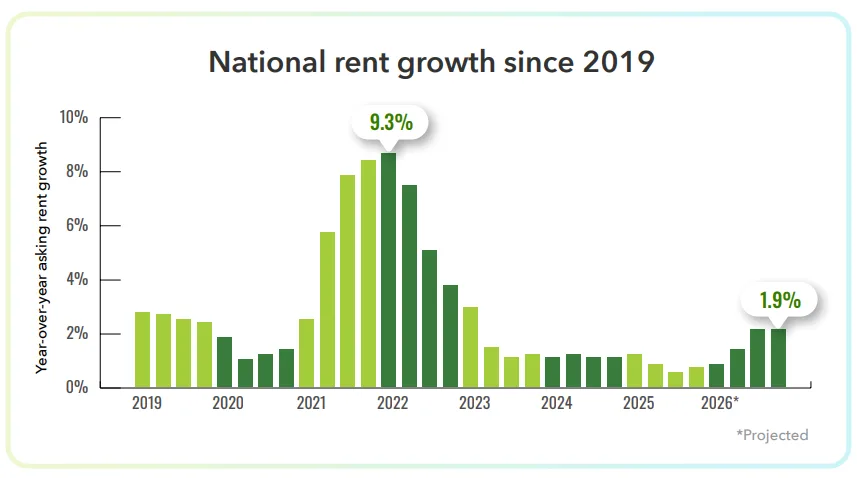
After hovering near 1% for most of 2025, national rent growth is projected to rise to 1.9% in 2026. This marks a modest rebound compared to the 9.3% spike seen in 2022. However, vacancies in luxury units will remain elevated at over 10%, slowing absorption of new supply.
Top-performing markets for rent growth include San Jose and San Francisco, driven by employer return-to-office mandates and the AI sector. Other strong markets include Norfolk, Chicago, and Philadelphia.
Automation And AI Go Mainstream
Operators are going all-in on automation. From digital package lockers to AI-powered leasing chatbots, tools are being widely adopted to streamline operations. A 17% year-over-year increase in listing automation was reported among Apartments.com clients. AI tools are also being used to track online reputation, identify pain points in reviews, and improve retention.
Centralized Leasing Saves Time
Leasing centralization — once reserved for large property managers — is expanding across the industry. Companies like MAA have saved over 30K hours annually by centralizing lease admin tasks. Expect more pod-style management and shared leasing offices across portfolios in 2026.
High Vacancy And The Concession Economy
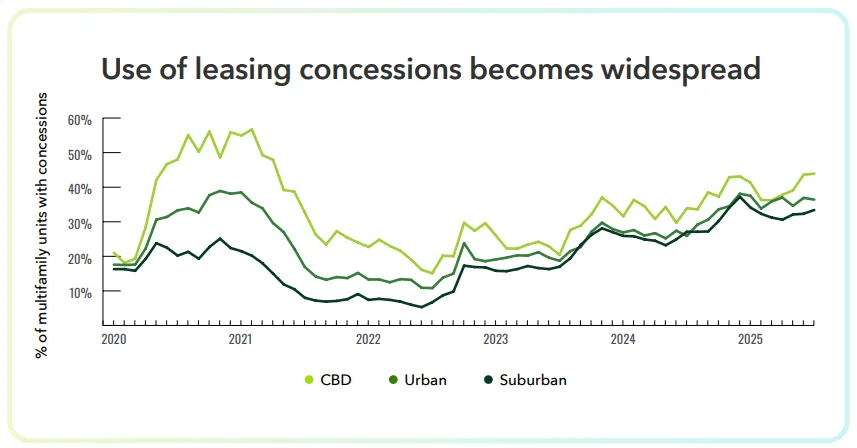
Even as supply drops, luxury properties will still battle high vacancy rates. Over 30% of multifamily units are offering concessions to fill units — a trend that will persist into 2026. Renters prefer long-term discounts over short-term perks: 67% favor discounted rent over 12 months, compared to 62% who would choose one month free rent.
Gen Z Sets The Standard
Younger renters are driving a shift in leasing expectations. Nearly 80% of renters want unit-specific photos, and over half would skip a listing that lacks them. Gen Z renters are significantly more likely to demand 3D tours and video content, pushing marketing teams to rethink digital strategies.
Resident Retention And Creative Amenities
Luxury buildings will increase efforts to retain existing residents, using multiple touchpoints and greater flexibility around renewals. At the same time, properties are adding unique amenities — like plunge pools, saunas, and virtual fitness — to stand out and appeal to Gen Z renters.
Why It Matters
Multifamily real estate is entering a phase of slower growth, smarter operations, and more renter-driven strategies. Success in 2026 will depend on how well operators adapt to automation, respond to regional shifts, and meet evolving renter expectations.