





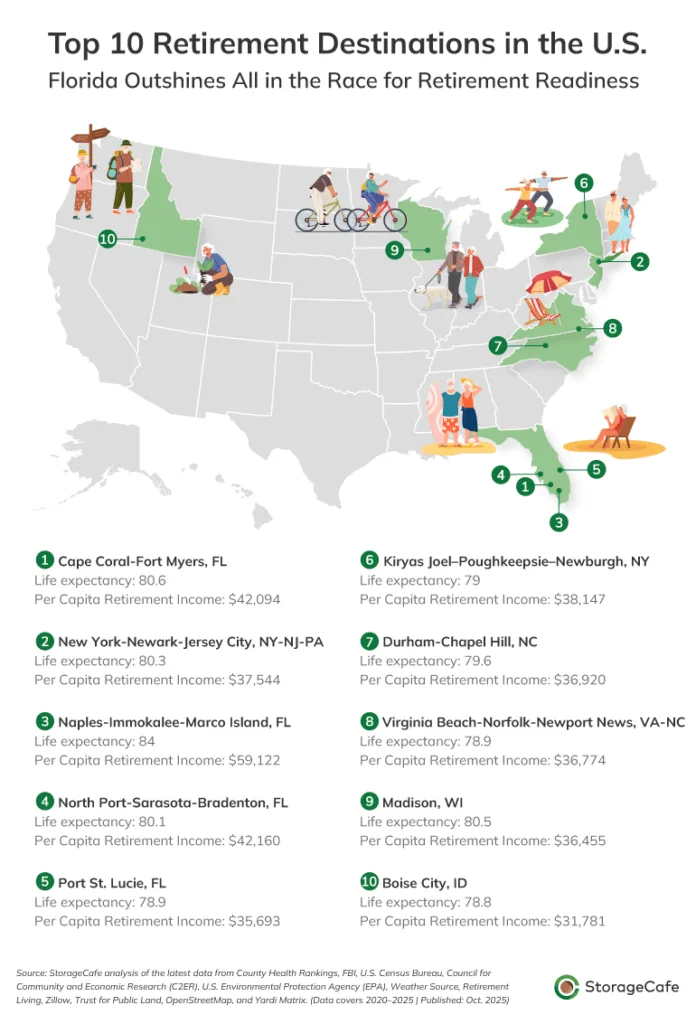
- Florida secures four of the top five retirement-friendly metros in 2026, including Cape Coral, Naples, Sarasota, and Port St. Lucie.
- Cities in the Midwest and Northeast stand out for affordability, healthcare access, and safety — with Madison, WI, and Poughkeepsie, NY ranking high.
- Healthcare infrastructure, cost of living, and self storage access are key factors shaping retiree decisions.
- Self storage offers flexibility and peace of mind, especially in metros where downsizing and aging in place are top priorities.
Retirement Is Changing — And So Are Retirement Hotspots
More than 4M Americans are expected to turn 65 in 2026, per StorageCafe. This marks the peak of the nation’s “Peak 65” moment. Every day, over 11,000 people will reach retirement age — a demographic milestone that is reshaping expectations.
Retirement today is about more than beaches and golf. Many seniors now prioritize healthcare access, affordability, and a strong sense of community. As a result, the best metros for retirement reflect this shift. These are places where safety, services, and financial peace of mind all play a role.
Florida Still Leads, But Cost Pressures Are Mounting
Florida continues to dominate the retirement landscape. Four of the top five metros are in the Sunshine State.
Cape Coral–Fort Myers ranks first. Nearly 29% of its population is over 65. Life expectancy reaches 80.6 years, and retirement income averages $42,000 — well above the national average. Additionally, the city offers over 400 miles of canals, ideal for outdoor recreation.
Naples comes in third. It boasts the longest life expectancy in the US at 84 years and the highest retirement income at $59,000. With clean air and a refined pace of life, Naples remains a top-tier retirement destination.
North Port–Sarasota–Bradenton also ranks high. It blends coastal living with a vibrant arts scene and walkable neighborhoods.
Port St. Lucie rounds out Florida’s top cities. It offers a slower pace and coastal charm, yet at a lower cost than Naples or Sarasota.
However, despite these advantages, costs are rising. Insurance rates and housing prices are becoming less affordable. As a result, some retirees are looking elsewhere.
Northeast and Midwest Cities Offer Strong Alternatives
New York–Newark–Jersey City ranks second, proving that retirees can thrive in urban environments. The metro has nearly 6,000 healthcare providers per 10,000 residents. That’s 36% higher than the national average. It also benefits from one of the nation’s most robust public transit systems.
Poughkeepsie (also known as the Kiryas Joel–Newburgh metro) places sixth. It stands out for having the most healthcare providers per capita among the top metros. Safety is also a strong point here, making it a peaceful place for older adults.
Madison, Wisconsin, is another standout. It offers low crime, excellent air quality, and strong access to parks. Social Security benefits are not taxed in the state, and property tax credits help stretch retirement income. These factors make Madison one of the most budget-friendly and balanced choices on the list.
Get Smarter about what matters in CRE
Stay ahead of trends in commercial real estate with CRE Daily – the free newsletter delivering everything you need to start your day in just 5-minutes
Southeast and Mountain West Metros Are Gaining Ground
Durham–Chapel Hill, North Carolina, offers excellent healthcare access. Anchored by major hospital systems like Duke and UNC, the area ranks tenth nationally for healthcare density. Lifelong learning programs, such as free tuition courses for seniors at NC State, add to the metro’s appeal.
Virginia Beach–Norfolk–Newport News blends affordability and a coastal lifestyle. Social Security benefits are untaxed, and home prices are reasonable. The area also has one of the highest concentrations of veterans in the US, adding a layer of community connection and support.
Boise, Idaho, rounds out the top 10. It ranks as the safest metro in the country, with crime rates far below national averages. Although the cost of living is slightly above average, retirees here enjoy scenic beauty and an active, outdoorsy lifestyle. The region has also seen housing development patterns evolve in response to population aging, with new homes increasingly designed to suit the needs of older adults.
Why Self Storage Quietly Supports Retirement Transitions
As more retirees downsize or choose to age in place, self storage has become a valuable asset. It offers flexibility during life transitions, helping seniors keep heirlooms, seasonal gear, or recreational items close — without cluttering their living space.
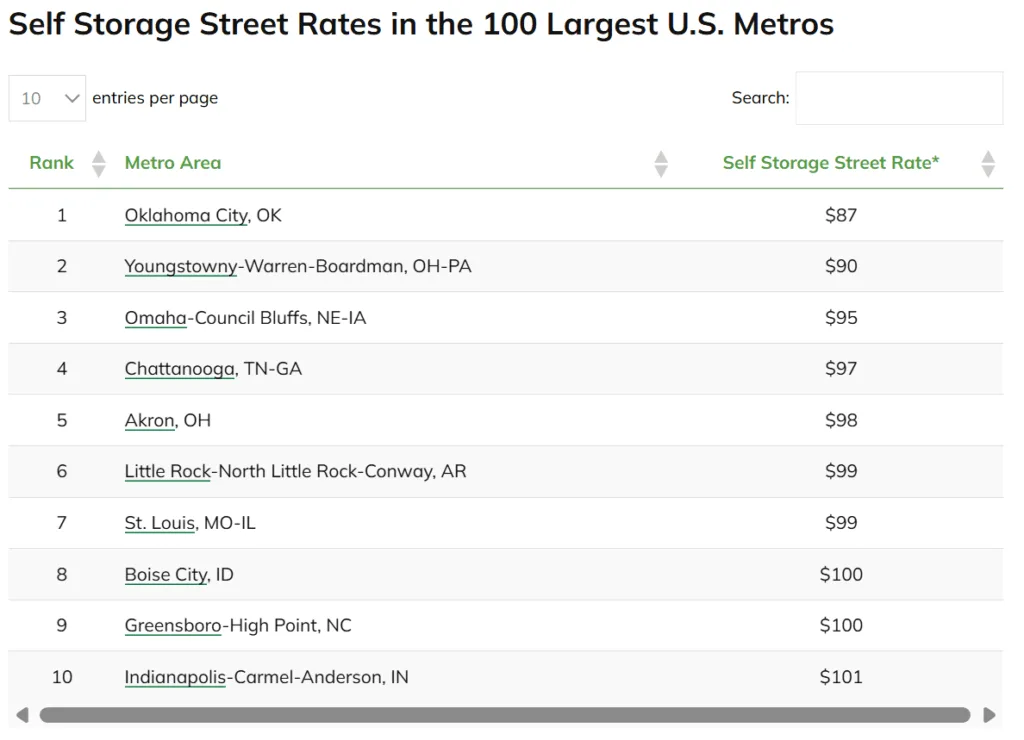
Boise leads the top 10 with the most affordable average storage rent at just $100 per month. That’s 27% below the national average. Durham, Madison, and Virginia Beach also offer below-average storage rates, making space management more accessible.
On the other hand, metros like New York and Naples have tighter supply. Storage costs there exceed $170 per month, limiting affordability for many retirees. Nevertheless, self storage continues to gain ground as a low-cost tool for simplifying retirement living.
Bottom Line
The best places to retire in 2026 offer more than just sun and sand. They provide a well-rounded lifestyle that supports aging with independence, comfort, and care.
Florida remains the leader, but rising costs may make other regions more attractive. Cities in the Northeast, Midwest, and Mountain West are now gaining attention for their healthcare access, affordability, and community infrastructure.
As the “Peak 65” generation reshapes retirement, expect more focus on cities that deliver practical value — not just lifestyle perks. Retirement is no longer about slowing down. It’s about finding places where life still feels full.