




- A $396M CMBS loan on 85 Tenth Ave., anchored by Google, was sent to special servicing for possible imminent default, per Bisnow.
- The 635K SF Chelsea office remains nearly 90% leased, but cash flow lags original projections by 28% as debt maturity nears.
- Manhattan’s flight to quality keeps top-tier occupancy strong, though Chelsea overall suffers from elevated vacancy rates and refinancing challenges.
Chelsea Office Debt Redeployed as Default Looms
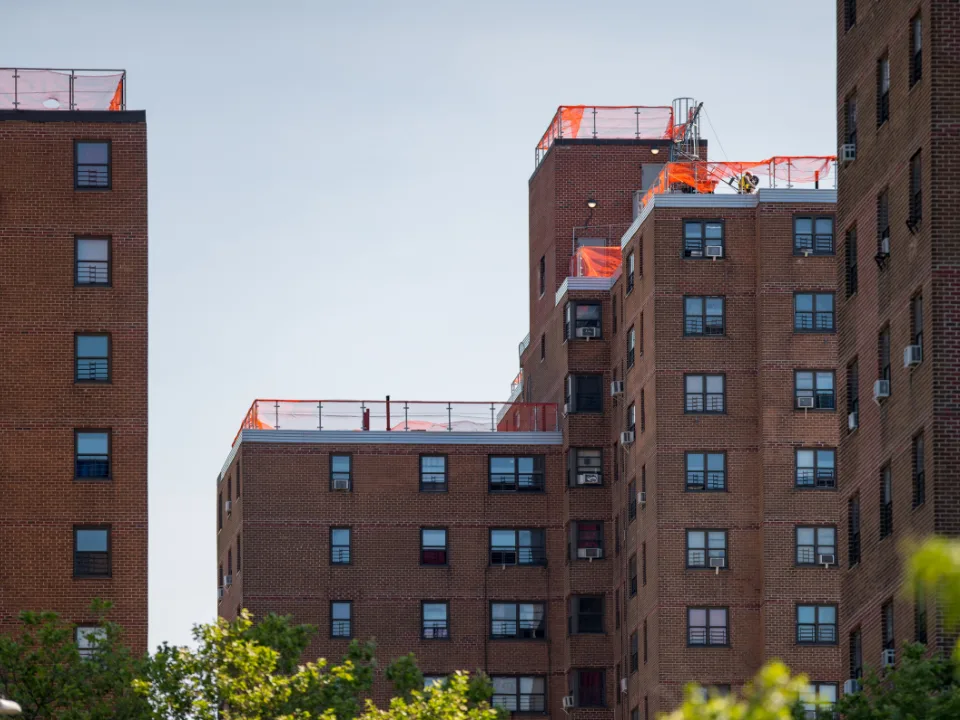
Vornado Realty Trust and Related Cos. face debt troubles at their 11-story, 635K SF office building at 85 Tenth Ave. Bisnow reported the development, citing a Morningstar Credit alert. The $396M CMBS mortgage backing the Chelsea property transferred to special servicing this week. Morningstar cited concerns about a potential “imminent default.”
Lower-than-expected cash flow and a December maturity are driving the trouble. Rising debt costs have also made refinancing more difficult. Even well-tenanted New York City assets now face tougher refinancing hurdles.
Cash flow metrics highlight why lenders are uneasy. Vornado’s Q2 2026 supplemental reports 89.9% occupancy at the property. However, Morningstar says 2025 cash flow fell 28% below projections made during the 2016 refinancing. Google anchors the building with 300K SF and renewed its lease in 2024. The asking rent reached $100 PSF.
Clear also leases 119K SF but remains in its free rent period. Meanwhile, the property carries $229M in mezzanine debt. That additional leverage complicates refinancing as borrowing costs remain well above the original 4.55% rate.
Get Smarter about what matters in CRE
Stay ahead of trends in commercial real estate with CRE Daily – the free newsletter delivering everything you need to start your day in just 5-minutes
The End of Easy Refinancing
Related bought 85 Tenth Ave. for $430M in 2007. Vornado acquired a 49.9% stake when the companies refinanced the property in 2016. They secured historically low borrowing costs, averaging just 4.55%. However, the post-pandemic office market has changed those financing assumptions.
The building’s strong occupancy contrasts sharply with Chelsea’s broader market. Cushman & Wakefield reported a 26.8% neighborhood office vacancy rate in Q2 2026. That rate ranked second highest in Manhattan. Despite healthy occupancy, the property still generated substantially less cash flow than projected.
The shortfall highlights growing refinancing risks as lenders reprice debt and tighten underwriting standards. Elevated bond yields are also pressuring NYC CRE financing, raising borrowing costs as owners approach major maturities. Strong occupancy alone can no longer guarantee favorable financing. Owners must also demonstrate sufficient cash flow to support higher borrowing costs.
The Details
The special servicing transfer covers $396M in CMBS debt. Another $229M in mezzanine debt adds complexity to the capital structure. The debt stems from a 2016 Deutsche Bank refinancing totaling $625M.
Google remains the largest tenant and occupies nearly half the property. Clear’s large lease supports occupancy but currently generates no rent during its concession period. Therefore, actual collections continue trailing the building’s headline occupancy.
The property must refinance by December 2026 while income remains below expectations. Morningstar analyst David Putro told Bisnow that a workout appears probable. He expects a modification or extension instead of a major equity injection or foreclosure.
NYC’s Top-Tier Office Divergence
Chelsea’s 26.8% vacancy rate shows how uneven office demand remains outside Manhattan’s strongest properties. Cushman & Wakefield reported Manhattan’s overall vacancy improved to 19.3% in Q2. That compares with 22.6% one year earlier.
Meanwhile, flight-to-quality demand continues supporting occupancy and rents at stronger buildings. Google’s $100 PSF asking rent at 85 Tenth Ave. ranks near Midtown South’s upper end. Still, the building faces weak NOI, heavy leverage, and a looming maturity.
The situation demonstrates how refinancing pressure can reach properties with strong tenants. Major NYC landlords now face higher rates and tighter lender standards. Even Google-anchored properties can show distress when cash flow misses earlier projections.
Why It Matters
The situation at 85 Tenth Ave. highlights several important themes across New York’s office market. First, legacy financing structures now pressure even well-leased institutional properties. Cushman & Wakefield recorded a 3.3-point annual decline in Manhattan’s overall vacancy rate.
Still, $625M of total debt creates significant refinancing risk when NOI misses expectations. Higher rates make those capital structures harder to support. Buildings financed during the low-rate 2010s increasingly face this mismatch as maturity dates approach.
Second, lenders and borrowers increasingly favor special servicing and loan modifications over immediate loss recognition. This approach becomes more attractive when properties retain strong tenants. Morningstar expects an extension or modification because of the building’s occupancy and location.
That strategy gives borrowers time instead of requiring immediate equity injections or distressed sales. However, more 2010s-era loans will require refinancing through 2028. The growing maturity wave could test lenders’ willingness to extend troubled debt.
Finally, the situation exposes limits within the flight-to-quality narrative. Buildings like 85 Tenth Ave. can remain nearly full while still missing cash flow targets. Strong tenancy does not automatically solve financing problems.
Owners must successfully manage leasing, tenant rollovers, concessions, and cash generation. CMBS lenders increasingly demand evidence of near-term financial performance. For CRE investors, Chelsea shows that NYC office refinancing risks remain significant.
What’s Next
The $396M CMBS loan’s special servicing transfer starts debt negotiations ahead of the December 2026 maturity. Market observers expect Vornado, Related, and the servicer to pursue a modification or extension. Strong occupancy and blue-chip tenancy support that outcome.
However, performance must improve as free rent periods expire and refinancing approaches. Otherwise, the property could influence workouts at other heavily leveraged office assets. Lenders and sponsors will increasingly rely on restructuring strategies to manage New York’s evolving office debt cycle.