






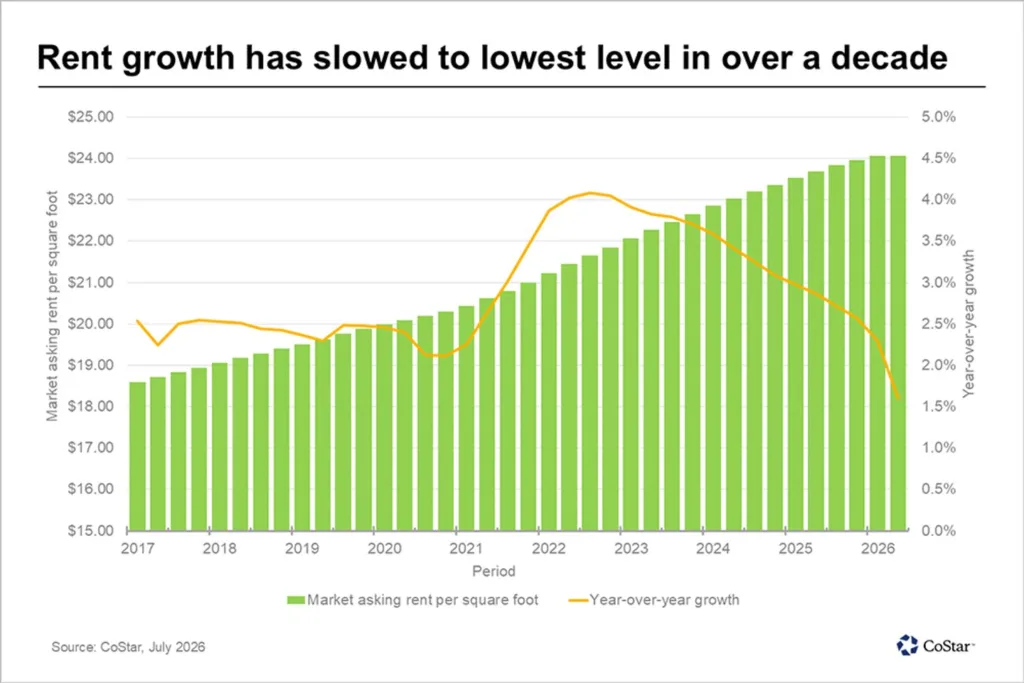
- US retail rent growth decelerated to 1.6% year-over-year in Q2 2026, per CoStar, marking the slowest pace in over a decade.
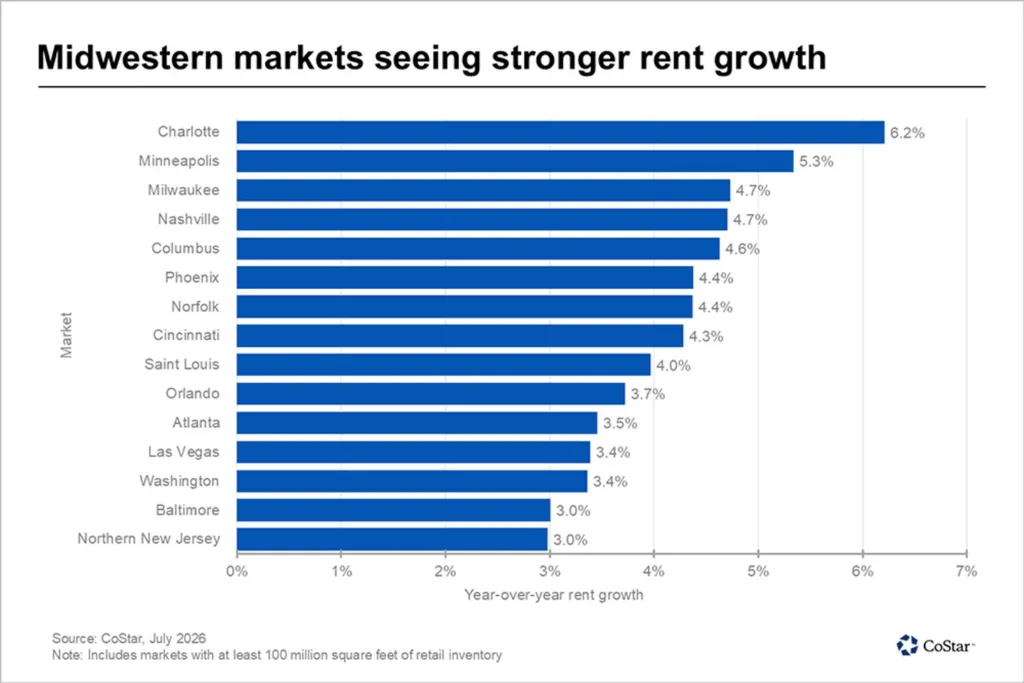
- Despite the slowdown, Sun Belt cities like Phoenix and Atlanta still saw 3%–6% annual rent hikes, outpacing the national average.
- Retail fundamentals remain healthy, but slower consumer spending and cost pressures are tempering landlords’ ability to raise rents aggressively.
Retail Rent Gains Lose Momentum
US retail landlords are seeing rent growth finally cool off after a string of strong quarters. Chain Store Age reports that according to CoStar Group, national retail asking rent growth slowed to 1.6% year-over-year in Q2 2026. That’s down from 1.9% in Q1 and represents the slowest pace of growth the sector has seen in over a decade. The average national asking rent sits at roughly $22.00 PSF, based on CoStar’s latest research.
This tapering follows several years of above-trend momentum driven by limited new construction, strong tenant demand, and pandemic-era lease spreads. Now, higher interest rates and softening consumer spending growth appear to be driving the normalization, even as the broader retail environment retains relatively healthy fundamentals.
Get Smarter about what matters in CRE
Stay ahead of trends in commercial real estate with CRE Daily – the free newsletter delivering everything you need to start your day in just 5-minutes
The Details
CoStar’s Q2 data shows a changing retail rent landscape across national and metro markets. National rent growth slowed to 1.6%. However, stronger Sun Belt markets remained more resilient. Phoenix, Orlando, Atlanta, Charlotte, and Las Vegas posted annual rent gains between 3% and 6%. Even these markets have cooled from earlier peaks.
Much of today’s revenue growth comes from lease spreads. Rents on expiring leases still sit below current market rates. Larger contractual rent escalations also support owner income as market rent growth slows.
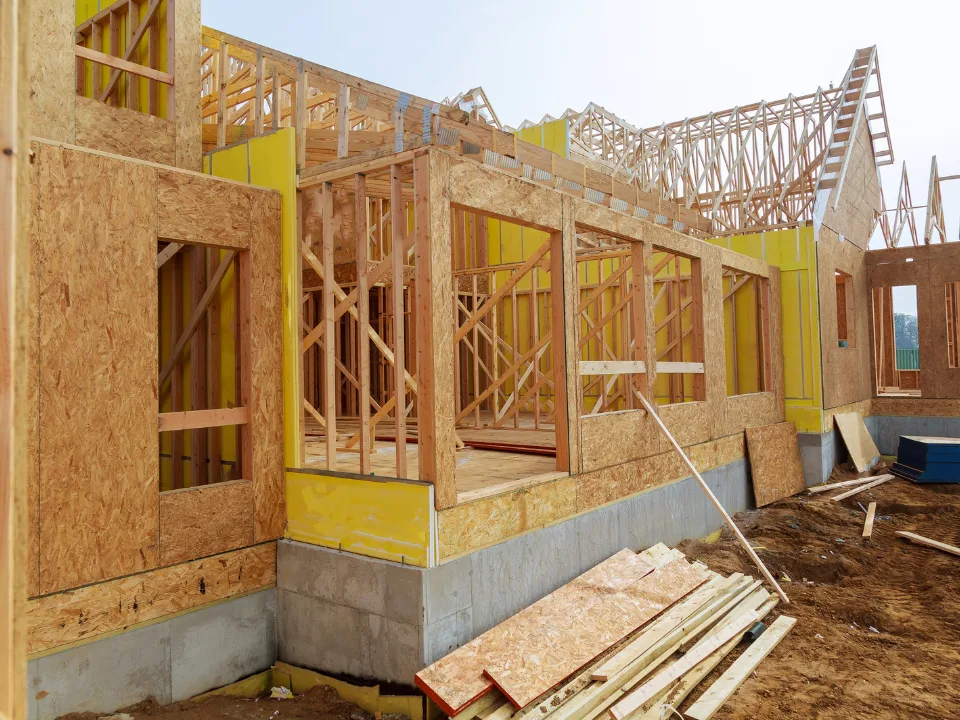
Retail construction increased slightly during Q2. Developers had 72.1M SF under construction nationwide. That figure remains below the 10-year average of 78.9M SF. Notably, just 15 metro markets account for 47% of the national pipeline.
Sun Belt Still Leads but Moderation Spreads
Sun Belt markets continue to outperform. However, rent growth has slowed from the rapid gains recorded between 2022 and 2024. Dallas, Houston, and Austin now account for 21% of the national retail construction pipeline. Together, they represent about 15M SF under development. CoStar’s data shows the region still attracts significant investment despite slower rent growth.
This regional gap reflects a broader national trend. The strongest rent growth still comes from Southern and Southeastern markets. Population gains and migration continue supporting retail demand. Even so, rent growth has entered a clear normalization phase. The market has shifted from rapid expansion toward consolidation.
Why It Matters
The retail rent slowdown marks a reset from pandemic-era highs. It does not signal imminent distress. Brandon Svec, CoStar’s national director of retail analytics, said moderation reflects normalization. Softer consumer spending, higher interest rates, and rising tenant costs have reduced landlords’ pricing power. Demand across most retail categories remains healthy by historical standards. Lease spreads also continue supporting owner income.
Investors should look beyond headline rent growth. Lease spreads remain elevated across many core markets. As older leases reset to market rates, landlords can still grow revenue. Meanwhile, limited new retail construction continues keeping vacancies tight in many markets, supporting pricing despite slower demand growth.
Developers also retain opportunities in high-growth metros. However, they should expect steadier conditions as the cycle matures. Higher financing costs may also require more conservative underwriting assumptions.
At the macro level, construction remains below the 10-year average. That trend shows landlords and developers have adopted a measured approach after the post-pandemic boom. Owners who capture rent escalations and lease spreads should remain best positioned to grow NOI despite slower rent appreciation.
What’s Next
Slower consumer spending and persistent interest rates will likely keep pressure on rent growth. A return to pandemic-era gains appears unlikely soon. CoStar’s pipeline data also shows most new supply will stay concentrated in a handful of high-growth markets. That should help limit broad oversupply risks.
Watch major Sun Belt metros for signs of renewed momentum or further slowing. Also monitor tenant retention strategies as landlords adjust to smaller rent increases. Near-term retail performance will likely depend on lease renewals, contractual escalations, and selective development in the strongest markets.