






- US renter mobility has dropped, with only 37% expecting to move in three years—down from 57% in 2014, per New York Fed data.
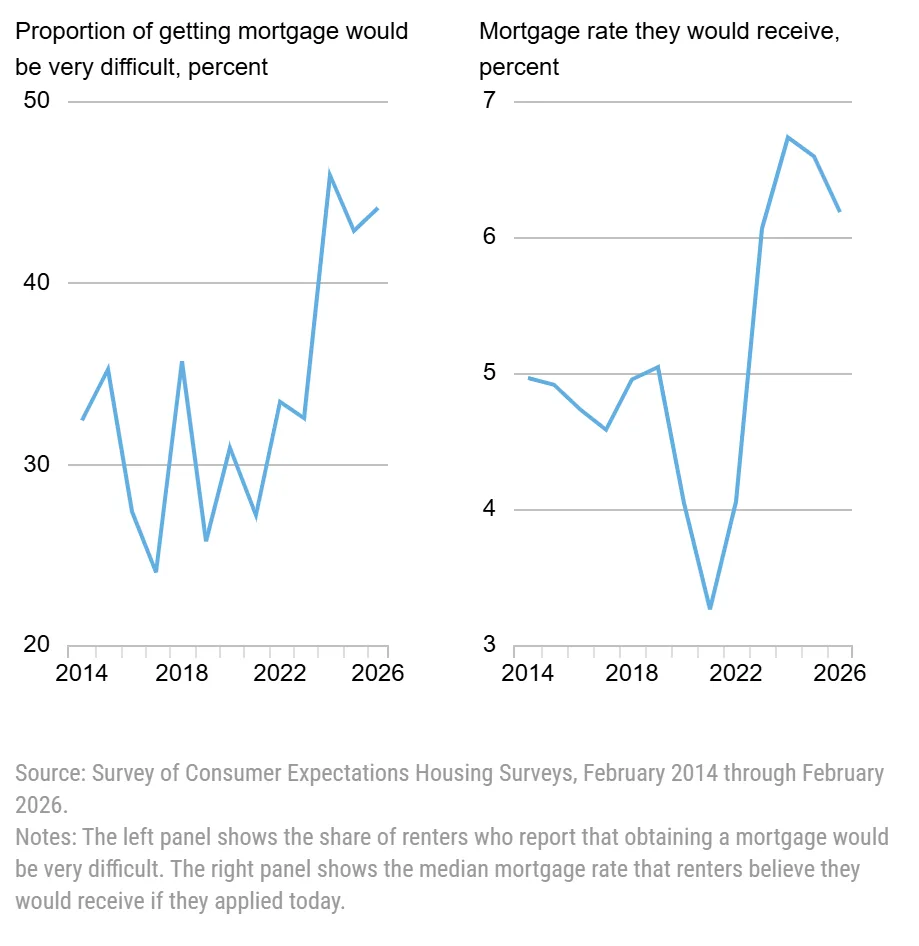
- Mortgage affordability concerns drive the drop, as 45% of renters now view securing a loan as very difficult and expected rates have doubled post-2021.
- This decline in mobility signals challenges for leasing, investor turnover, and markets reliant on renter churn, beyond the single-family ownership debate.
Tenants Are Stuck: Mobility Halved Since 2014
The US rental market faces a historic slowdown in mobility. Renters now expect to stay put much longer. According to Liberty Street Economics, just 37% expect to move within three years. That figure stood at 57% in 2014. The decline spans regions, age groups, and income levels. Homeowners also expect to move less, but renters show the steeper drop. The trend accelerated after the pandemic, suggesting lasting forces beyond temporary disruptions.
For CRE professionals, lower mobility means fewer unit turnovers and less leasing activity. That shift challenges business models that depend on tenant churn. Renters make up roughly one-third of US households. As a result, these changes could reshape multifamily strategies, especially value-add investments.
Get Smarter about what matters in CRE
Stay ahead of trends in commercial real estate with CRE Daily – the free newsletter delivering everything you need to start your day in just 5-minutes
The Details
The New York Fed Survey of Consumer Expectations shows renters and homeowners both expect fewer moves. Renters reported the biggest decline. Their average three-year moving probability fell from 57% in 2014 to 37% in early 2026. Homeowners dropped from 21% to 14% during the same period.
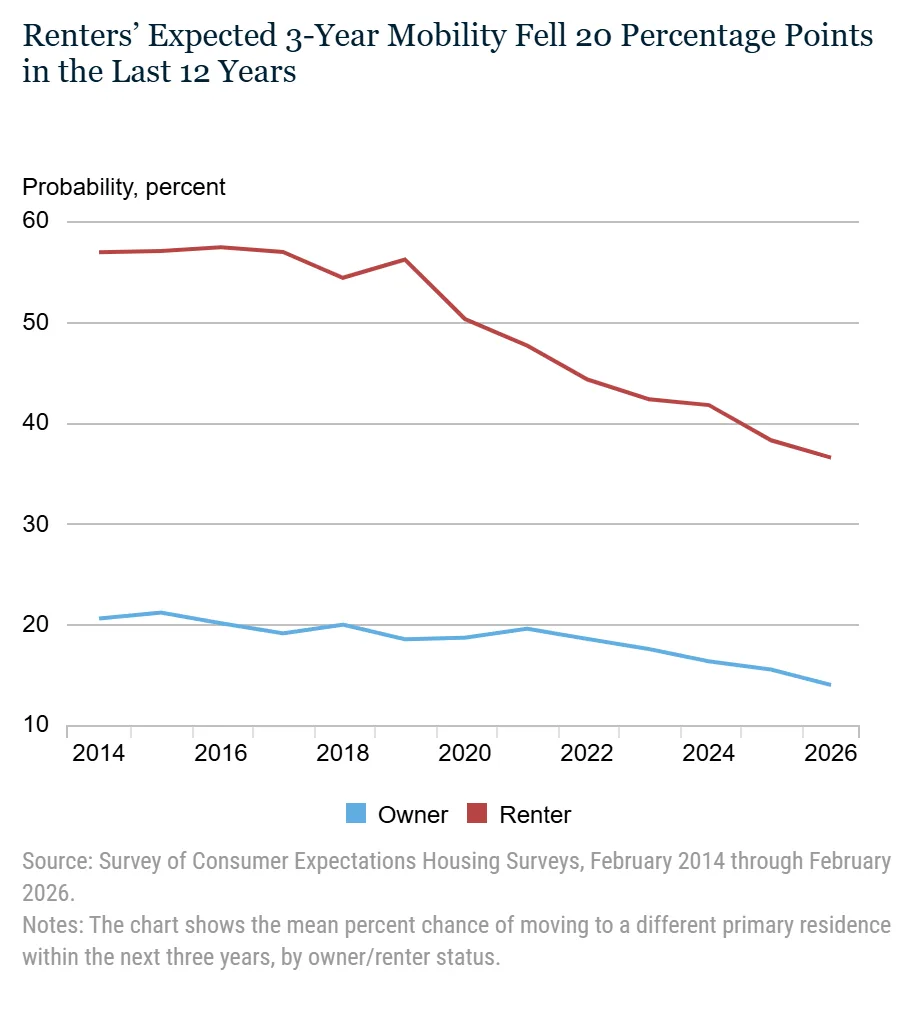
The findings match a broader national trend. Annual household moving rates fell from about 20% in the mid-1980s to below 10% by 2019. Recent nationwide data also showed Americans moved at historically low rates, reinforcing that weaker mobility extends beyond today’s renter affordability challenges. Mobility declined even faster after the pandemic. Rising mortgage rates and home prices likely drove much of that change. Expected mobility has historically predicted actual moves. That makes it a valuable early indicator for landlords and investors.
Mortgage Headwinds Drive Down Mobility
The decline in renter mobility coincides with falling confidence in homeownership. By 2025, only 35% of renters expected to own a home someday. That figure reached 52% in 2015. Mortgage affordability explains much of the shift. In 2024, 45% of renters expected major difficulty securing a mortgage. Only 27% felt that way in 2021. Renters also expected mortgage rates to rise sharply. Their median expectation climbed from 3.3% in 2021 to nearly 6.8%.
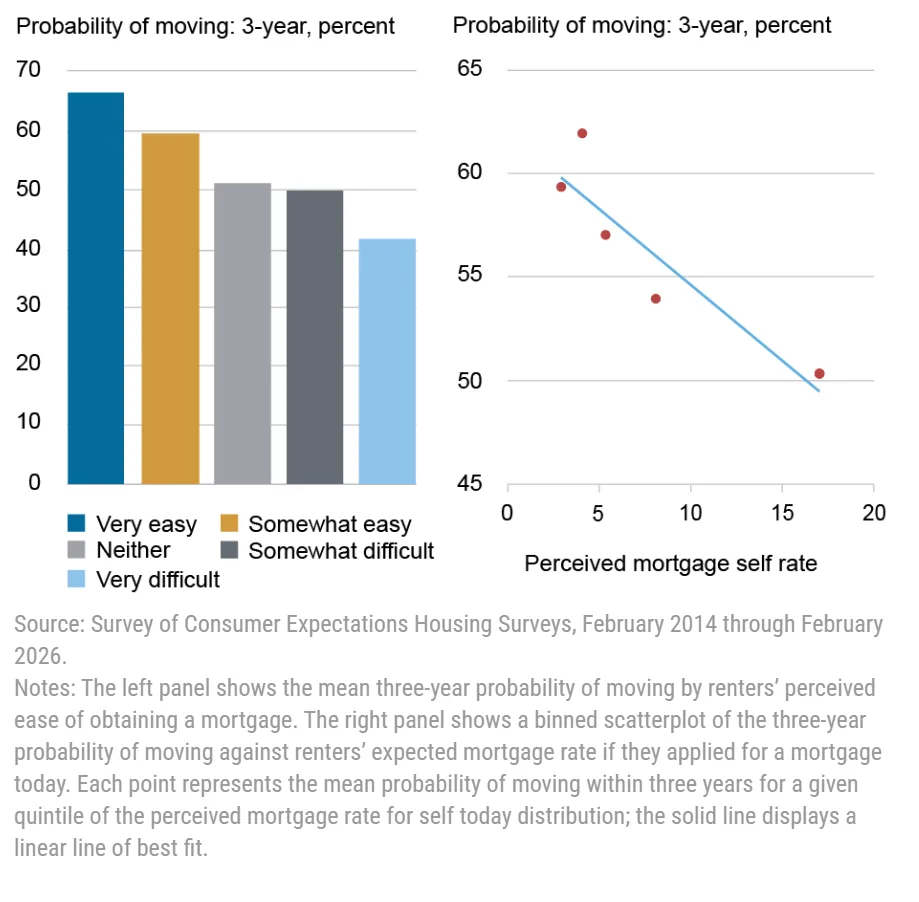
These perceptions influence moving decisions. Renters expecting easy mortgage access reported a 66% chance of moving within three years. Those expecting difficulty reported just 42%. Despite these obstacles, homeownership remains popular. About 65% still want to buy if they can afford it. Affordability, not preference, drives today’s mobility decline.
Why It Matters
Lower renter mobility affects the entire housing market. Property owners face fewer unit turnovers and longer average tenancies. Higher renewal rates may improve occupancy. However, slower tenant churn reduces opportunities to reset rents. Leasing teams may also face longer lease-up periods.
Lower mobility also weakens economic flexibility. People move less often for better jobs or changing life circumstances. That could reduce growth in markets that depend on active rental demand. Multifamily investors may also need to revisit underwriting assumptions. Moving expectations now sit below 40%. Models based on frequent turnover and rent growth deserve closer scrutiny. Many renters now associate moving with buying. If homeownership stays out of reach, portfolio churn could remain muted.
What’s Next
Affordability pressures show little sign of easing. Renters will likely continue delaying moves. Lower interest rates could improve sentiment. However, high home prices and difficult mortgage qualification remain major barriers. A rapid rebound in renter mobility appears unlikely.
Multifamily owners may need to prioritize resident retention over turnover. They may also need to adjust operating budgets built around higher leasing activity. Investors should watch future affordability data closely. Those trends could shape rent growth, credit performance, and tenant demand across primary and secondary markets.