






- National one-bedroom rents climbed 0.5% month-over-month in June 2026, ending a year-long run of declines, according to Zumper.
- San Francisco rents hit record highs, with one-bedroom units up nearly 22% year-over-year and two-bedrooms exceeding $5,700.
- The return of rent growth signals diverging market dynamics, with inventory still dictating local conditions and Sun Belt markets showing continued softness.
Rents Rebound Nationally as Local Divergences Grow
The US rental market is showing signs of stabilization. According to the June 2026 Zumper National Rent Report, the median one-bedroom rent rose 0.5% month-over-month to $1,526, posting its first annual increase since May 2025. Two-bedroom rents also nudged up 0.1% for the month, to a median of $1,905—just 0.3% below year-ago levels. The report highlights a market that is no longer broadly falling, but seeing highly divergent local trends, with some Sun Belt metros still declining and coastal markets rebounding sharply. Such splits in rental trajectories are increasingly driven by disparities in new supply and shifting demand patterns across markets.
This renewed national growth follows six consecutive months of narrowing declines. The annual change in one-bedroom rents bottomed out at -2.2% in November 2025 before recovering to flat in June, reflecting both improving occupancy rates and a slowdown in new deliveries. Demand has gradually caught up to the post-pandemic construction boom, and with deliveries set to slow further into the back half of 2026, rent growth is expected to become increasingly dependent on local supply and demand dynamics.
Get Smarter about what matters in CRE
Stay ahead of trends in commercial real estate with CRE Daily – the free newsletter delivering everything you need to start your day in just 5-minutes
Bay Area Markets Separate From the Pack
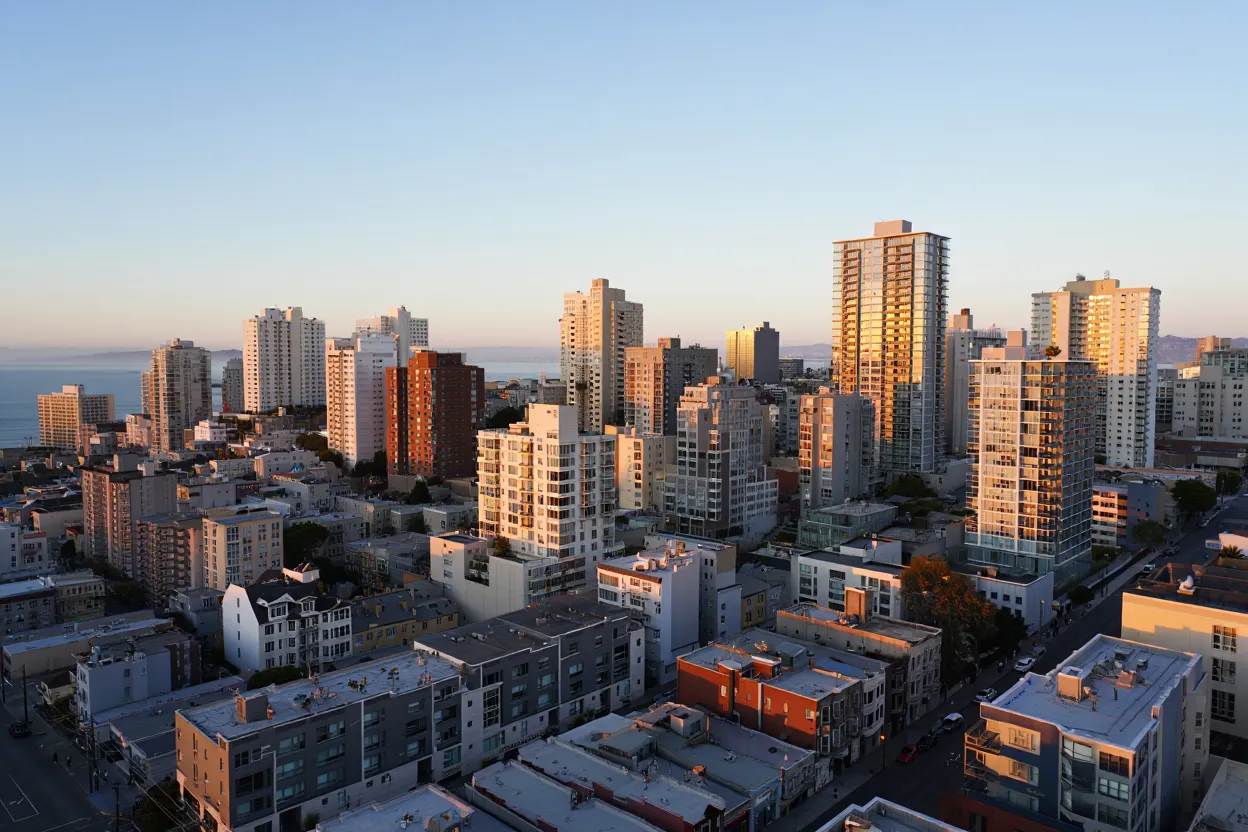
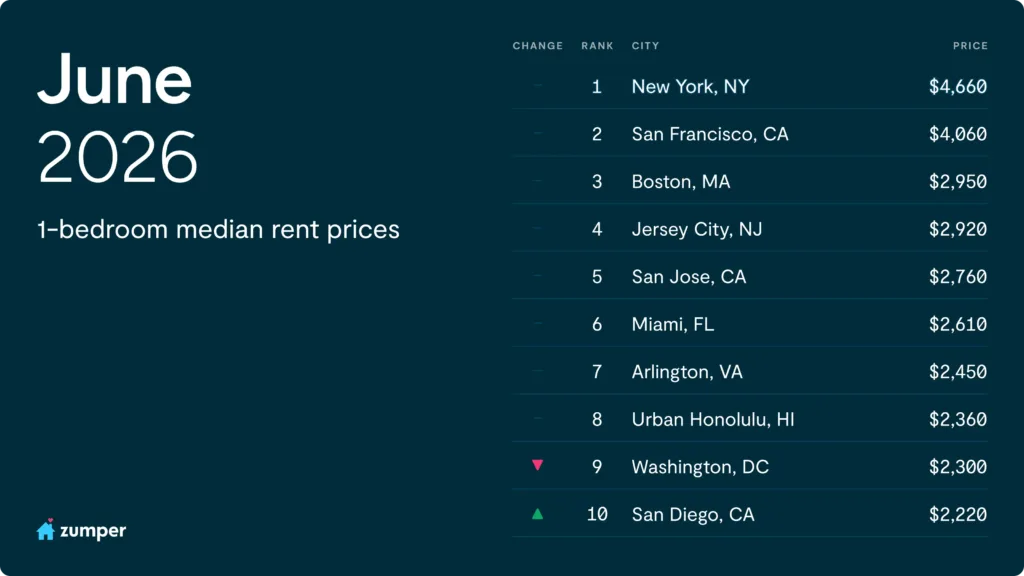
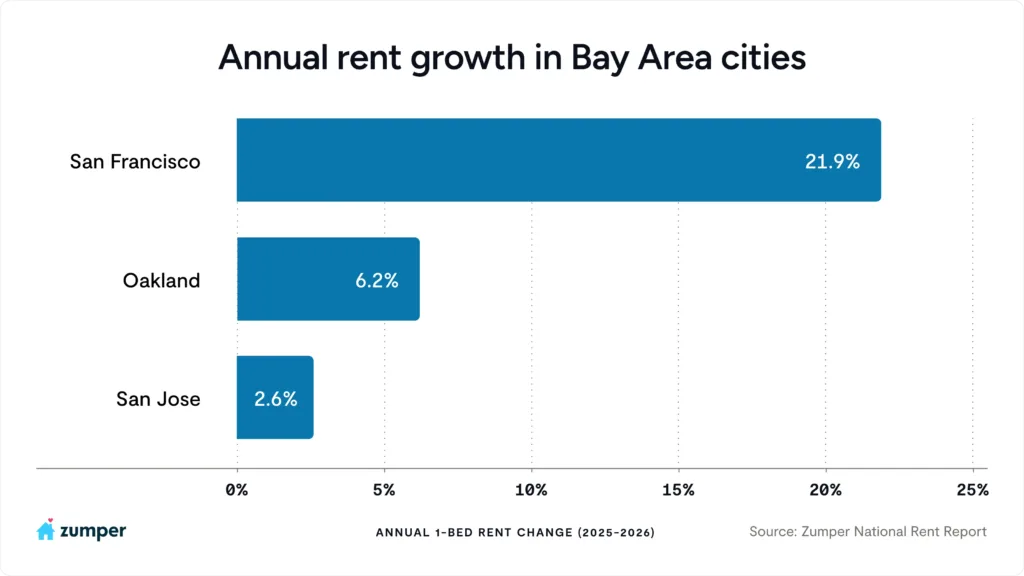
San Francisco leads the nation in rent growth, according to Zumper. Median one-bedroom rent reached a record $4,060. That marks a 21.9% annual increase. Median two-bedroom rent climbed to $5,700, up 22.6% year over year.
The Bay Area rally continues beyond San Francisco. Oakland’s one-bedroom rent increased 6.2% over the past year. San Jose posted a 2.6% gain. Strong tech and AI hiring fuel demand. Return-to-office policies also support leasing activity. Office demand has nearly returned to pre-pandemic levels. Meanwhile, new apartment construction remains limited. Occupancy now exceeds 96%, highlighting the supply imbalance.
Rent Growth Returns After Supply Wave
The end of the national supply surge marks a turning point. National rents have returned to annual growth. However, local markets continue to diverge. Supply-constrained cities, including San Francisco, New York, and Boston, continue setting rent records.
Zumper CEO Shawn Mullahy says supply remains the housing market’s biggest story. Markets with heavy construction, especially across the Sun Belt, still face weaker pricing. In contrast, markets with limited new inventory have regained pricing power.
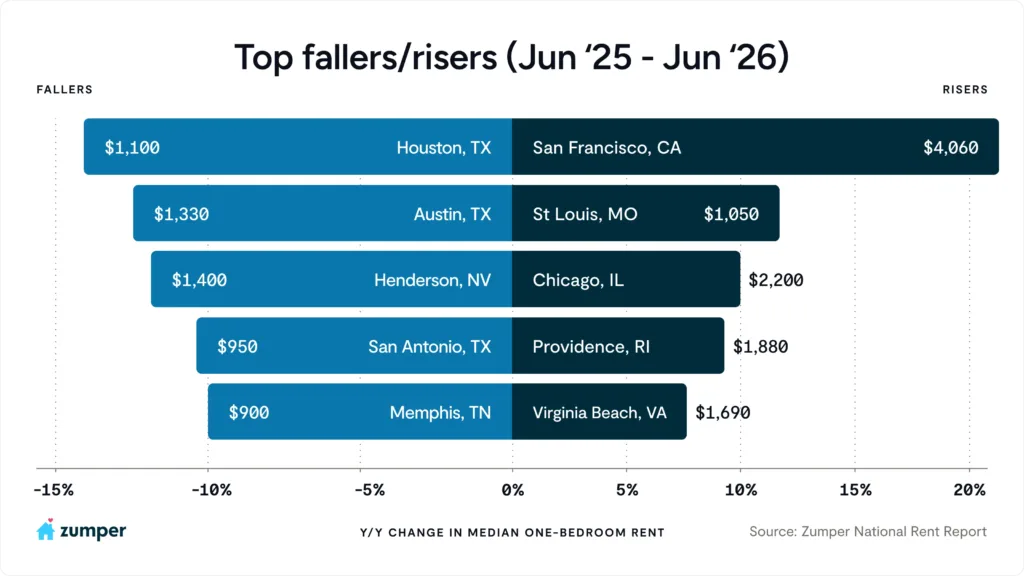
Arizona shows the strongest supply pressure. Mesa rents fell 7.3% year over year. Phoenix rents declined 4%. More than 26,000 new units entered the market last year. Vacancy rates remain in the double digits. Still, declines have started slowing. Scottsdale posted 5.9% annual rent growth. Landlords across many Sun Belt markets still offer free-rent concessions. However, the shrinking construction pipeline points toward gradual stabilization.
Blue Chip Markets Outperform as Supply Tightens
The latest data shows coastal markets outperforming as new construction slows. San Francisco and New York continue leading rent growth. New York remains the nation’s most expensive rental market. Median one-bedroom rent stands at $4,660 despite a 0.4% monthly decline. San Francisco ranks second and posts the fastest annual growth.
Meanwhile, Miami and Los Angeles still report annual rent declines as they absorb recent supply. Miami’s continued weakness reflects how new apartment deliveries can pressure rents until demand catches up. Most Arizona markets, including Phoenix, Mesa, and Glendale, continue working through excess inventory. However, rent declines have slowed. Scottsdale and Gilbert already returned to annual growth because they added fewer units and maintained lower vacancy.
National shelter inflation remains elevated, rising 3.4% in June. However, Zumper believes official inflation data may lag real-time market trends. Those measures could ease later in 2026 as rental markets stabilize.
What’s Next
Operators and investors face different conditions during the second half of 2026. Overbuilt markets, including Phoenix and Austin, should continue stabilizing. Fewer new deliveries and improving occupancy should support rents.
Supply-constrained cities should keep gaining pricing power as demand outpaces available housing. Investors will need market-specific strategies. Coastal markets already support stronger rent growth. Recently overbuilt Sun Belt markets still require incentives and disciplined underwriting. As construction pipelines shrink nationwide, future performance will depend on how quickly demand absorbs recent supply.