



- New York City’s housing affordability gap is wider than the national average, with racial disparities growing significantly when adjusted for the city’s higher cost of living.
- NYCHA’s aging housing stock and federal funding pressures disproportionately affect Black and Latino residents, who make up most of the authority’s tenant base.
- Rising rents and neighborhood turnover across Brooklyn and other boroughs continue pushing long-term low-income residents out of historically minority communities.
New York City’s housing affordability crisis is hitting renters unevenly, and race remains one of the clearest dividing lines. A new wave of data from Chandan Economics tied to the city’s first-ever Preliminary Citywide Racial Equity Plan shows Black and Latino New Yorkers continue to face disproportionately high levels of housing insecurity, poverty, and displacement.
The report, developed by 45 city agencies across two mayoral administrations, outlines more than 200 policy goals aimed at narrowing racial disparities across housing, education, healthcare, and economic mobility. But the housing data underscores how deeply entrenched those inequities remain.
Get Smarter About What Matters in New York
Subscribe to our free newsletter covering the biggest commercial real estate stories across the five boroughs — delivered in just 5 minutes.
A Cost Burden Beyond The National Average
According to Chandan Economics’ 2026 Racial Inequities in US Housing Report, 22.2% of New York City renter households live below the federal poverty line, compared to 20.6% nationally. The racial poverty gap among renters is also roughly 20% larger in NYC than across the broader US market.
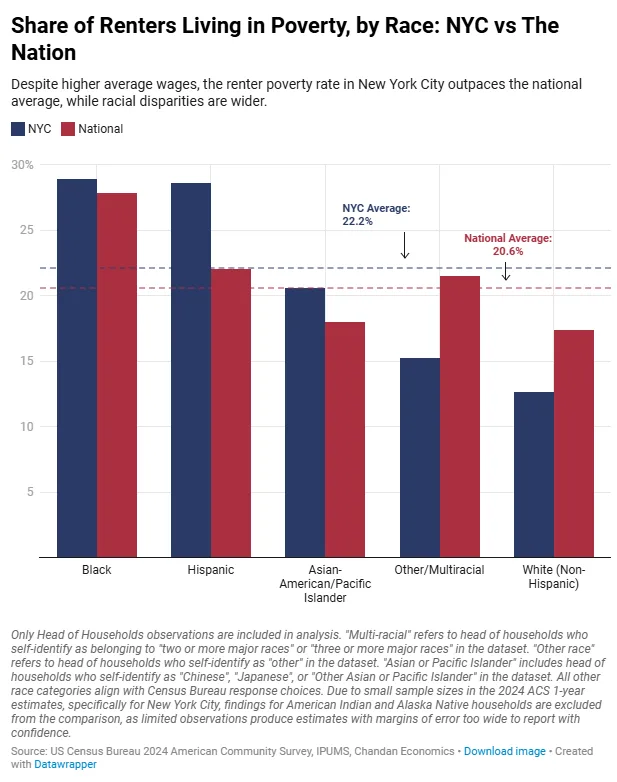
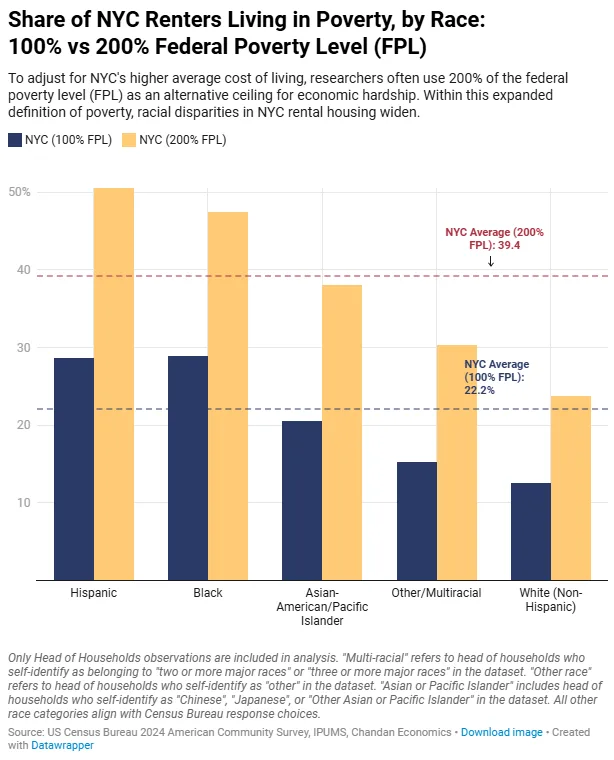
The disparity grows even wider when accounting for New York’s cost of living. Urban policy researchers frequently use 200% of the federal poverty level (FPL) to better measure economic hardship in high-cost cities. Using that threshold, nearly 40% of NYC renter households qualify as economically insecure.
The divide becomes more pronounced across racial groups. At the 200% FPL threshold, more than half of Hispanic renter households in New York City face housing insecurity, alongside 47.5% of Black renter households. The gap between Black, Hispanic, Asian American Pacific Islander, multiracial, and White renters widens substantially under the localized affordability measure.
NYCHA’s Outsized Role In The Affordability Crisis
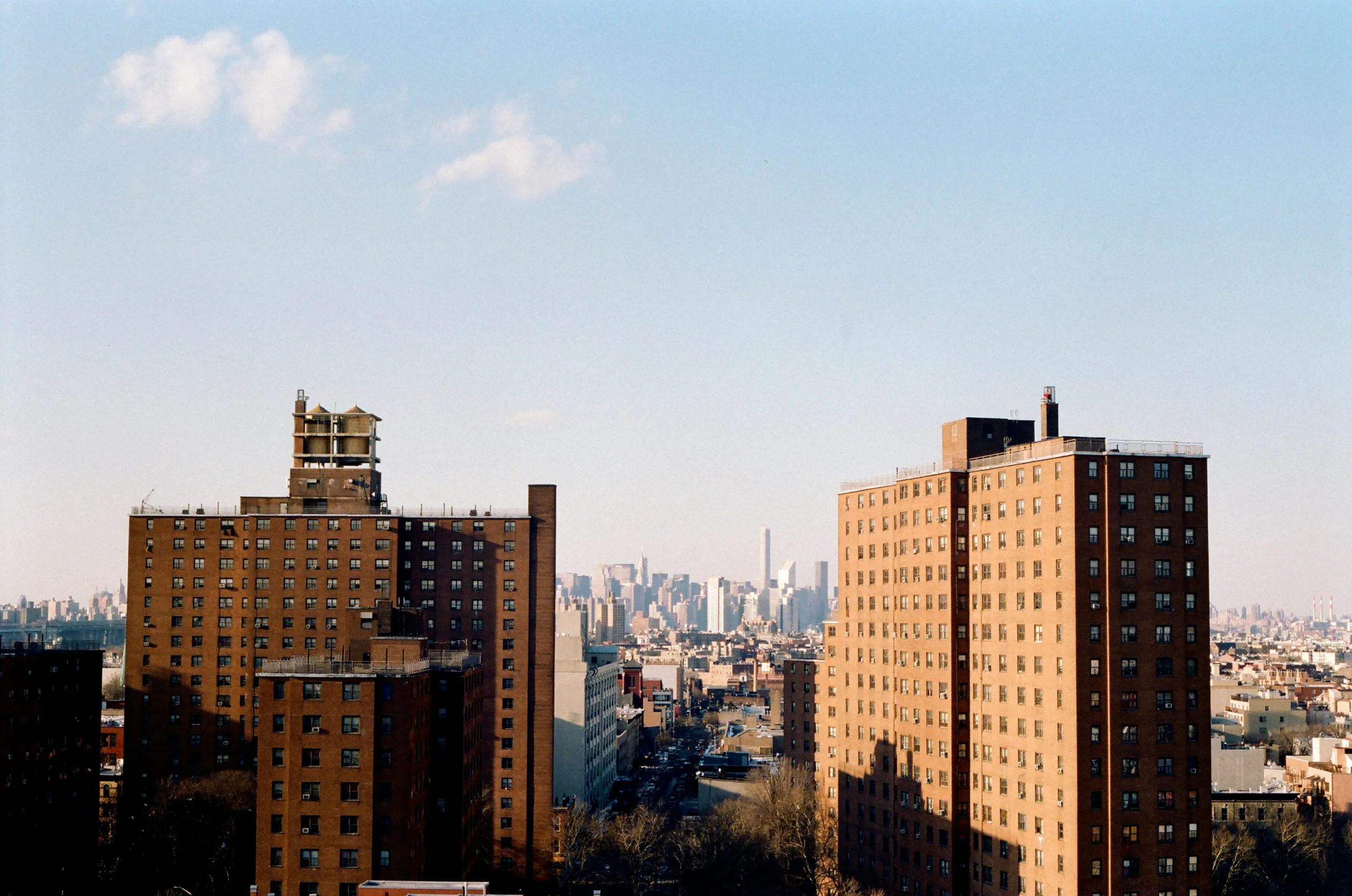
New York’s public housing system remains central to the city’s affordability landscape. The New York City Housing Authority houses more than 511,000 residents across 335 developments, making it the nation’s largest public housing authority.
That footprint also means NYCHA sits at the center of many racial housing inequities. Its tenant population is overwhelmingly Black and Latino, while decades of federal underinvestment have left the agency struggling with aging infrastructure, capital backlogs, and growing operational strain.
NYCHA’s November 2024 capital plan outlined $7.84B in planned commitments against more than 650 active infrastructure projects. At the same time, federal housing funding remains uncertain. Although HUD received a funding increase under the FY2026 appropriations bill, lawmakers still reduced public housing funding by $700M, creating new financial pressure for housing authorities nationwide.
For many residents, public housing represents the only remaining affordable option in a market where private rents continue climbing faster than incomes.
Homelessness And Language Barriers Deepen Inequities
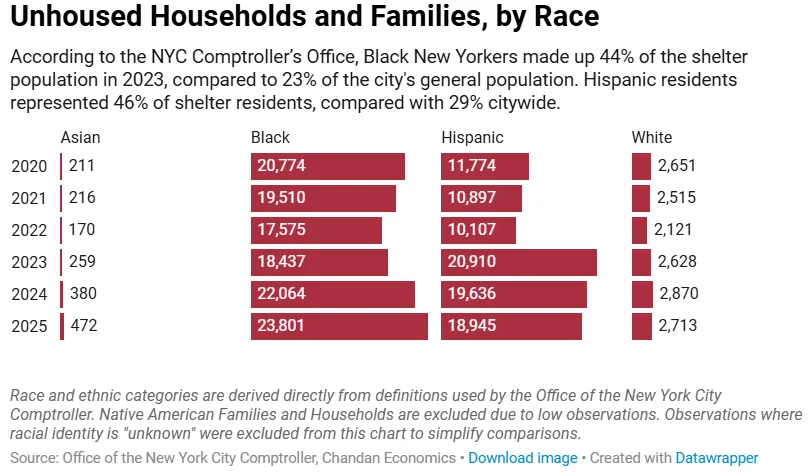
The city’s homelessness crisis reflects many of the same racial disparities. According to NYC Comptroller data from fiscal year 2023, Black residents accounted for 44% of New York City’s shelter population despite representing just 23% of the city overall. Hispanic residents made up 46% of shelter residents while accounting for 29% of the population.
Language access issues add another layer of vulnerability. Roughly 2M New Yorkers have limited English proficiency, and tenant advocates have repeatedly documented barriers navigating housing court and eviction proceedings.
Brooklyn’s Affordability Squeeze Intensifies
Market-driven displacement continues reshaping many neighborhoods across the five boroughs, particularly in Brooklyn. Data from NYU’s Furman Center shows the share of Black residents in Prospect Heights and Crown Heights fell from 78.1% in 2000 to 45.5% in 2023, while the White population quadrupled during the same period.
Rising rents remain a primary driver. Between 2013 and 2023, inflation-adjusted median rents in Brooklyn climbed 17.9%, above the citywide average increase of 13.5%. By 2023, more than one in four Brooklyn renter households spent over half their income on housing costs.
The trend highlights how demographic change and affordability pressures increasingly overlap in high-demand urban neighborhoods.
Why It Matters
New York City’s housing challenges mirror broader national affordability trends, but the city’s density, rent burden, and reliance on public housing amplify the racial dimensions of the crisis. The combination of rising market rents, aging subsidized housing, and limited affordable supply creates a structural squeeze that disproportionately affects communities of color.
For CRE owners, developers, and policymakers, the data also signals growing pressure around affordable housing production, preservation, and tenant protections. As affordability deteriorates, political momentum behind rent regulation, public investment, and anti-displacement policies is likely to intensify. The findings also reinforce broader national housing trends showing racial affordability gaps continuing to widen across major US rental markets.
What’s Next
The city’s racial equity plan sets the stage for future housing policy debates around affordability, preservation, and public housing reinvestment. Whether those initiatives gain traction may depend heavily on federal funding stability, private-sector housing production, and the city’s ability to slow displacement in rapidly changing neighborhoods.
Meanwhile, affordability pressures are unlikely to ease soon. With limited new low-income housing supply and continued demand across the five boroughs, New York’s racial housing gap may continue widening without targeted intervention.