




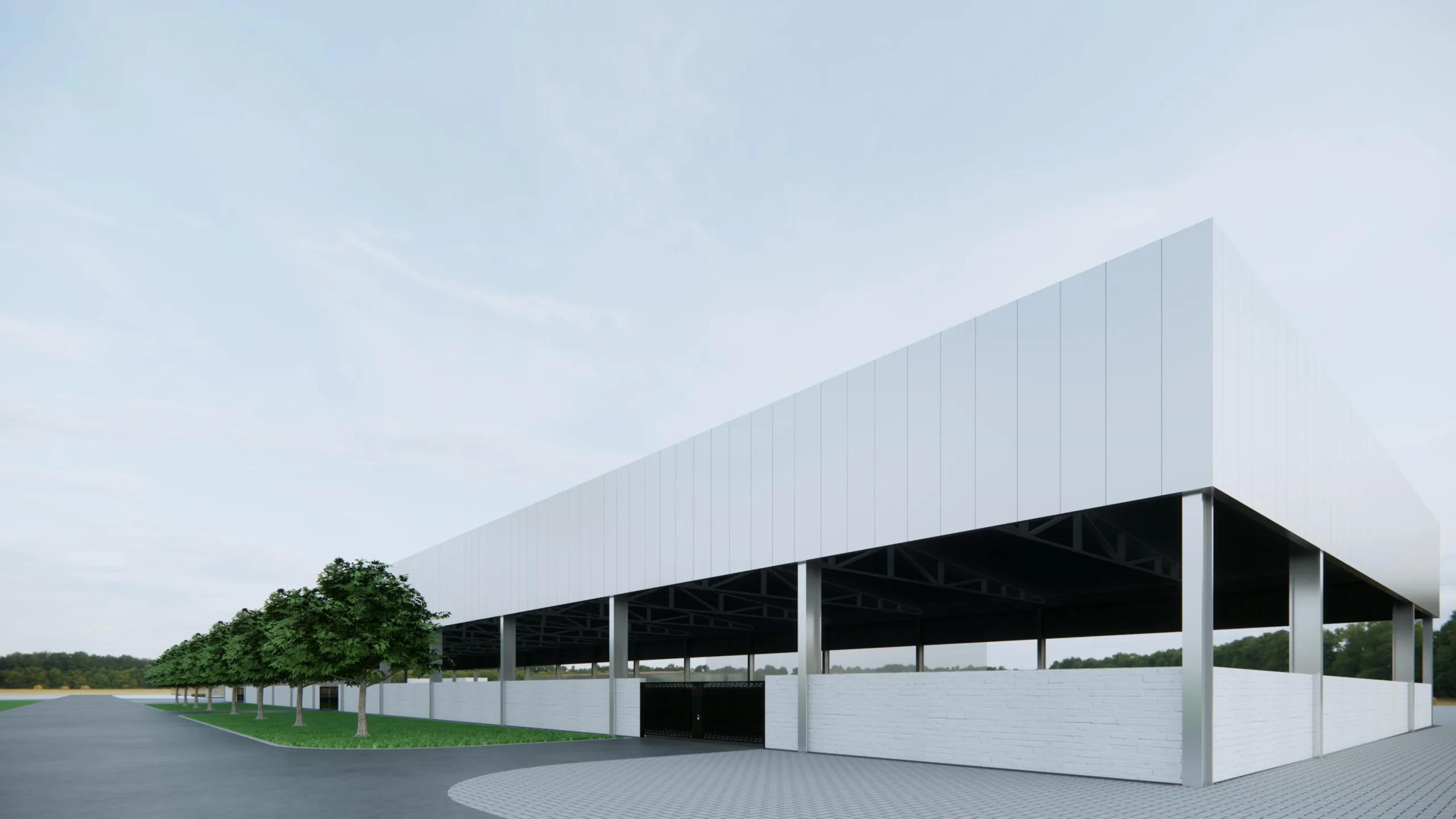



- Nvidia and Corning plan to develop three manufacturing facilities in North Carolina and Texas focused on optical connectivity equipment for AI data centers.
- The partnership aims to increase Corning’s US optical connectivity manufacturing capacity tenfold and boost domestic fiber production by more than 50%.
- The expansion underscores how AI infrastructure growth is driving new industrial development and reshoring advanced manufacturing supply chains across the US.
Bisnow reports that Nvidia and Corning are expanding deeper into the AI infrastructure buildout with plans for three new US manufacturing facilities tied to data center connectivity equipment production. The companies announced Wednesday that the plants will be located in North Carolina and Texas, though exact sites and development sizes remain undisclosed.
The partnership centers on scaling production of optical connectivity equipment and fiber systems used in AI-focused data centers. Together, the projects are expected to create more than 3,000 jobs as hyperscalers and AI companies race to secure infrastructure capacity.
Domestic Manufacturing Push
The new facilities would increase Corning’s US-based optical connectivity manufacturing capacity by a factor of 10 while expanding domestic fiber production capacity by more than 50%, according to the companies. Nvidia CEO Jensen Huang framed the initiative as part of a broader push to strengthen US industrial supply chains tied to artificial intelligence infrastructure.
Corning CEO Wendell Weeks said the partnership reflects how AI growth is increasingly becoming a manufacturing and industrial development story, not just a technology trend. The announcement also aligns with broader federal and private-sector efforts to localize semiconductor and advanced technology supply chains.
Get Smarter about what matters in CRE
Stay ahead of trends in commercial real estate with CRE Daily – the free newsletter delivering everything you need to start your day in just 5-minutes
The Details
While the companies did not release capital investment figures, the scale of the planned capacity expansion suggests a sizable industrial footprint. Corning already has a major manufacturing presence in North Carolina and has been ramping up production tied to hyperscale data center demand.
In October 2025, Corning announced plans to expand its Hickory, North Carolina, facility with an investment between $170M and $268M. That expansion preceded a January 2026 agreement with Meta worth up to $6B to supply connectivity technology for the tech giant’s North Carolina data centers.
Investors responded quickly to Wednesday’s announcement. Corning shares jumped more than 13% by early afternoon trading, while Nvidia stock rose roughly 4%.
AI Infrastructure Keeps Spreading
The deal adds to Nvidia’s growing list of infrastructure-focused partnerships beyond its core chip business. As AI workloads push data center operators to deploy more computing power, demand is rising not only for GPUs but also for fiber connectivity, power systems, cooling infrastructure, and edge deployment strategies.
This week, Nvidia partnered with homebuilder PulteGroup and a San Francisco startup to explore small-scale data center “nodes” integrated into commercial and residential properties. Earlier this year, Nvidia also announced a partnership with Eli Lilly to develop a $1B AI-powered research facility in South San Francisco over five years.
The company has also expanded its role in large-scale AI infrastructure financing. In September 2025, Nvidia disclosed a $100B equity infusion into OpenAI to support development plans for at least 10 gigawatts of AI computing capacity, adding to a broader wave of AI infrastructure expansion reshaping data center development and power demand nationwide.
Why It Matters
The Nvidia-Corning partnership highlights how AI demand is translating into industrial real estate growth and domestic manufacturing expansion. Fiber connectivity systems have become critical infrastructure for hyperscale and AI data centers, where massive data throughput requirements depend on increasingly dense optical networks.
The announcement also reinforces the growing role of North Carolina and Texas as strategic hubs for data center and advanced manufacturing investment. According to CBRE’s 2025 North America Data Center Trends report, both states continue attracting hyperscale development due to lower-cost power, available land, and pro-business incentives.
What’s Next
More AI-related manufacturing announcements are likely as hyperscalers and infrastructure providers race to close supply chain bottlenecks. Nvidia’s widening footprint across chips, connectivity, edge infrastructure, and data center development suggests the company is positioning itself as a full-stack AI infrastructure player rather than solely a semiconductor supplier.
For industrial developers and utility providers, the next phase of AI growth may increasingly revolve around manufacturing campuses and infrastructure ecosystems supporting the data center economy—not just the server farms themselves.