






- US housing starts rose 19% in June, driven by a 76% multifamily spike, while single-family activity stalled, per Oxford Economics.
- Multifamily gains were strongest in the Midwest and South, but building permits fell 3%, signaling softer starts ahead.
- Current strength in multifamily is unlikely to sustain without lower rates, keeping residential investment growth modest through 2027.
Multifamily Capitalizes On Volatile Construction Pipeline
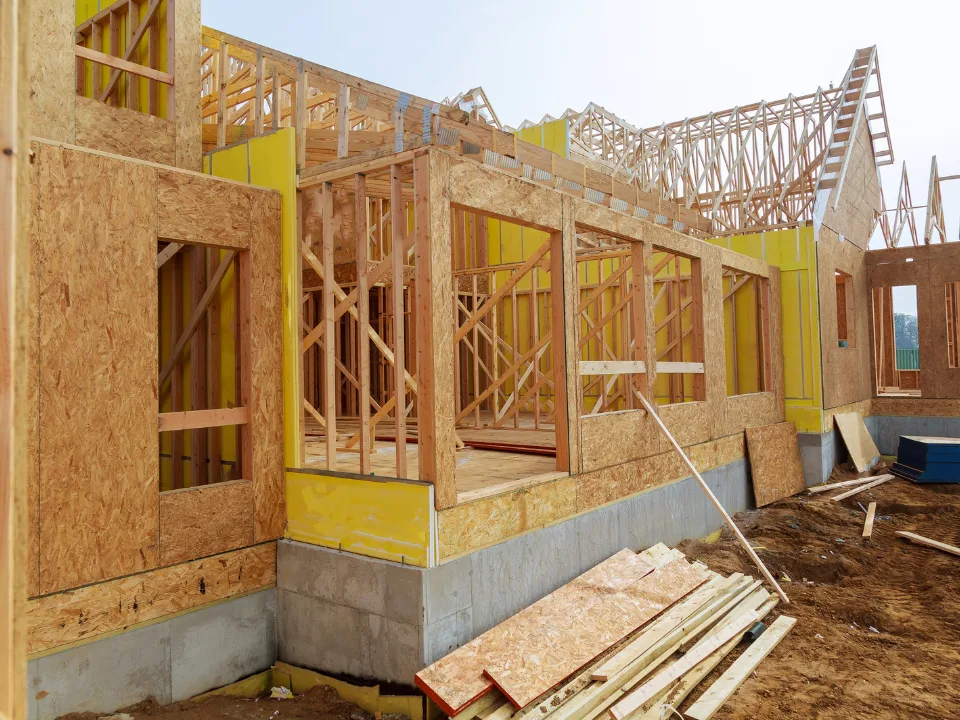
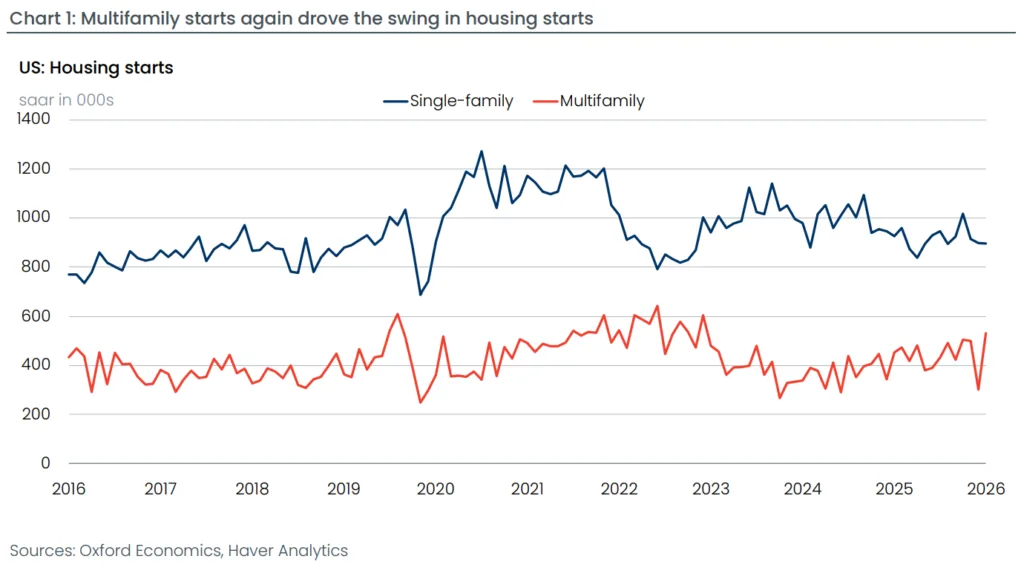
US housing construction surprised to the upside in June, with starts climbing 19% to a seasonally adjusted annual rate of 1.427M, according to Oxford Economics. While the headline looks bullish, Globe St reports single-family starts remained essentially flat—down 0.2%—leaving multifamily projects to account for June’s outperformance. Oxford Economics attributes this spike to a sharp 76.2% rebound in multifamily, after May’s puzzling slump. The jump in apartment construction underscores developers’ willingness to proceed with new product, even as overall residential investment remains cautious and financing costs run high.
Despite June’s momentum, Oxford Economics cautions that the overall foundation for housing starts remains shaky, with single-family builders still working through excess inventory and high mortgage rates discouraging buyers. Until borrowing costs ease, a broad-based residential construction breakout looks unlikely.
Get Smarter about what matters in CRE
Stay ahead of trends in commercial real estate with CRE Daily – the free newsletter delivering everything you need to start your day in just 5-minutes
The Details
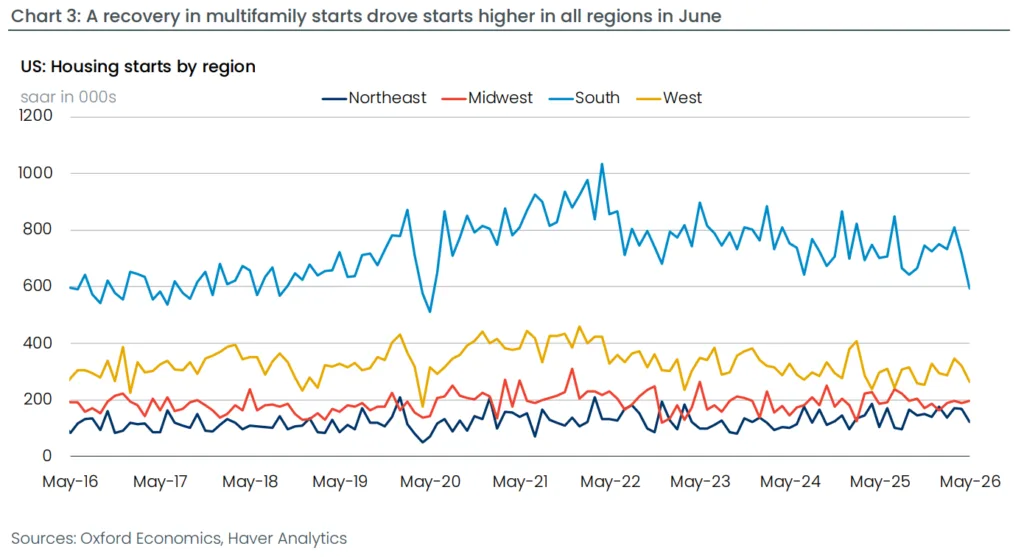
June housing starts rose well above forecasts, climbing from the 1.31M consensus estimate to 1.427M. Multifamily construction drove almost all of the increase. Meanwhile, single-family starts stayed flat despite accounting for more than two-thirds of national activity. Multifamily growth spread across most regions, with the Midwest and South posting the strongest gains.
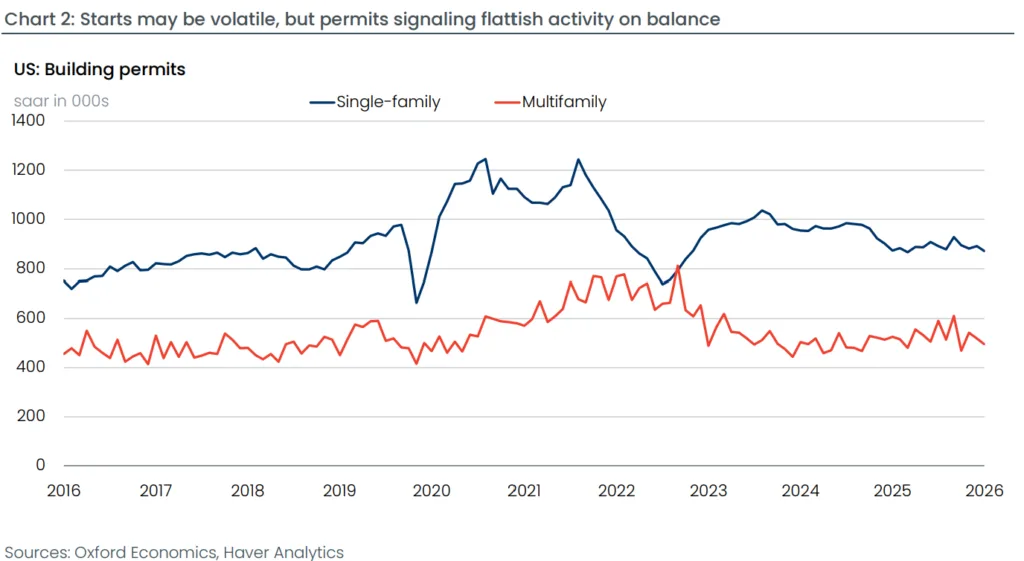
At the same time, the future pipeline weakened. Total building permits fell 3% to 1.367M. Both single-family and multifamily permits declined, signaling weaker construction activity ahead. Oxford’s tracker showed real residential investment grew just 0.9% annualized in Q1 2026. Units under construction also remained flat during Q2.
Regional Multifamily Rebound Pushes Midwest, South Ahead
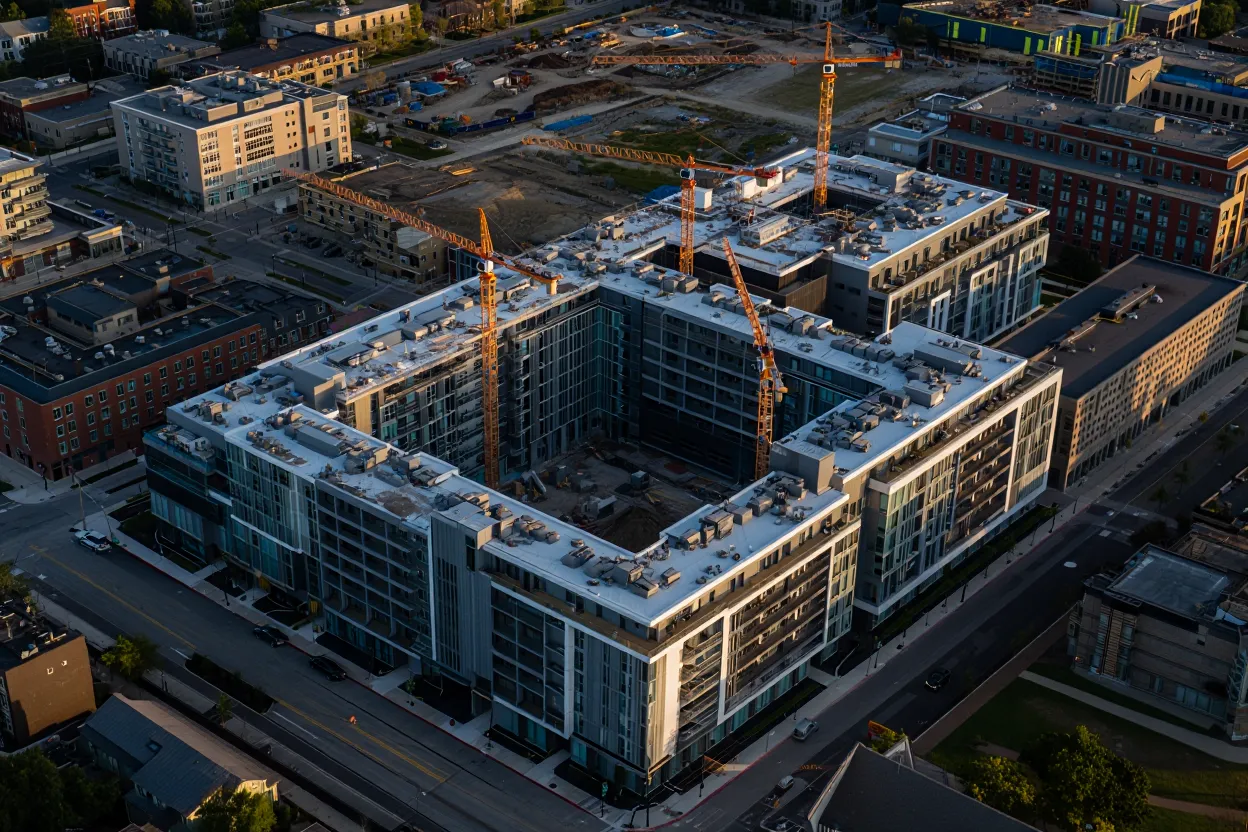
June’s multifamily surge reached beyond a single market. The Midwest and South led the gains, with both regions posting above-average apartment starts. By comparison, single-family groundbreakings declined across every region. The broader multifamily rebound suggests continued rental demand in high-growth markets. Migration and demographic trends likely continue supporting that demand.
However, building permits fell across both asset classes. That decline suggests deliveries will not accelerate soon. Multifamily developers may uncover new regional opportunities. Even so, they should expect a less predictable project pipeline through the rest of 2026.
Why It Matters
The 76% jump in multifamily starts strengthened overall construction data. However, it also masked weaker momentum elsewhere. Oxford Economics noted that multifamily projects often create sharp swings because of their timing and scale. Meanwhile, single-family supply remains constrained by slow absorption and high financing costs.
The firm also argues that units under construction drive residential investment more than headline starts. On that measure, the market remains flat. Residential investment grew less than 1%, while permit activity continued declining. As a result, developers must balance near-term opportunities with longer-term caution.
CRE investors should stay selective. The Midwest and South still offer favorable conditions for multifamily projects. That approach aligns with Oxford Economics’ recent view that disciplined investors can find opportunities despite slower market conditions. However, declining permits and weak residential spending do not support widespread speculative development. Investors may benefit more from projects already under construction. They should also prioritize markets with stronger demand fundamentals. A sustained development rebound will likely wait until 2027 or later. Lower interest rates and tighter builder inventories should support that next cycle.
What’s Next
Oxford Economics expects housing starts to remain mostly flat over the next 18 months. Stronger multifamily performance should offset sluggish single-family activity. A broader construction recovery still depends on lower interest rates, faster inventory absorption, and clearer long-term demand.
Multifamily developers may use the next 12 to 18 months to complete projects already underway. However, new groundbreakings will likely stay limited until market conditions improve. Regional opportunities should continue emerging, but developers should deploy capital carefully on new projects.