




- US CRE investment sales hit $37.4B in May, up 18% year over year, largely due to portfolio and entity-level transactions.
- Single-asset sales slid in office, multifamily, and retail, but industrial and hospitality sectors saw significant growth fueled by major deals.
- Market pricing showed modest overall improvement, though some asset types, especially hospitality, faced continued value pressure.
Megadeals Distort the Headline
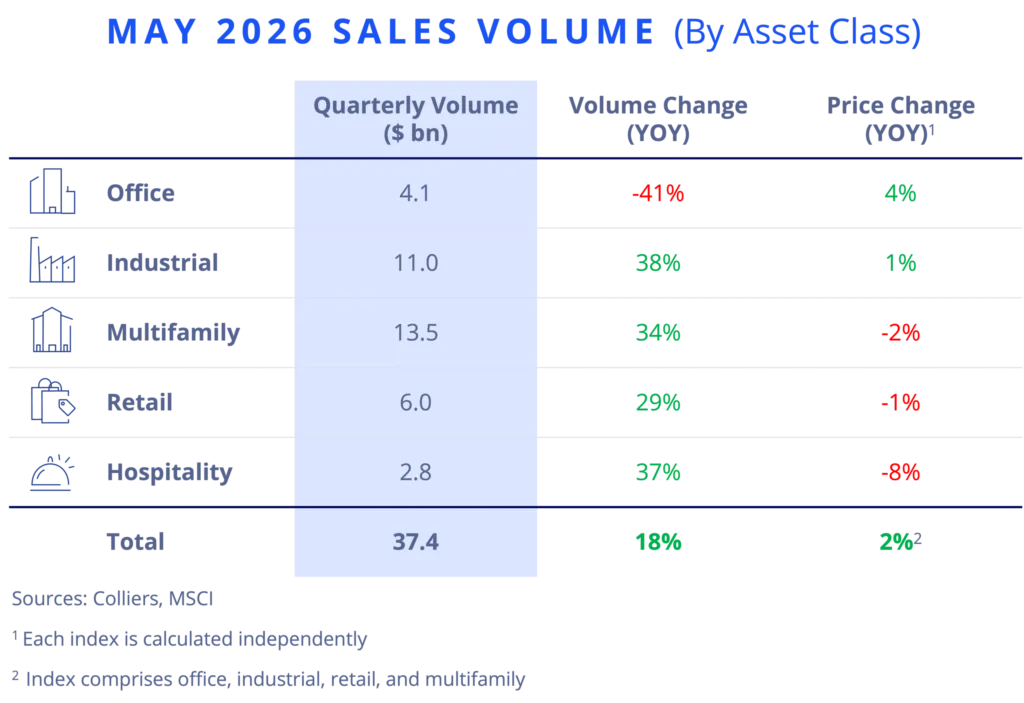
According to MSCI’s May update covered by Colliers, US commercial real estate sales posted a headline gain as portfolio and entity-level transactions surged. While overall investment sales volume reached $37.4B, an 18% uptick from a year prior, much of the strength masked underlying sluggishness in single-asset transactions. Only one major sector—office—declined in overall sales, while industrial, multifamily, retail, and hospitality all registered year-over-year improvements. The composite RCA CPPI all-property index reflected the slightly stronger sentiment, up 1.6% annually. Still, headline numbers painted a rosier picture than most property types experienced in their day-to-day deal flow.
The uneven distribution of activity, driven by a handful of sizable portfolio and entity-level transactions, suggests investors are still selective, favoring scale over sole asset risk. This dynamic is especially relevant as several sectors struggle to sustain pricing and liquidity in the face of stubbornly high interest rates and tepid lending environments.
Get Smarter about what matters in CRE
Stay ahead of trends in commercial real estate with CRE Daily – the free newsletter delivering everything you need to start your day in just 5-minutes
The Details
Office extended its decline, posting $4.1B in sales, down 41% year over year. Single-asset office trades fell 49%. Downtown CBDs dropped an even steeper 66%. Industrial stood out with $11B in sales, up 38%. A 164% surge in portfolio and entity-level deals drove most of that growth.
Multifamily reached $13.5B in sales, up 34%. A landmark entity-level deal fueled the gain, even as individual apartment sales fell 14%. Retail generated $6B in sales, rising 29%. A 475% jump in larger deals drove growth. Meanwhile, shop sales fell 41%, while shopping centers stayed flat.
Hotel sales reached $2.8B, growing 37%. However, one transaction accounted for nearly one-third of total volume. Pricing remained mixed. Office values rose 4.1%, while hotel values fell 7.7% year over year, according to Colliers and MSCI.
Portfolio Sales Outpace Single-Asset Deals
May highlighted a clear shift toward portfolio and entity-level transactions. Industrial portfolio deals surged 164%. Meanwhile, single-asset industrial sales increased just 3%. Retail followed a similar pattern. Portfolio deals lifted overall volume, while individual property sales declined. Recent market data also showed capital increasingly favoring larger portfolio transactions over individual assets.
Multifamily also relied on scale. The year’s first multibillion-dollar entity deal lifted the sector despite weaker one-off apartment sales. The data shows confidence remains selective. Investors with capital favored larger, diversified deals. Smaller transactions continued to face slower market conditions.
Why It Matters
May’s sales data highlights a two-speed market. Institutional buyers continue driving volume through large portfolio deals. Meanwhile, single-asset transactions continue shrinking across several property sectors. That trend creates tougher conditions for brokers and local investors.
Colliers reported office single-asset sales fell nearly 50% year over year. Multifamily sales declined for the second straight month. Retail shop transactions also posted double-digit declines. These trends point to weaker liquidity and stricter underwriting for smaller acquisitions.
Portfolio activity may reflect growing demand for scale and diversification. However, it also highlights a widening gap across the investment market. Pricing reinforces that divide. Office values rose 4.1%, likely reflecting high-quality institutional assets instead of struggling Class B and C properties. Meanwhile, multifamily, retail, and especially hospitality values remain under pressure. For most buyers, smaller transactions remain difficult without institutional-scale capital.
What’s Next
May’s results suggest further separation between institutional buyers and the broader market. Large investors continue driving transaction volume. Without lower borrowing costs or easier lending, single-asset activity may remain slow through the summer.
Investors will watch the Fed and Q3 lending data for signs of stronger buyer demand. The $10M to $100M single-asset market remains a key focus. Until then, headline volume will likely stay uneven. A small group of well-capitalized buyers will continue driving most large transactions.