





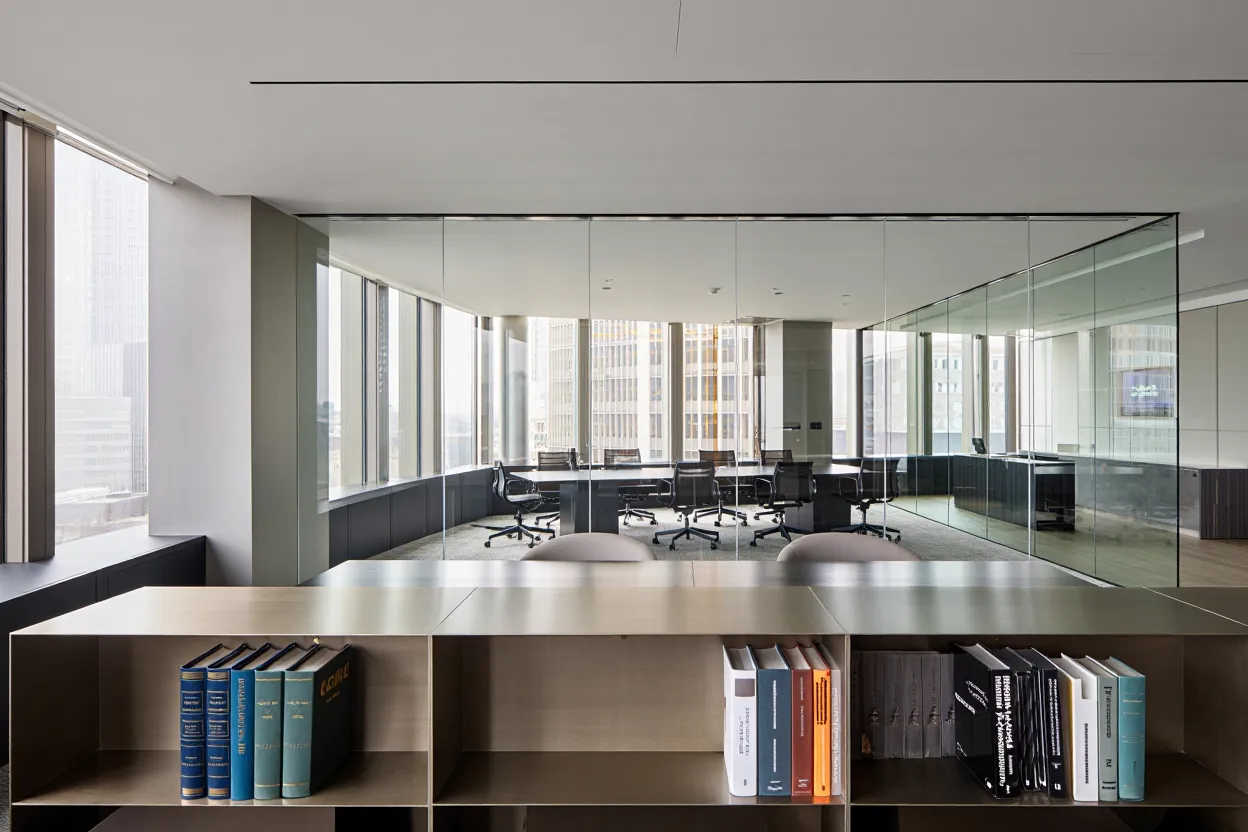
- US law firms have ramped up office leasing, reversing years of space reductions, as AI, litigation, and regulations propel caseloads.
- Legal sector office leasing rose 46% above pre-pandemic levels, with major deals and expanded footprints in both top-tier and regional markets.
- This expansion signals that legal remains more office-centric than most sectors, but new strategies include more flex space and high-end amenities.
Litigation and Regulation Spur Legal Office Demand
Law firms nationwide are rapidly expanding their office footprints, fueled by a surge in artificial intelligence work, fast-changing regulations, and a spike in corporate litigation. Bisnow reports that the legal sector’s office leasing is outpacing all major industries, with firms locking in new and bigger spaces amid sustained business growth. Cushman & Wakefield data shows the legal industry signed 4.6M SF of new leases in Q1 2026—the fourth consecutive year of above-average absorption.
This marks a sharp turnaround for legal practices, which spent the last decade downsizing. As more complex regulatory and compliance work flows in, national and regional firms are competing for top talent and doubling down on prime office locations. CBRE notes that compared to pre-pandemic levels, legal leasing is up 46%, even as tech sector leasing dropped 8% over the same period.
Get Smarter about what matters in CRE
Stay ahead of trends in commercial real estate with CRE Daily – the free newsletter delivering everything you need to start your day in just 5-minutes
The End of Legal Sector Downsizing
Pandemic-era office contraction has clearly ended for US law firms. In the years leading up to 2020, firms regularly gave back 25% of their leased space when signing new deals. Those leases inked in 2019 are starting to turn, and today’s legal tenants have much stronger balance sheets—Georgetown Law and Thomson Reuters report a 13% average profit gain last year across the industry.
This new fiscal confidence and competition for attorneys specializing in AI and compliance are motivating firms to lock in higher-quality spaces and expand in both major and emerging business hubs.
The Details
Legal office deals are bigger and earlier. Simpson Thacher & Bartlett’s 916K SF lease at 570 Fifth Ave in Manhattan this May set a six-year city record. Similar expansions by Kirkland & Ellis and Goodwin Procter last year illustrate a legal industry “space race.” In Manhattan, legal tenants now account for 17% of leasing volume—up from 11% in all of 2025, per Savills.
The Miami legal sector doubled its share of local office leasing from 10% pre-pandemic to 20% today. Nashville, Charlotte, Charleston, Austin, and Dallas are also seeing spikes as national firms plant new flags and open satellite offices.
Talent, AI Skills, and Flex Space Accelerate Growth
Law firms have significantly increased hiring for attorneys with AI and tech backgrounds, with job postings for AI skills up 7x since 2022, per Cushman & Wakefield. This hiring wave builds on strong leasing momentum seen earlier this year, as legal tenants expanded across major US office markets. Firms are reconfiguring space: average SF per attorney dropped from 925 to 746, but there is a strong push for more collaboration zones, ‘war rooms,’ and hospitality-driven amenities.
As workforce costs rise, up 8.2% since 2024, premium spaces with gyms, pools, and event-capable conference rooms have become top recruitment tools. Firms are investing not just in headcount but also in software and infrastructure to support expanding AI-related practice groups and workflow automation. Regional market wins underscore a national shift, as legal has become more opportunistic while tech and finance tenants remain cautious in office leasing.
Why It Matters
The legal sector’s burst of office leasing highlights a rare bright spot for landlords and developers in a broader office market still grappling with elevated vacancy and lagging demand from tech, finance, and traditional corporate occupiers. According to Savills, legal tenants drove a full 17% of Manhattan’s leasing activity this year, more than any other single industry. The competitive hiring landscape and the proliferation of AI regulation nationwide are changing how law firms allocate space, spend on amenities, and select strategic markets—reversing a yearslong contraction and making legal one of the most reliable office tenants in 2026.
Even as average SF per attorney shrinks, leasing growth is propelled by demand for collaborative, client-centric, and tech-enabled work environments. Georgetown and Thomson Reuters’ joint industry report flags that business volatility, global trade disruptions, and new regulatory risks are forcing clients’ hands, driving a 3.9% YoY increase in lawyer hours—the fastest expansion since tracking began. But there’s risk: the same industry report warns of a potential ‘boom and bust’ as law firms contend with higher staffing and technology costs, and the challenge of billing AI knowledge work at premium rates.
What’s Next
CRE professionals should expect legal sector demand to remain strong heading into lease rollovers and build-outs through 2027, especially as regulatory innovation and litigation risks keep pushing corporate clients toward large, resource-rich firms.
However, watch for possible future volatility if profitability plateaus or AI-driven efficiencies eventually reduce headcounts. For now, law firms remain set on scale, tech, and talent—making them increasingly central to the narrative around who will fill next-generation US office towers.