



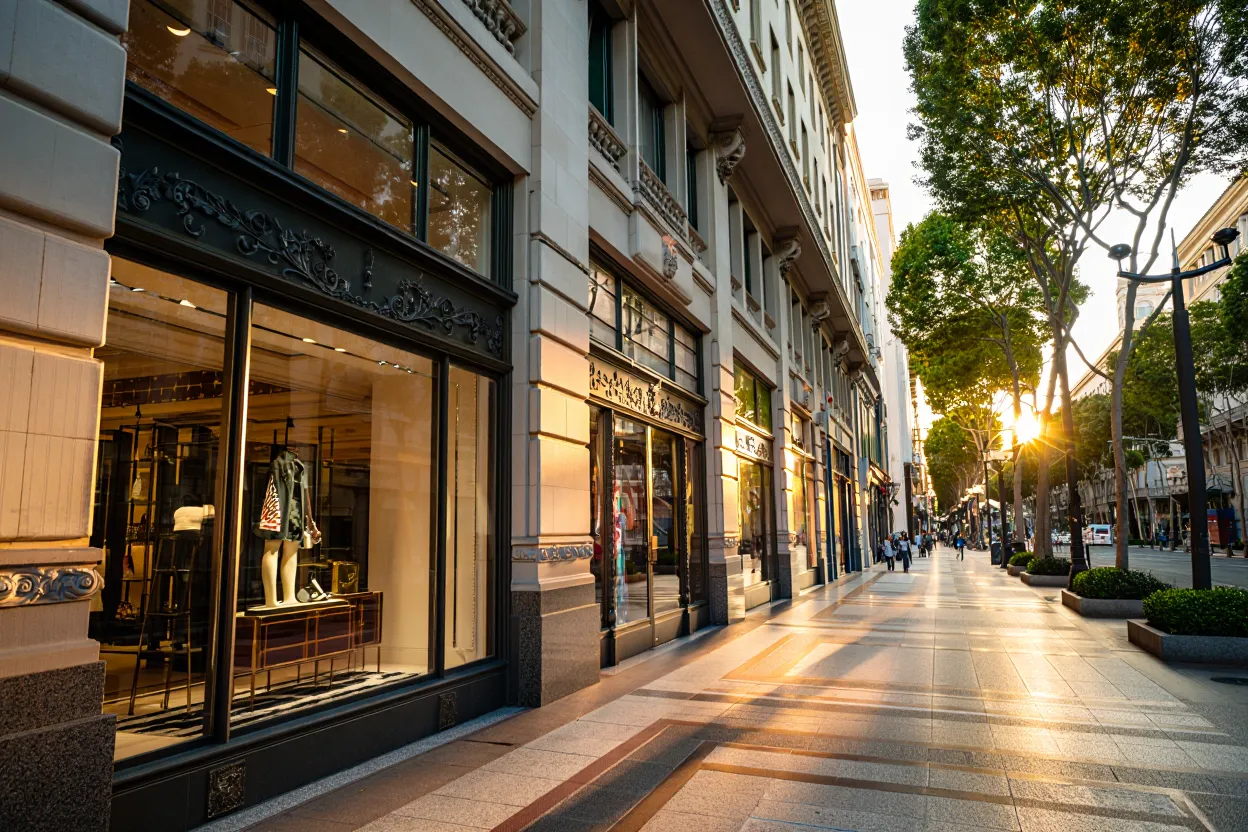
- Luxury retailers are retreating to three main US cities: New York, Los Angeles, and Miami.
- Prime luxury corridors like Rodeo Drive and Madison Avenue account for most new store openings.
- Vacancy rates for luxury retail space remain low, with rents climbing sharply.
- Brands prioritize clustering to reinforce exclusivity and attract affluent shoppers.
Luxury Retailers Refocus
Bisnow reports that amid a sector-wide slowdown, luxury retailers are consolidating their presence in just three US cities: New York, Los Angeles, and Miami. After years of expansion into secondary markets, declining revenues and an uncertain economic outlook have prompted leading brands to double down on established, high-traffic corridors.
According to JLL, Rodeo Drive, Madison Avenue, Fifth Avenue, Bal Harbour, and the Miami Design District represented 80% of luxury retail openings in 2025. These locations continue to attract brands seeking proximity to wealthy shoppers and solid brand recognition.
Prime Corridors Dominate Openings
The focus on high-profile retail strips comes as middle-market consumers cut back and brands like LVMH and Kering report falling revenues. New stores from Dior, Louis Vuitton, Rolex, and Dolce & Gabbana have opened on key luxury corridors. At the same time, limited space in core markets has pushed availability to historic lows, intensifying competition for flagship locations. Weaker-performing stores in secondary markets continue to close.
Vacancy in US luxury retail space hovers around 4.5%, notably lower than the average shopping center’s 6%. Prime spaces quickly attract multiple high-profile bidders, pushing luxury retail rents higher—up to $1,400 PSF on Rodeo Drive and $894 PSF on Madison Avenue, per JLL data.
Get Smarter about what matters in CRE
Stay ahead of trends in commercial real estate with CRE Daily – the free newsletter delivering everything you need to start your day in just 5-minutes
Clustering and Brand Strategy
Industry experts emphasize the strategic value in clustering luxury retailers together. Locating a high-end brand alongside peers reinforces brand equity and signals exclusivity—a major draw for top-spending customers and affluent tourists. Although newer luxury districts like Houston’s River Oaks see demand, historic corridors still command the greatest prestige.
With little space left on iconic streets, both US and European luxury brands are pushing to secure a presence in these prime locations, even as new luxury hubs remain difficult to establish without existing brand momentum. Despite expansion ambitions, a lack of available core-market space is forcing brands to remain selective in their physical store strategies.