






- Kennedy Wilson and Jamison Capital Partners launched a $1.7B joint venture to build or convert 4,000 affordable apartments in Los Angeles over five years.
- The initiative will leverage local government incentives, including tax credits and expedited permitting, with its first project being a 512-unit office-to-residential conversion downtown.
- The deal highlights the city’s reliance on public incentives to spur affordable housing production and underscores the sector’s increasing viability despite broader CRE market headwinds.
A New Playbook for LA Affordable Housing
Kennedy Wilson and Jamison’s $1.7B affordable housing venture comes as Los Angeles searches for solutions to one of the toughest housing shortages in the US. Bloomberg reports that the two firms plan to deliver 4,000 income-restricted apartments over five years, combining new construction with conversions of aging office buildings. That puts the venture squarely at the intersection of two trends: reuse of outdated commercial space and the pivot of capital toward subsidized rents. According to the US Department of Housing and Urban Development, half of LA households spend more than 30% of their income on rent—making incentive-driven projects a rare bright spot for large-scale multifamily development in an otherwise sluggish market.
The significance isn’t limited to unit count. The partnership marks one of Los Angeles’ largest recent private investments focused on affordable rentals, with local government incentives reshaping the economics in a sector long beset by high costs and regulation. For investors, the play is clear: tax credits, exemptions, and streamlined approvals have raised the sector’s profile while traditional market-rate projects face tougher feasibility hurdles.
Get Smarter about what matters in CRE
Stay ahead of trends in commercial real estate with CRE Daily – the free newsletter delivering everything you need to start your day in just 5-minutes
The Details
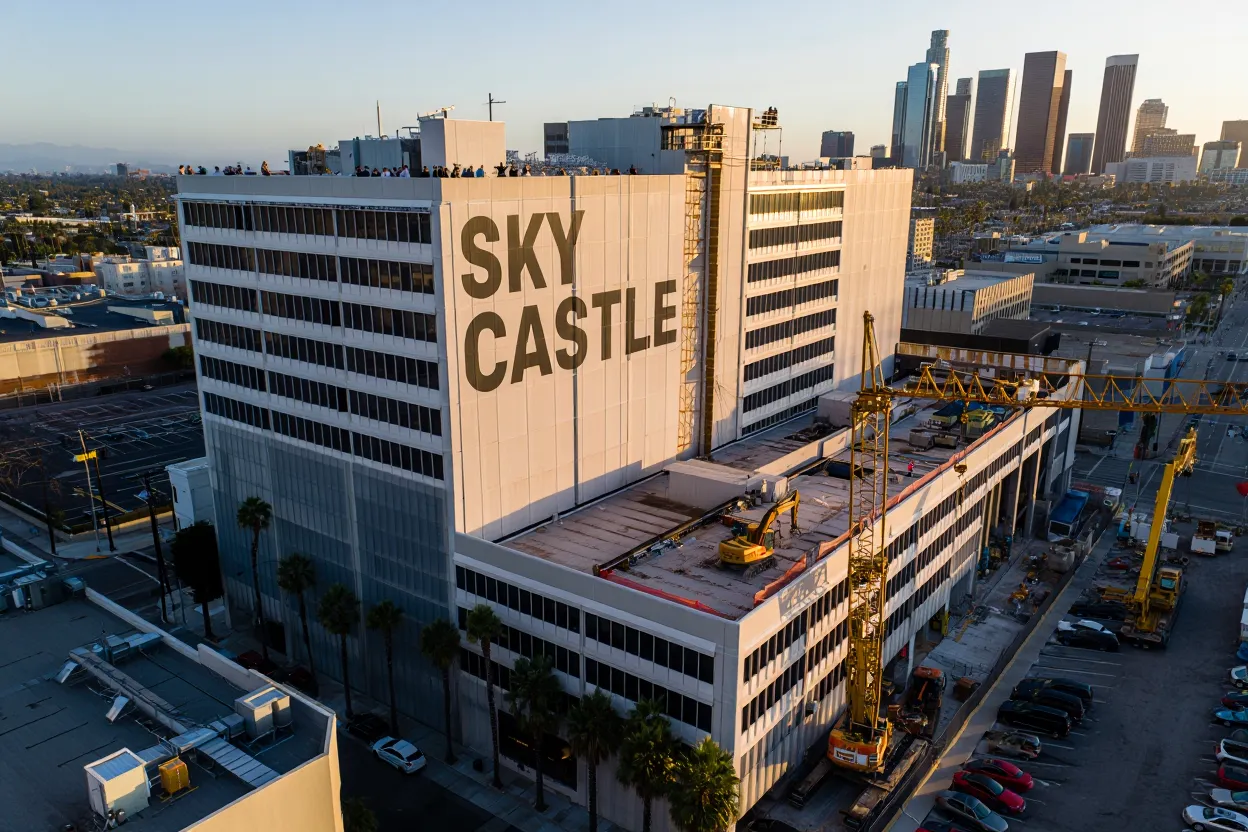
Sky Castle will launch the venture’s first project in Downtown Los Angeles. The 512-unit development will convert a 400,000-SF office complex into affordable apartments. It will offer one-, two-, and three-bedroom units for households earning 30% to 80% of area median income. Construction will begin in August.
Kennedy Wilson says a two-bedroom apartment at 60% AMI will rent for $2,248 per month. Comparable market-rate units average about $3,991, based on 2026 HUD data. Jamison CEO Garrett Lee says adaptive reuse lowers development costs. Reusing vacant offices and using city and federal tax incentives reduces costs to about $425,000 per unit. That remains well below typical affordable housing costs in Los Angeles.
Conversions Rise as Development Pipeline Shifts
Los Angeles continues to face housing shortages, high borrowing costs, and regulatory delays. However, new incentives now support more affordable housing projects. RAND Corp. reported in May that the city’s 2022 transfer tax generated $1.2B for housing. At the same time, it slowed large commercial real estate transactions.
Jamison has completed 8,000 apartments, including 2,000 office conversions. Another 1,700 converted units remain under construction. Kennedy Wilson manages $36B in assets and went private earlier this year. The firm’s recent expansion of its multifamily platform also strengthened its ability to scale affordable housing investments. The firm owns 45,000 affordable units nationwide and has another 25,000 US units in development.
Many industry groups say office conversions remain the most practical way to deliver affordable housing in core markets. Lower costs and faster approvals improve project economics. The venture also reflects growing investor demand for tax-advantaged housing as traditional value-add opportunities become less attractive.
Why It Matters
The Kennedy Wilson–Jamison venture highlights two major shifts in Los Angeles. First, public incentives now attract institutional capital into affordable housing. Tax credits and tax-exempt bonds, expanded under the One Big Beautiful Bill Act, improve project economics. Bridges at Kennedy Wilson says those incentives help projects reach roughly $425,000 per unit. Los Angeles still needs more than 500,000 affordable homes, making this model attractive for other expensive markets.
Second, the venture reflects the city’s housing and office challenges. Mayor Karen Bass continues to face pressure over housing shortages and wildfire-related demand. Since taking office, the city has permitted 42,000 affordable units, with 6,000 under construction. Joshua Baum of Hilgard Economics says another 4,000 units help but address only a fraction of demand. As office demand stays weak, more investors will likely pursue similar conversions where government incentives improve returns.
What’s Next
Construction at Sky Castle will begin in August. The partners plan to complete the 4,000-unit pipeline over the next five years. They will combine adaptive reuse and ground-up development based on available incentives and suitable sites.
Investors will watch whether other cities adopt similar public-private partnerships. Strong returns in high-cost markets could encourage more institutional capital if traditional commercial real estate remains under pressure.