




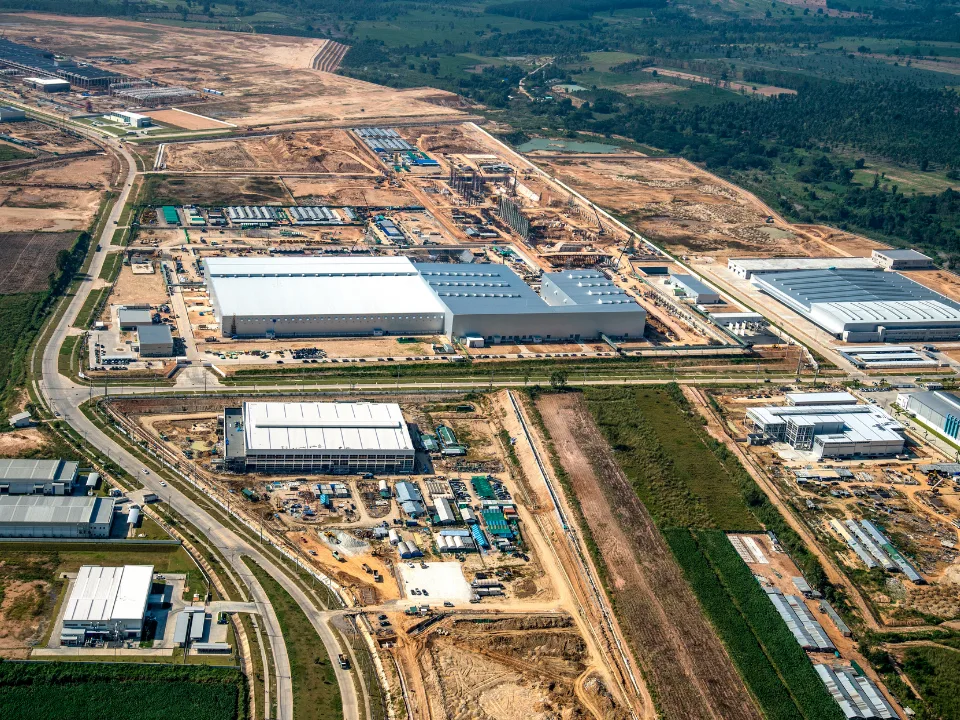
- InfraTech Capital is planning a $2.7 billion, 5,000-plus-acre data center campus near Amarillo, anchored by an undisclosed major hyperscaler tenant.
- The project adds a second major data center player to Carson County, joining Fermi America’s 7,570-acre Project Matador development nearby.
- West Texas is emerging as a top frontier market for data centers as Texas overall is projected to surpass Northern Virginia in capacity by 2030.
InfraTech Capital has announced plans for a $2.7 billion Amarillo data center campus spanning more than 5,000 acres in Carson County, Texas, according to Commercial Property Executive. A consortium of institutional investors is backing the project, which will be anchored by a major hyperscaler once definitive agreements are finalized. The campus lands in a county that’s quickly emerging as one of the state’s busiest data center corridors.
Get Smarter About What Matters in Texas
Subscribe to our free newsletter covering the biggest commercial real estate stories across Texas — delivered in just 5 minutes.
Amarillo Data Center Gold Rush
Carson County already has Fermi America’s Project Matador. The competing development spans 7,570 acres. It targets more than 15 million square feet and 17 gigawatts of capacity at full build-out.
Fermi recently signed a binding 15-year lease with AI cloud provider TensorWave. The deal could generate $6.5 billion in contracted revenue for a 222-megawatt facility. That deal highlights the capital chasing power-ready land in the region.
InfraTech’s project adds another major player to the same rural county. The move intensifies competition for land, power and construction labor. Just a few years ago, the area had little data center activity.
The Details
InfraTech plans to partner with an undisclosed global manufacturer. The partnership would add fiber optic cable manufacturing capacity on-site. The move suggests InfraTech is planning for supply chain needs beyond power and land.
Definitive agreements with the anchor hyperscaler and investor consortium remain in progress. The companies have not disclosed the project’s power capacity or delivery timeline.
The site covers more than 5,000 acres. That gives InfraTech room to expand if hyperscaler demand remains strong. Frontier-market developers are increasingly using this large-scale approach.
The on-site fiber manufacturing could also help shield the project from supply chain bottlenecks. Those delays have slowed other large data center projects across the country.
Zooming Out
Texas could overtake Northern Virginia as the nation’s top data center market by 2030. The state already had 6.5 gigawatts of capacity underway in 2025.
JLL’s mid-year North America Data Center report found more than 66 gigawatts under construction across the continent as of June 2026. Frontier markets accounted for 77% of that capacity.
The shift is also visible as Permian Basin landowners pivot toward data centers. They are seeking to capture the same AI-driven demand spreading across rural Texas.
Frontier markets have gained share as hyperscalers face capacity constraints in established hubs. Lower-cost land and power in West Texas are helping drive that expansion.
Why It Matters
West Texas has emerged as a major beneficiary of the frontier-market data center boom. Amarillo’s entry alongside Fermi’s Project Matador shows how quickly rural counties can change.
Cheap land and available power are attracting hyperscale demand. The same trend is playing out as AI data centers reshape rural America.
For Carson County, competing multibillion-dollar projects could accelerate infrastructure investment. They could also put pressure on power grids, water supplies and construction capacity. Local infrastructure was not originally designed for this scale of demand.
What’s Next
InfraTech’s next milestone is finalizing agreements with its anchor hyperscaler and investor consortium. Those agreements will determine the project’s buildout timeline and power capacity.
More competing announcements could follow in Carson County and other frontier West Texas markets. Developers are racing to secure land and power before capacity runs short. Manufacturers may also follow with fiber and equipment plants to support the buildout.
Local utilities and state regulators will be worth watching closely. Two major campuses could compete for the same regional power supply. That could force capacity-allocation decisions well before either project reaches full build-out.