






- AbbVie will invest $1.4B in a 185-acre industrial development in Durham, NC.
- The new campus will create 734 permanent jobs and over 2,000 construction jobs.
- This marks AbbVie’s largest single-facility investment to date and its first North Carolina project.
- The initiative is part of AbbVie’s broader $100B US industrial development and R&D plan.
Major Industrial Development Announced
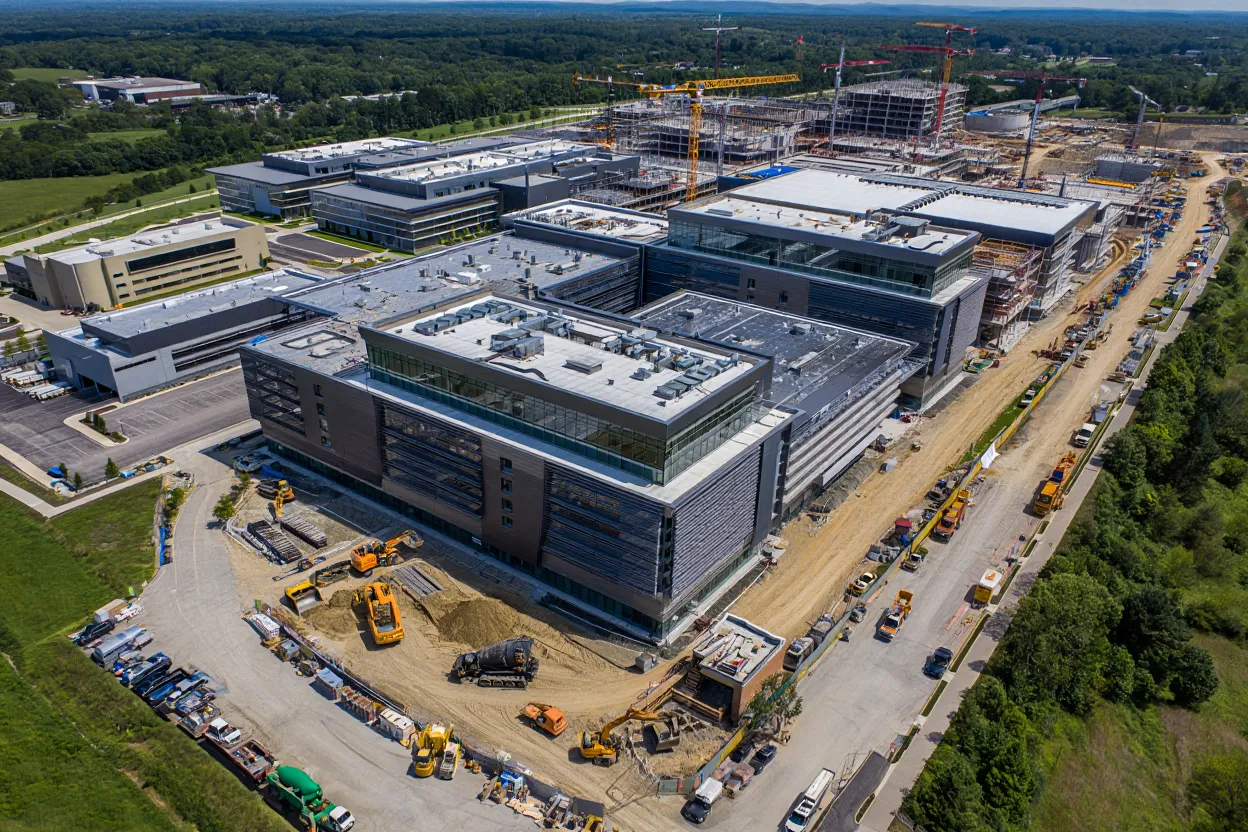
Commercial Property Executive reports that AbbVie plans a major industrial development in Durham, NC. The company will invest $1.4B in a 185-acre manufacturing campus. The site sits next to Research Triangle Park. It marks AbbVie’s largest single-project commitment and its first operational presence in North Carolina.
Project Details and Workforce Impact
The industrial development’s first phase will include small volume parenteral drug manufacturing, laboratories, a warehouse, offices, and wellness facilities. AbbVie expects the project to generate 734 new permanent jobs once operational by 2028—plus over 2,000 construction jobs throughout the buildout phase. Artificial intelligence will play a key role in production, supporting immunology, neuroscience, and oncology therapies.
Get Smarter about what matters in CRE
Stay ahead of trends in commercial real estate with CRE Daily – the free newsletter delivering everything you need to start your day in just 5-minutes
Broader Expansion in Industrial Development
AbbVie’s North Carolina move is part of a larger $100B initiative to expand US research, development, and manufacturing over the next decade. Recent projects include a $380M Chicago headquarters expansion and a $70M addition to its Bioresearch Center in Massachusetts. These efforts underline ongoing industrial development momentum, particularly for large pharmaceutical operations even as national life science construction slows, mirroring broader demand shifts as population flows continue to support growth in key regional markets like the Southeast.
Regional Growth Despite Market Headwinds
While overall life science deliveries across the US have slowed, industrial development remains active in areas like North Carolina’s Research Triangle. Genentech, for example, recently began a $700M industrial development in Holly Springs. This regional activity signals sustained investment and bullish sentiment among major pharmaceutical firms.