


- Salt Lake City, Austin, and Dallas are among the top 10 most affordable cities globally based on rent-to-income ratios, according to DWS Group.
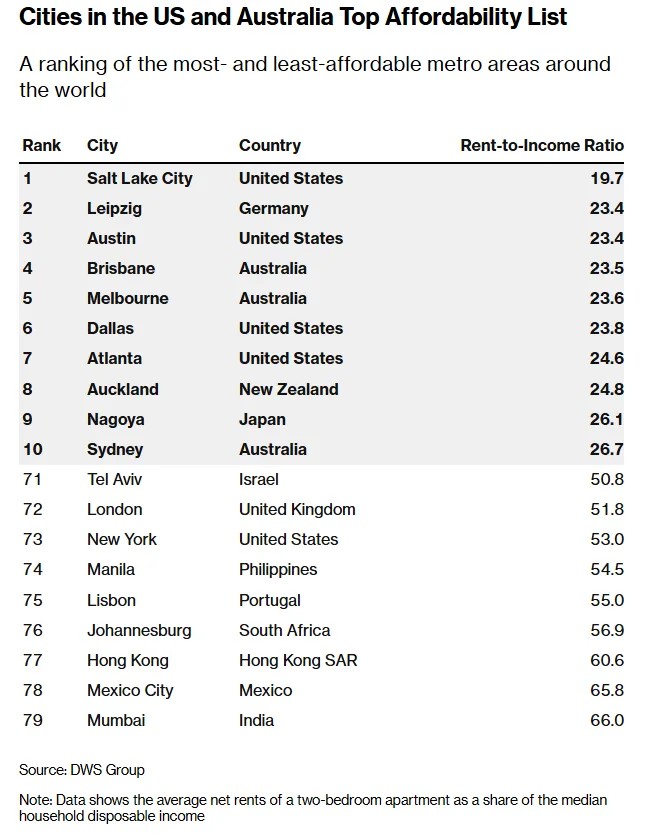
- The average renter in Salt Lake City spends just 19.7% of their post-tax income on a two-bedroom apartment—the lowest among 80 cities surveyed.
- New York, Mexico City, and Hong Kong rank among the least affordable, with renters spending over 50% of their income on housing.
US Cities Top the List
Salt Lake City ranks as the most affordable major metro globally for renters, with Austin and Dallas also making the top 10, per Bloomberg.
The study analyzed rent-to-income ratios across 80 cities worldwide, offering a snapshot of how housing costs compare internationally.
Renters in Salt Lake City spend just under 20% of their disposable income on a two-bedroom unit, significantly below the global average of 38%. Austin and Dallas came in at 23.4% and 23.8%, respectively.
Simon Wallace, global co-head of real estate research at DWS, said US cities continue to offer affordable options despite recent rent hikes, noting that income levels and housing supply remain relatively balanced in many metros.
Australia Also Ranks High on Affordability
Three major Australian cities—Brisbane, Melbourne, and Sydney—joined the US metros in the top 10. In each, renters spend less than 27% of their income on rent, thanks in part to strong wages and a more balanced supply-demand dynamic in their housing markets.
New Zealand’s Auckland and Japan’s Nagoya also made the top 10.
At the Other End of the Spectrum
Least affordable cities include some of the world’s biggest financial and cultural hubs. Renters in Bangkok, Mumbai, Mexico City, and Hong Kong spend more than 60% of their post-tax income on rent. New York ranks near the bottom as well, with a rent-to-income ratio of 53%.
These cities have seen sharp rent increases in recent years, fueled by inflation, high interest rates, and constrained housing supply. In New York alone, rents rose 27% between 2020 and 2024, according to Zillow, making housing affordability a key issue in the city’s upcoming mayoral race.
Why It Matters
As housing affordability tightens in global metros, midsized US cities and select markets in Australia and Asia are emerging as more livable alternatives. Lower rent burdens can attract workers, improve quality of life, and support more sustainable urban growth.
What’s Next
While affordability remains a challenge in many cities, global housing dynamics are shifting. With interest rates staying high and housing shortages continuing, cities that maintain a healthy balance between income levels and housing costs may become increasingly attractive to both residents and investors.
Get Smarter about what matters in CRE
Stay ahead of trends in commercial real estate with CRE Daily – the free newsletter delivering everything you need to start your day in just 5-minutes