






- The U.S. attracted $28 billion, or 15% of cross-border commercial real estate investment, in the 12 months to September, below its five-year average of nearly 19%.
- Panelists at a New York event said post-midterm gridlock is lowering political risk, though rates and construction costs have not changed since Election Day.
- New York’s tight supply and record leasing keep it on foreign investors’ lists, with Canadian and Asian buyers reportedly starting to look at office again.
The U.S. drew just 15% of cross-border property investment in the year through September, short of a five-year norm near 19%, Bisnow reports, citing Colliers.
Fund managers at a Bisnow event in New York said that picture may be starting to change after the midterms.
Get Smarter about what matters in CRE
Stay ahead of trends in commercial real estate with CRE Daily – the free newsletter delivering everything you need to start your day in just 5-minutes
A Thaw Takes Shape
Sherry Wang, a partner at Vistria Group, told the Bisnow audience that sentiment toward the U.S. had been “very, very negative.” However, some pools of capital that had stayed away are starting to loosen up in recent weeks.
Earlier this year, she said, some foreign funds withdrew their U.S. mandates because of geopolitical concerns. Still, they continued to believe in the underlying real estate.
The Case for Caution
Cross-border investment volume rose 56% to $71.8B in the first half, according to figures cited by Bisnow. Most of that activity came from Asia and Europe. Singapore led individual markets with $8.7B.
AFIRE, the foreign investors’ trade group, said its members lowered U.S. allocation targets by 10 basis points in 2025. In its summer survey, 53% of respondents planned to cut or maintain their U.S. exposure. Those investors collectively managed more than $4T.
Negative views of the U.S. economy more than doubled to nearly 27%. Moreover, over 90% of those respondents cited politics.
Gridlock as a Selling Point
Todd Pajonas, who leads Legal 1031 Exchange, said a Democratic Congress and a Republican White House could mean policy stability. He expects no major tax code changes, monetary swings or sweeping tariffs.
Oxford Economics’ first post-midterm survey found consumer sentiment had improved. Year-ahead inflation expectations also fell by a full percentage point, to 3.7%.
New York’s Local Risk
Panelists said New York owners are most concerned about tenant protections and the periodic return of commercial rent control proposals. Besen Partners’ Sam Finkler said local policy and interest rates will shape the next couple of years.
Still, NAI Global’s Arthur Milston said he knows of no foreign capital that has written off New York because of politics. He added that most investors view those concerns as temporary.
Zoom Out
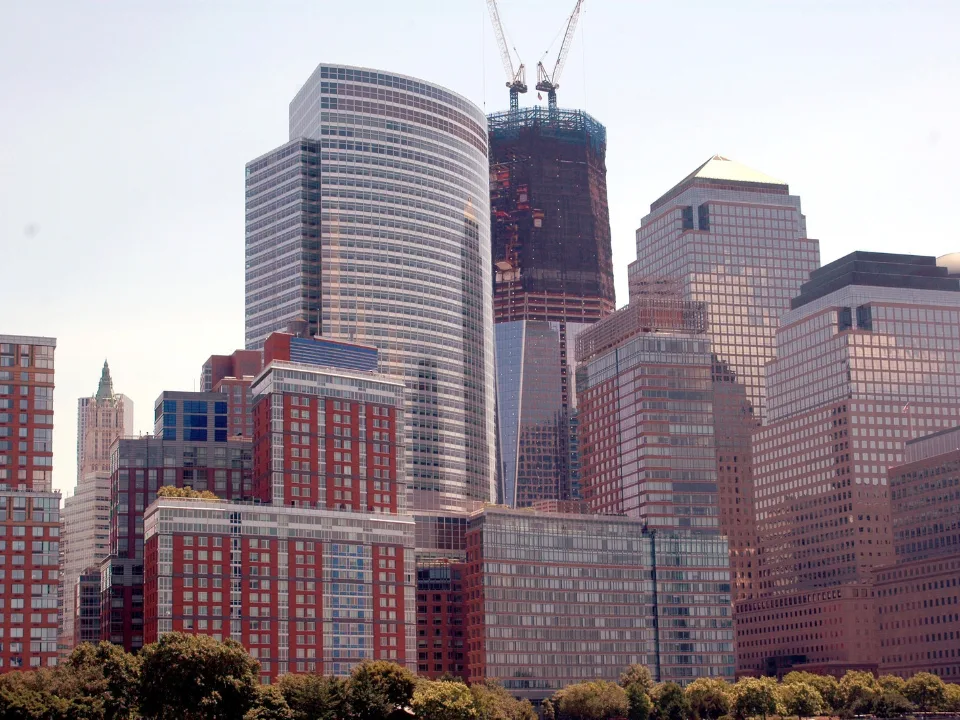
New York remains one of the few markets still building offices. There are 6.4 million SF under construction and 2.5 million SF under renovation. Average rents stand at $156.64 per SF, according to figures cited by Bisnow. Those numbers align with Cushman & Wakefield data in our brief on NYC office construction.
Why It Matters
Foreign investors were already becoming more selective. In January, we reported that overseas investors were returning with a targeted approach. Their focus included data centers, housing and select office and retail assets.
BGO’s Abbe Franchot Borok said Canadian and Asian investors are writing checks for office properties. She also sees a “herd mentality” starting to form.
What’s Next
Interest rates and construction costs remain obstacles to deals. The key question is whether the first office investments will attract more foreign capital.