





- Data centers under construction globally are valued at $550B, dwarfing past investment volumes and signaling explosive growth.
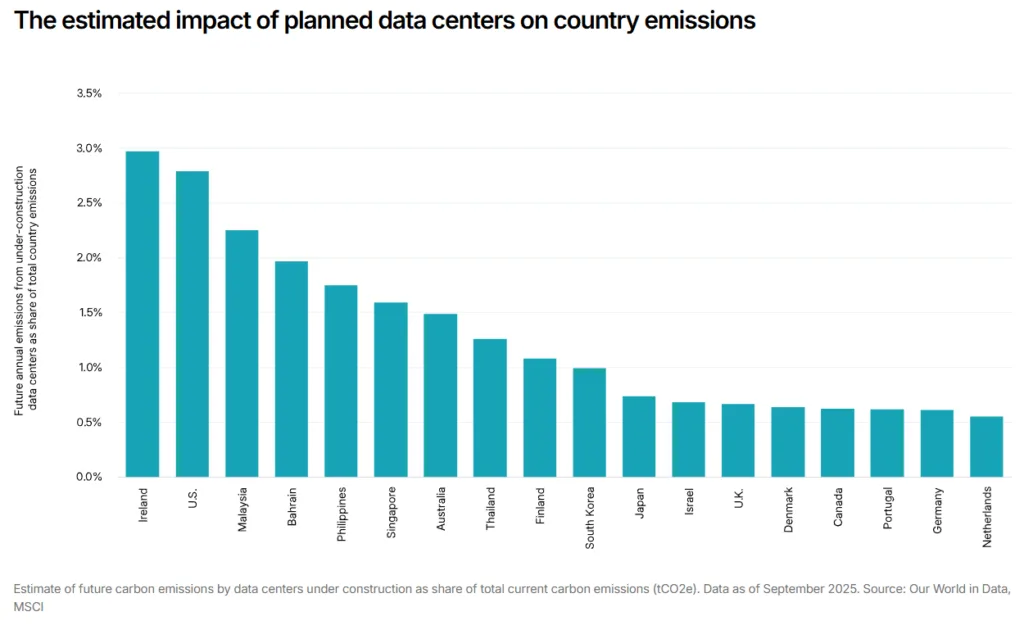
- The expansion comes with a heavy carbon cost — particularly in countries like Ireland and the US, where emissions tied to new centers could rise as much as 2.9% and 2.6%, respectively.
- Institutional investors face a growing sustainability dilemma: how to balance net-zero targets with exposure to data centers, one of the most carbon-intensive real-estate assets.
A Booming Sector With A Carbon Cost
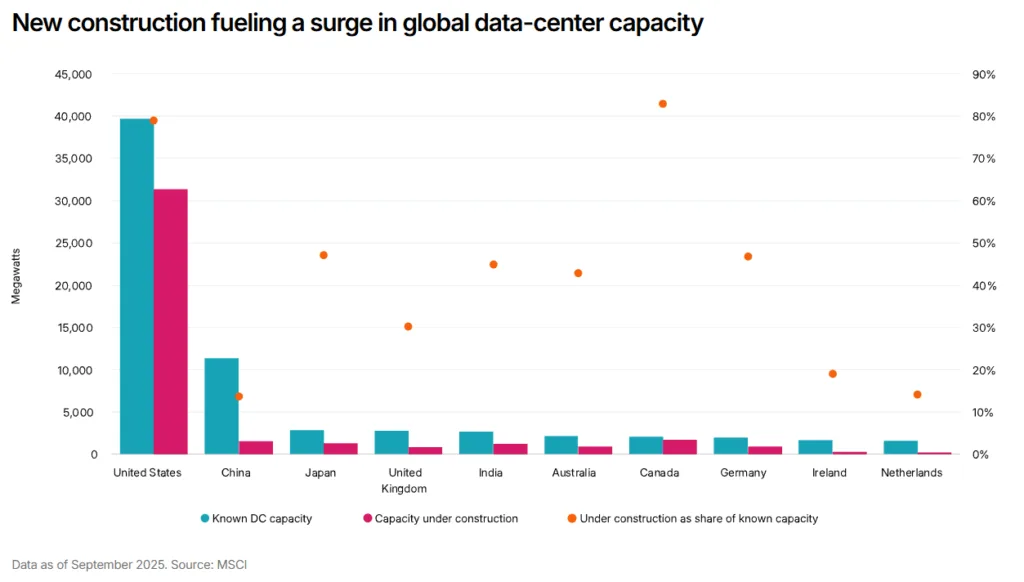
Surging AI and cloud demand is driving record global investment in data centers, reports MSCI. Developers are currently building more than 47 GW of capacity, set to boost global data center supply by 50%. But the construction boom — valued at over $550B — brings a steep rise in emissions, testing investors’ ability to hit long-term climate goals.
Top Target, Tough Trade-Off
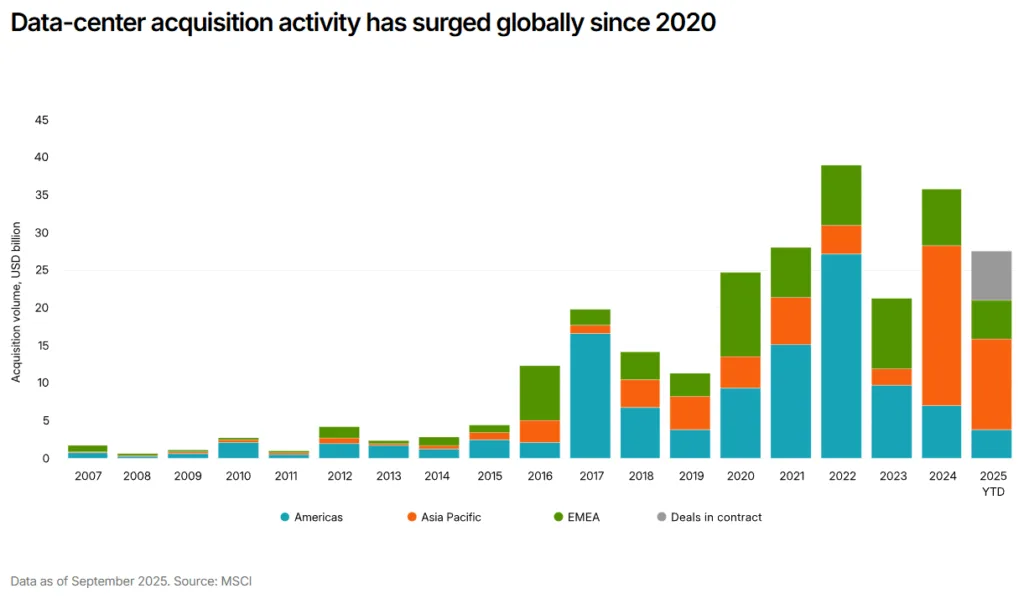
In 2025, data centers topped the list of property investors’ preferred asset classes, according to the Urban Land Institute and PwC. And with $36B in acquisitions last year alone, major investors like Blackstone, Brookfield, and KKR are leading the charge. Yet, compared to traditional real estate, data centers dramatically increase a portfolio’s carbon footprint. A single 50-MW hyperscale facility, for instance, can emit as much carbon as 100 energy-efficient office buildings.
Get Smarter about what matters in CRE
Stay ahead of trends in commercial real estate with CRE Daily – the free newsletter delivering everything you need to start your day in just 5-minutes
Energy Demand Is Outpacing Clean Supply
Many operators, including Google, Meta, and Microsoft, are securing renewable energy through PPAs and RECs. However, most data centers still rely on fossil-fuel-heavy grids. This is especially true in fast-growing markets. Ireland offers a stark example: data centers now consume 22% of the country’s electricity, up from 5% a decade ago. Globally, the sector could account for 3% of energy demand by 2030, up from 1.5% in 2024.
Offset Limitations And The Push For 24/7 Renewables
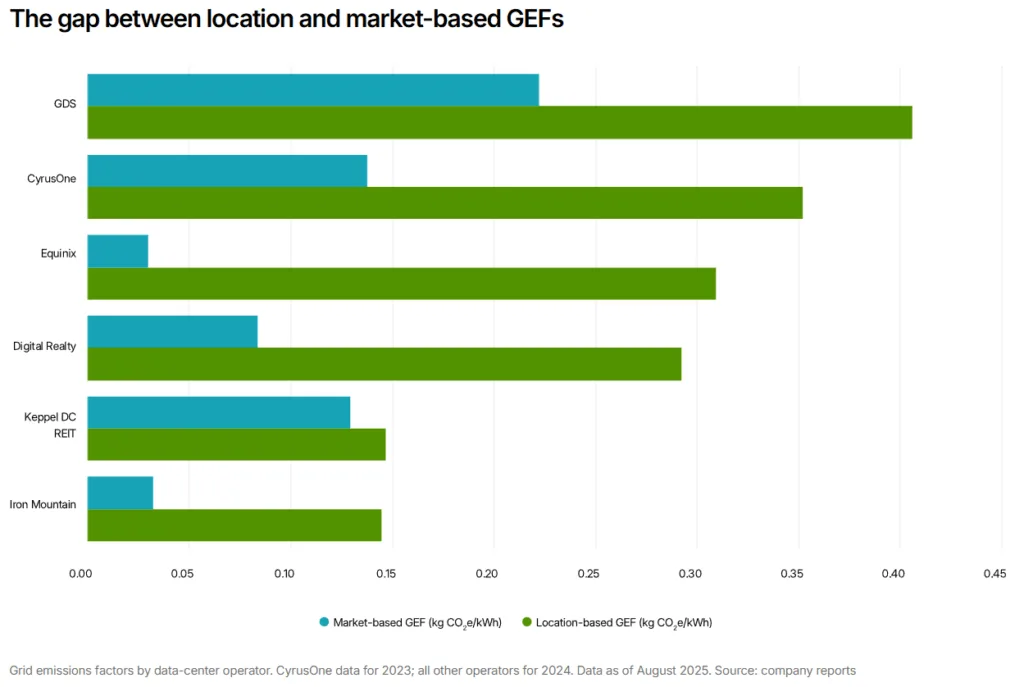
Current emissions reporting often relies on market-based offsets, such as RECs, which can obscure the actual climate impact of energy use. But location-based emissions — tied to local grids — are harder to ignore. Increasingly, companies are pursuing long-term clean energy deals, like Google’s $3B hydro PPA or Meta’s nuclear power contract, in search of consistent, low-carbon electricity.
Why It Matters For Investors
As net-zero pressure grows, investors may struggle to align climate goals with increasing exposure to data centers. The sector’s energy intensity and emissions complicate portfolio decarbonization strategies, especially as regulators shift toward more transparent, location-based reporting.
What’s Next
The data center sector shows no sign of slowing, but the race is on to align its growth with a low-carbon future. For investors, data centers may become a litmus test — not only for their ability to deliver financial returns, but also for how effectively they can square digital transformation with climate responsibility.