






- A total of $76.6B in CMBS loans face hard maturities in 2026, with office and retail loans carrying the largest refinancing exposure.
- Loans with debt yields below 8% have consistently shown the highest delinquency and refinance risk, according to Trepp’s latest data review.
- Extensions and loan modifications continue masking immediate distress, but worsening post-maturity performance could pressure CMBS delinquency rates later this year.
The commercial real estate industry’s long-feared maturity wall has arrived. However, Trepp says loan quality matters more than maturity volume. Trepp’s Spring 2026 Quarterly Data Review found $76.6B in CMBS loans face hard maturities this year. Those loans include fixed-rate debt reaching maturity and floating-rate debt without remaining extension options.
Trepp says debt yield now drives refinancing outcomes more than maturity volume alone. Loans with stronger debt yields refinance more easily. Meanwhile, weaker loans often require extensions or fall into delinquency. The report identifies debt yield as the clearest indicator of future CMBS stress.
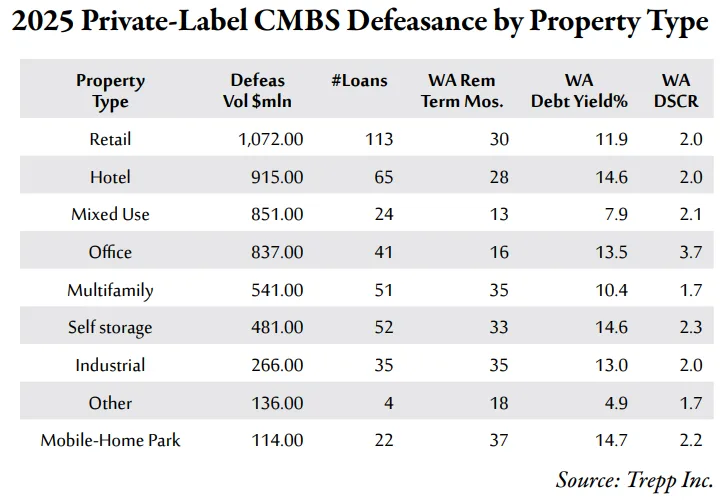
Debt Yield Becomes the Key Refinancing Metric
Trepp’s analysis of 2024 and 2025 CMBS maturities found a sharp divide between performing and troubled loans. Loans that paid off on time carried average debt yields between 13% and 14%, while loans that failed to refinance averaged debt yields closer to 9%.
That spread matters as lenders continue sizing loans conservatively in a higher-rate environment. Lower debt yields leave borrowers more exposed to refinancing gaps, especially when property values remain below peak pricing and debt costs stay elevated.
Trepp also introduced a deeper way to evaluate maturity stress: how loans behave after maturity. Some loans technically fail to pay off but remain current while negotiating extensions. Others become persistently delinquent, creating what Trepp called “maturity recidivism,” where loans cycle in and out of nonperformance while workouts drag on.
The Details
The 2026 CMBS maturity calendar totals $146.2B overall, including the $76.6B in hard maturities. Roughly 36% of those hard maturities—about $27.3B—carry debt yields of 8% or less, the threshold Trepp identified as the highest-risk refinancing zone.
The maturity pressure is also heavily back-loaded. Nearly 39% of hard maturities are scheduled for Q4 2026, meaning refinancing conditions later this year could heavily influence outcomes.
Office and retail properties account for the largest concentration of hard-maturity exposure after removing extension-eligible loans. Multifamily loans, meanwhile, make up a sizable share of the low-debt-yield watchlist, highlighting growing pressure in an asset class that until recently was viewed as relatively insulated.
Trepp’s historical data shows the difference between unresolved maturities and actual delinquency pressure. In 2025, 70% of CMBS hard maturities paid off on time, an improvement from 56% in 2024. The unresolved 2025 loan cohort spent 45% of post-maturity time classified as nonperforming, down from 66% the year before.
Even so, large office loans continue driving headline delinquency metrics. Trepp noted that the CMBS office delinquency rate hit a record 12.34% in January 2026, partly driven by the $835M One New York Plaza loan transferring to special servicing ahead of maturity. The loan was later modified and extended through 2028.
A Market Still Leaning on Extensions
One of the report’s clearest themes is that extensions and modifications continue softening what could otherwise be a more severe refinancing shock.
Banks currently hold roughly $1.89T in CRE loans backed by income-producing properties, while securitized lenders account for another $753B, according to Trepp. Many near-term maturities across both lender groups carry extension options or have already been modified with additional reserves, partial paydowns, or performance tests.
That dynamic has reshaped the refinancing cycle into what Trepp describes as a “path-dependent sorting process.” Stronger borrowers with stable cash flow and sponsor support continue extending maturities and buying time. Weaker assets are increasingly being forced into recapitalizations, distressed sales, or foreclosure.
The report also suggests banks are slowly re-entering the CRE lending market after two years of caution. Bank holdings of income-producing CRE loans grew 3.6% year-over-year in 2025, with nearly 40% of that growth occurring in Q4.
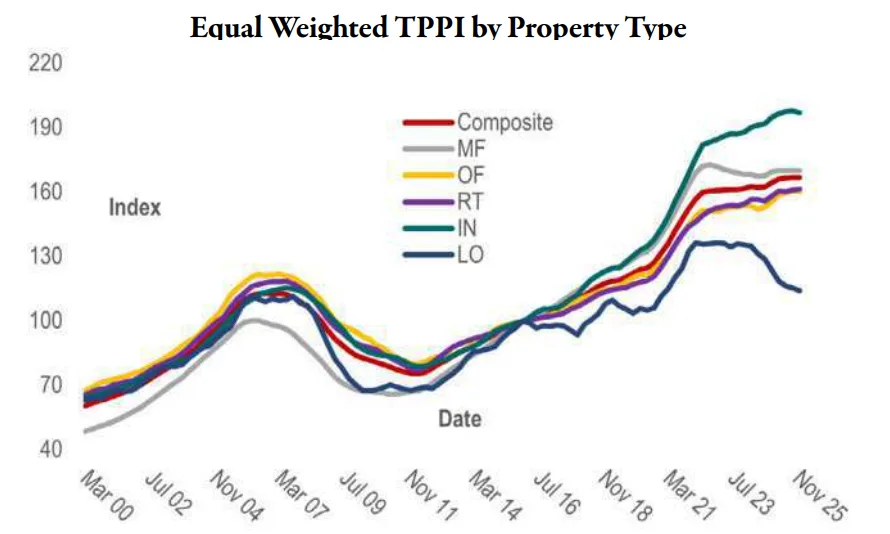
Source: Trepp
At the same time, CMBS issuance remains active despite market volatility. Private-label CMBS issuance totaled $32.74B in Q1 2026, making it the second-busiest first quarter since before the Global Financial Crisis.
Why It Matters
The industry narrative around the maturity wall has often focused on sheer volume, but Trepp’s data suggests refinancing outcomes are becoming increasingly property-specific.
Debt yield is emerging as the simplest shorthand for separating refinanceable loans from future delinquency events. That matters because large unresolved balances don’t automatically create distress. Some loans remain current through extensions, while others become long-term delinquency drivers that distort CMBS performance metrics.
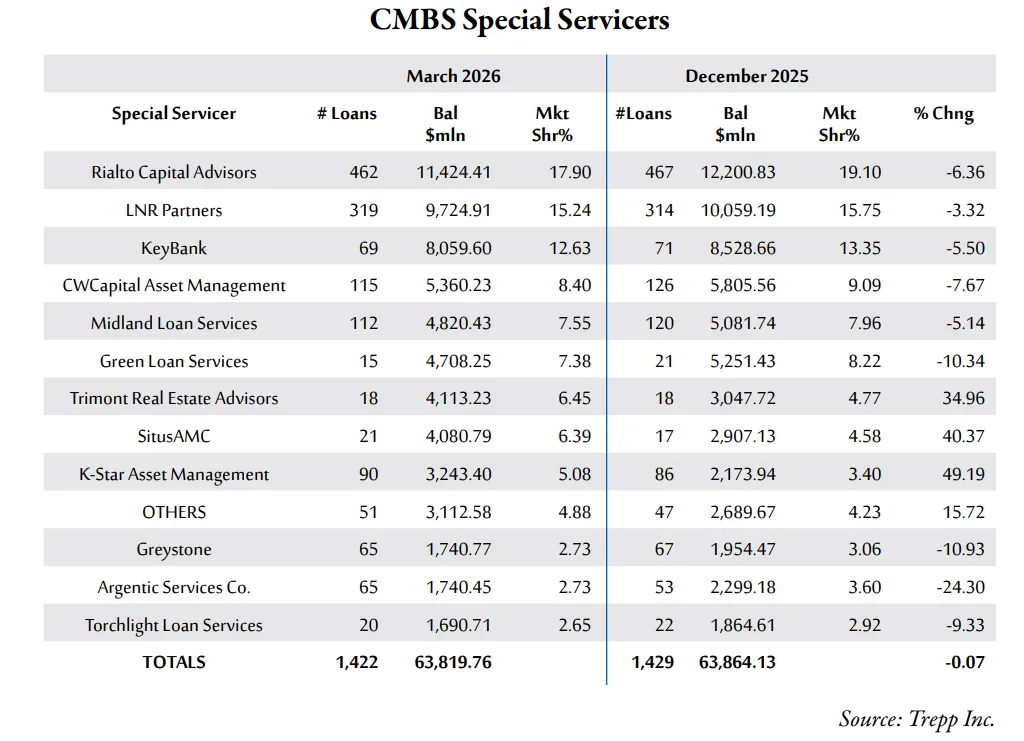
The distinction is especially important for office assets, where refinancing remains difficult amid weaker leasing fundamentals and declining valuations. Retail properties are also under pressure, though Trepp noted some sectors have shown stronger post-maturity performance than expected. Several lenders and investors have also started repositioning around distressed office pricing as refinancing pressure creates more forced-sale scenarios across major US markets.
Meanwhile, multifamily’s growing presence in the low-debt-yield category could become a bigger concern if rent growth slows further or lenders continue tightening proceeds.
What’s Next
Trepp expects 2026 outcomes to depend largely on capital markets conditions in the second half of the year. If rates stabilize and lenders remain active, more borrowers may continue extending and refinancing without triggering widespread defaults.
But the back-loaded maturity schedule raises the stakes for Q4. Should refinancing conditions tighten again, unresolved maturities could quickly translate into rising delinquency rates—particularly for office and lower-debt-yield multifamily loans.
Trepp’s bottom-line view is that the maturity wall itself isn’t the crisis. The real issue is how much of the unresolved balance ultimately becomes delinquency-intensive after maturity. In 2026, that distinction could define the next phase of CRE credit stress.